Historic Mansions

The State of Heritage Travel 2026: How America Sells, Scripts, and Saves History

Maison Research: browse the full research index or see the methodology and standards behind this series.
The State of Heritage Travel 2026: How America Sells, Scripts, and Saves History
Photo by Olivia Hartwell for Cornerstone Mansion · May 18, 2026

Heritage travel in the United States is usually described as a mix of preservation and tourism. That description is too soft for 2026. Once you line up the strongest current case studies, a different picture appears. Historic places are being packaged into products, fenced by access rules, rewritten by interpretive conflict, triaged by climate pressure, and kept alive or repurposed through capital stacks that look more like development finance than nostalgia.

This report brings together eight Maison flagship studies published or updated on May 18, 2026. Across that body of work, Maison scored 46 units: hotels, house museums, public-history sites, cultural landscapes, and one national preservation-finance layer. The point is not to force every place into one master score. The point is to show that the same operating logic keeps returning, even when the subject changes from a haunted hotel in Colorado to a shoreline site in Virginia or a tax-credit-backed revival in Boise.

The cleanest way to say it is this: America is not just preserving history. It is actively packaging, gating, scripting, triaging, and refinancing it.

46
scored units across the current Maison flagship research base
8
flagship Maison studies synthesized into this umbrella report
$8B
potential U.S. set-jetting demand signal used in the screen-tourism work
$6.8B
FY2024 federal HTC rehabilitation investment used in the preservation-finance work

What This Report Is Actually Measuring

This is not a list of places to visit. It is an attempt to describe the operating system now shaping American heritage travel. The six pressures below show up again and again across the Maison research base. Sometimes they reinforce each other. Sometimes they collide. Either way, they decide what kind of historic experience the public is really buying.

Operating pressureCore questionBest current signalWhat the visitor actually notices
Monetization and fenced packagingHas the story become structured inventory?Tiered ghost tours, packaged paranormal products, branded add-ons.Timed entry, age gates, separate products, named rooms, bookable experiences.
Fandom and screen-tourism frictionHow much real-world control is required once fiction drives demand?Private-home gates, reservation-only access, waivers, routed town tours.Restricted stoops, cabin minimums, sold-out tram systems, no-recording rules.
Commemorative-political pressureWho and what stays visible in the public story?Removed panels, flagged language, symbolic rollback, litigation.Missing names, altered signage, softened framing, restored or stripped symbols.
Climate triage and managed lossWhat is being defended, moved, or documented first?Living-shoreline work, relocation, mitigation archaeology, retreat planning.Moved facilities, altered access, stabilization work, documentation as preservation.
Capital-stack pressureWhat financing logic makes survival possible?Historic tax credits, mixed-use reuse, district spillover, risk absorption.Hotels becoming apartments, bus stations becoming inns, downtown anchors coming back online.
Interpretive access controlDoes the hard history sit in the base visit or in the side room?Whole-history tours, working-space visibility, specialty-ticket segmentation.Whether labor, slavery, service, and systems appear up front or only in optional layers.

Two cautions matter before going further. First, these pressures are not directly commensurable. A climate-triage score and a haunted-hotel commercialization score do not claim to measure the same thing. Second, some sites appear in more than one study. That repetition is useful. When the same property keeps resurfacing under different lenses, it usually means the operating pressure is real.

Packaging And Gating: When History Becomes Inventory

The most visible shift in the heritage economy is that history is increasingly sold as bookable inventory rather than background atmosphere. The cleanest examples sit in the haunted-hospitality and screen-tourism work, because those two areas expose the mechanics more openly than most museums ever would.

The Haunted Hospitality Index showed the full ladder clearly. At the low end, a hotel may have a resident ghost story or a lightly commercialized legend. At the top end, the property has built a full ecosystem: multiple tour tiers, named characters, dedicated landing pages, add-on spending, and route control. The 1886 Crescent Hotel & Spa scored at the ceiling because it is not just haunted in mood. It sells a whole paranormal stack. Hotel del Coronado and the Stanley Hotel sit just below that top rung, each showing a slightly different path to the same outcome: history has been organized into products.

The Stanley matters because it also crosses into the screen-tourism world. In the ghost framework it is a structured in-house attraction model. In the Screen-Tourism Friction Index it becomes a commercial campus that has learned how to fence its own fame. Visitors meet the operating logic directly in the rules: check-in windows, age floors, no-recording policies, and carefully bounded routes that do not spill into guest-room life. That is the real system speaking. The hotel is not asking the public to “feel history.” It is separating attraction traffic from ordinary hospitality operations.

The same pattern appears when film or television fame overwhelms a place that did not start as an attraction. At 66 Perry Street in New York, the system had no built-in commercial absorber. The result was backlash: private-life defense after years of trespass and nuisance behavior. At Chief Joseph Ranch, the response was different. Access was turned into a premium reservation gate tied to overnight stays. At Mystic Falls Tours in Covington, the town-scale solution was routing: approved schedules, waivers, homeowner-sensitive stops, and a controlled tour circuit. Different properties, same pressure. Once a market is large enough to support an estimated $8 billion set-jetting economy, with 53% of travelers reporting increased desire for screen-led trips and 81% of Millennial and Gen Z travelers planning getaways around what they saw on screen, the real place must decide how to fence demand, price it, or push it away.

Haunted hospitality research image

Haunted hospitality is the clearest case of history turning into layered inventory rather than staying ambient lore.

Screen tourism research image

Screen-tourism pressure forces real places to pick a model: backlash, routing, premium gating, or estate-scale absorption.

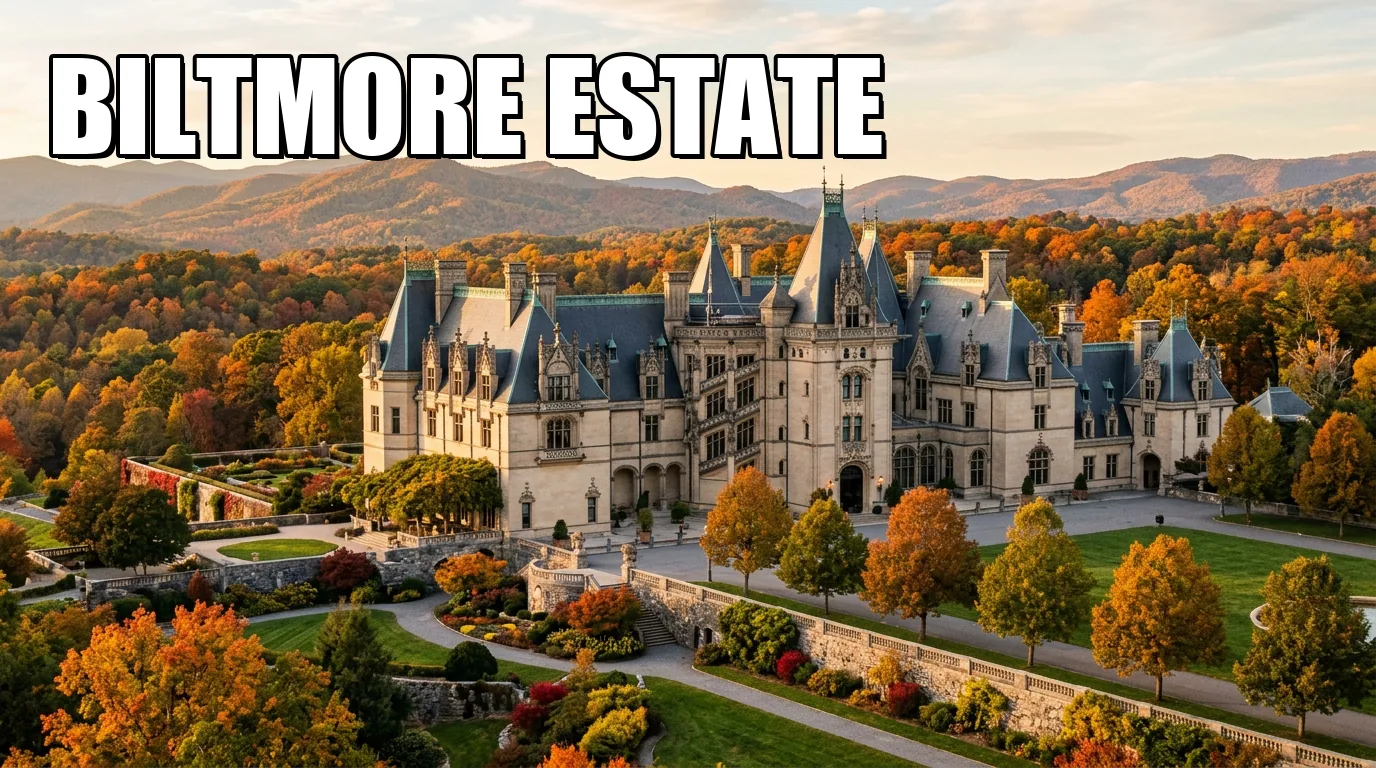
Semiquincentennial redaction research image

The 250th cycle is not just programming. It is a live argument over who stays named and visible in public history.

Climate triage research image

Climate pressure has already moved preservation beyond the old “save it at all costs” script.

The 46-Unit Research Map

The current Maison umbrella report sits on eight flagship studies. They do not all use the same scoring model, but together they show where the editorial and structural pressure is already visible. The chart below tracks how many scored units each study covered. Counts are useful here because they show breadth without pretending the frameworks are interchangeable.

Scored Units Covered By Current Maison Flagship Research

Haunted Hospitality Index
8
Semiquincentennial Redaction Index
6
Victorian House Tour Index
6
House Museum Interpretation Index
6
Screen-Tourism Friction Index
5
Historic-Site Triage Matrix
5
Historic Tax Credit Revival Index
5
Whole-History Access Index
5 scored + 1 comparison

That distribution matters because it pushes against a common lazy summary of the field. The current pressure is not only on haunted hotels or only on politically contested federal sites. It reaches house museums, film locations, downtown rehab projects, public memorials, and shoreline landscapes. The field is structurally wider than most media treatment suggests.

The 250th Is No Longer A Celebration Story

The Semiquincentennial Redaction Index was built because the 250th-anniversary cycle had already stopped looking like a simple commemorative beat. By May 18, 2026, the strongest pattern was not patriotic programming. It was pressure on what the public is still allowed to see named, mounted, and left in place.

The President’s House Site in Philadelphia became the clearest case because the conflict moved beyond argument and into literal subtraction. Panels naming the nine people enslaved by George and Martha Washington were removed in January 2026. A federal court ordered restoration in February. That sequence matters because it turned the usual abstract language of “memory debates” into something legible at visitor level. A person could arrive on site and see that the story had physically changed.

Stonewall National Monument showed a related problem in symbolic form. The fight over the permanent Pride flag was not a side issue. It was a direct argument over whether the symbolic layer of public memory would remain visible under the same federal umbrella that claimed to protect the history itself. Selma, Glacier, Brown v. Board, and Grand Canyon broadened the map. Once those cases were placed together, the pattern was hard to miss: the 250th was operating less like a harmless celebration and more like a stress test for whole-history interpretation.

This matters for reporters because the usual anniversary frame is too clean. A good 250th story in 2026 is not “what events are planned?” It is “what exactly has to be defended for the public story to remain intact?” The Maison redaction work exists to keep that sharper question on the table.

Front Rooms, Side Tours, And The Fight Over Whole History

The access and interpretation studies pushed the same point from a different direction. A site can say all the right things on paper and still keep its hardest material operationally marginal. The real question is not whether slavery, labor, service, or conflict are mentioned somewhere. The real question is where they sit in the visit.

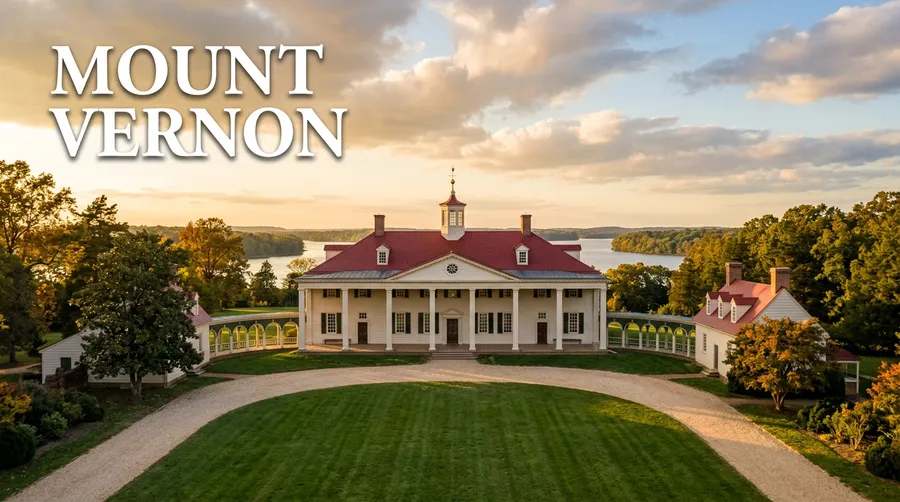
The Whole-History Access Index asked whether hard history appears inside the base visit or gets peeled off into separate ticket layers, special tours, or secondary exhibit rooms. Whitney Plantation, the National Memorial for Peace and Justice, and Manzanar showed what unavoidable whole-history access looks like. They do not treat the hard story as a specialist add-on. It is the visitor experience. Mount Vernon and Monticello showed a more layered model: substantial progress, but still a visible hierarchy between what every visitor gets and what the most motivated visitor buys or seeks out separately.

The House Museum Interpretation Index and the Victorian House Tour Index made a related argument at house scale. Gibson House Museum, Whitney Plantation, Mount Vernon, and Monticello performed well when the house was treated as a working system. Pabst Mansion sat in a more gated middle. Rosson House and several Victorian-tour properties showed how easy it still is for the sector to fall back on façade-first tourism: polished rooms, aesthetic admiration, and only partial visibility into the labor and service systems that made the place run.

This is not just a curatorial preference. It is an operating choice. If kitchens, service passages, enslaved labor, staff routines, or system-level history remain optional, then the institution is still asking the visitor to consume a cleaned front-room version of the past. The strongest Maison work in this area keeps returning to the same standard: whole-history access begins when the hardest material stops behaving like a premium side product.

High-Intensity Cases Already Visible In Five 10-Point Maison Frameworks

Haunted commercialization cases scoring 8-10
3
Screen-friction cases scoring 8-10
3
Redaction cases scoring 7-10
3
Climate-triage cases scoring 7-10
4
HTC-revival cases scoring 7-10
5

This chart uses only the Maison frameworks that run on 10-point scales. The access and interpretation studies use different models, so they are excluded here rather than forced into a fake comparison.

Climate Triage Replaces The Old Preservation Script

The Historic-Site Triage Matrix may be the hardest Maison piece for the sector to absorb because it takes away one of preservation’s favorite illusions: that every important site can be kept in place if only enough people care. By May 18, 2026, the stronger question was already different. What exactly is being defended: the structure, the shoreline, the visitor route, or the archive?

MRDAM in coastal Louisiana scored at the top because it makes the managed-loss logic explicit. This is not a story of permanent victory over water and land loss. It is a story of mitigation archaeology, documentation, and knowledge capture in landscapes expected to keep disappearing. Werowocomoco scored just below that top line because the site is already in selective-fortification territory. Shoreline work is not a symbolic gesture there. It is a present-tense management response to ongoing erosion at one of the most consequential Indigenous political centers in the Chesapeake.

Assateague and Cape Hatteras make the public-facing side easier to grasp. Once access routes and visitor infrastructure start moving, the old public vocabulary starts to fail. People still like to ask whether a place was “saved.” But a relocated facility, a moved lighthouse, or a shifted shoreline tells a different story. A site can survive only by changing where it is, how it is approached, or what part of the experience remains physically available.

The value of the triage framework is that it stops treating retreat as moral failure. Sometimes the responsible move is fortification. Sometimes it is relocation. Sometimes it is documentation because the physical baseline is already gone. The old preservation script was binary: saved or lost. The climate script is operational: hold, move, mitigate, or document.

Old heritage assumptionWhat the 2026 research base shows instead
Historic value naturally produces public access.Access is often gated by demand, routing, room rules, waivers, timing windows, or premium booking layers.
Important sites are mainly preserved by admiration.Important sites are often preserved, repurposed, or documented through capital stacks, triage plans, and hard operating choices.
Difficult history, once acknowledged, sits securely in place.Named stories, symbols, and panels remain vulnerable to review, rollback, removal, and legal fight.
Visitors mostly consume history as interpretation.Visitors increasingly consume history as a product bundle with pricing, route control, scarcity, and operating friction.
Climate adaptation means strengthening what is already there.Climate adaptation now includes relocation, retreat, mitigation archaeology, and managed loss.
A beautiful house tells its own story.Without deliberate interpretive work, the front rooms can hide the labor, systems, and social hierarchy that made the house function.

Capital Stacks Decide Which Buildings Get To Survive

The Historic Tax Credit Revival Index pushes the preservation story into its least romantic but most decisive territory. The federal Historic Tax Credit is not background policy. It is one of the clearest reasons whole districts and major buildings still have a second life at all. The FY2024 layer in the Maison research base is blunt: $6.8 billion in annual rehabilitation investment, 116,000 jobs, $257.8 billion in total leveraged rehabilitation investment through FY2024, and an estimated federal tax take that now exceeds the estimated inflation-adjusted credit cost.

Those numbers matter because they change the tone of the preservation argument. This is not just about heritage sentiment. It is about whether a building can absorb risk and become usable again. The Owyhee in Boise scored as survival infrastructure because the project did not simply beautify a beloved landmark. The tax-credit stack helped make a difficult, risk-heavy reuse deal possible and coincided with a visible district-level spillover story. Marshalltown and Tyler matter for a different reason: they show that the program’s strongest narrative is not limited to superstar coastal markets. It is also a small-city and corridor tool.

The capital-stack lens also clarifies why some kinds of sites move faster than others. A downtown hotel shell, a mixed-use block, or a former station can often find a path back through rehab finance because the reuse outcome is legible to lenders, developers, and city boosters. A house museum without a strong operating model has a much narrower lane. That does not make it less important historically. It does mean the survival logic is different.

Recurring Cross-Over Properties Matter More Than Isolated Examples

One of the clearest signals in the current Maison research base is repetition. When a property shows up across multiple frameworks, it usually reveals more than a one-off anecdote ever could. These repeat appearances help identify where the pressures overlap and where the sector’s most revealing operating conflicts are concentrated.

PropertyWhere it reappearsWhat the overlap reveals
The Stanley HotelHaunted hospitality, screen-tourism frictionCommercial lore and media fandom reinforce each other, but only because the property has built strong operating fences around both.
Mount VernonWhole-history access, house-museum interpretationThe estate shows how a major national landmark can expand the story of slavery without fully escaping layered access and symbolic-house gravity.
MonticelloWhole-history access, house-museum interpretationThe site is strongest when it integrates slavery into the core narrative, but it still exposes how deeper interpretation can remain segmented into premium or specialty structures.
Gibson House MuseumVictorian house touring, house-museum interpretationIt is a useful contrast case because one framework penalizes the limited spatial reveal while the other rewards the strength of whole-house interpretive logic.
Pabst MansionVictorian house touring, house-museum interpretationThe mansion keeps landing in the middle because it offers real depth, but still shows what a partly gated decorative-core model looks like in practice.
Whitney PlantationWhole-history access, house-museum interpretationWhitney is the clearest proof that the hardest history can be made unavoidable without hiding behind side-room framing.

The Better Questions For Reporters And Editors

If this report has one practical use beyond Maison’s own research layer, it is to improve the questions that get asked about historic places. Too much coverage still stops at mood, beauty, popularity, or broad mission statements. The better questions are operational.

  • What exactly is being sold? A room, a route, a premium window, a ghost, a screen fantasy, or a whole history?
  • What part of the visit is default and what part is gated? Hard history in the base ticket says something different from hard history in the premium tour.
  • What has to be protected first? The shoreline, the guest floors, the residents, the archive, the symbolic layer, or the capital stack?
  • What disappears if the current operating model fails? Sometimes it is the building. Sometimes it is the story. Sometimes it is public access.
  • Which repeated case tells the bigger truth? Cross-over properties often reveal more than isolated examples because they sit under more than one pressure at once.

The best heritage reporting in 2026 will not look only for romance, scandal, or trend language. It will ask how public memory is being managed on the ground.

Method, Scope, and Limits

This umbrella report synthesizes eight Maison flagship studies current as of May 18, 2026. The combined base includes 46 scored units and one additional named comparison point in the whole-history work. Those studies do not all use the same framework. Some run on 10-point scales. Others use 100-point scoring or tier logic built around access and interpretation. For that reason, this report compares operating pressures, not raw scores across unrelated systems.

The report is broad but not exhaustive. It is not a national census of all American heritage sites. It is a structured synthesis of the strongest Maison case work already in hand. The reason to trust it is not statistical totality. The reason to trust it is that the same operational patterns keep appearing in materially different settings: haunted hotels, private fandom sites, federal memory conflicts, shoreline landscapes, and tax-credit-backed rehabs.

One more limit matters. Repetition inside the dataset is not a bug. A property such as the Stanley Hotel, Mount Vernon, Monticello, Gibson House Museum, or Whitney Plantation may surface under more than one lens because it actually sits under more than one pressure. That is part of the story, not contamination of it.

Selected Maison Research Base

This report is built on the current Maison research layer. For the underlying frameworks and full case-by-case work, start with these pages:

Frequently Asked Questions

What is the main argument of The State of Heritage Travel 2026?
The report argues that American heritage travel is no longer best understood as preservation plus tourism. It now operates through six recurring pressures: monetization, fandom friction, commemorative-political pressure, climate triage, capital-stack pressure, and interpretive access control.
Is this article a travel guide?
No. It is an umbrella report built from eight Maison flagship studies and 46 scored units. The goal is to explain how historic places are being packaged, gated, rewritten, triaged, and financed.
Why do the same sites appear in more than one Maison study?
Because some properties sit under more than one operating pressure at once. The Stanley Hotel, for example, matters both as a haunted-hospitality product and as a screen-tourism friction case.
What does the article mean by whole-history access?
It means asking whether the hardest parts of a site’s story appear inside the base visit or get pushed into optional tours, premium products, or side-room interpretation.