What This Article Is Actually Measuring
This is not a remake of somebody else's haunted-hotel roundup. It is a Maison-built 2026 audit of how historic hotels are currently turning ghost lore into bookable inventory, seasonal packages, in-house merchandising, and fenced-off guest experiences.
The distinction matters. A lot of haunted-hospitality coverage still treats the category as if it were a pile of colorful anecdotes. That is no longer enough. By 2026, the stronger properties in this niche have moved far beyond ambient storytelling. They have product pages, operating rules, demographic segmentation, retail tie-ins, and explicit tactics for keeping paranormal customers from disturbing non-participating guests.
Maison reviewed a small but high-signal source set on May 18, 2026: current official hotel pages, current official package pages, and one institutional background source where it helped establish industry context. The goal was narrow and deliberate. We were not trying to prove ghost revenue in dollar terms. We were trying to identify which properties have already built the visible infrastructure of a haunted-hospitality business.
Maison rule for this index
A ghost story by itself does not earn a serious score. A hotel only starts to rank once the lore turns into a commercial system: ticketed tours, age gates, third-party booking instructions, packaged add-ons, room-specific branding, proprietary retail, or other public-facing operating signals.
That rule is what makes this a citation story instead of a mood piece. Once a hotel's paranormal identity has a booking call to action, a price, an age floor, a merch shelf, or a recurring calendar slot, the conversation has moved from folklore to operations. That is the line this article tracks.
The Maison Scoring Model
The first version of the Maison Haunted Hospitality Index uses a 10-point scale. It does not measure quality, and it does not measure whether a hotel is "more haunted" in any literal sense. It measures how completely a property has commercialized the haunted layer in public.
| Index Level | Score Range | What Maison Is Seeing |
|---|---|---|
| Passive Lore | 1-2 | The hotel openly repeats ghost stories, but the public commercial surface is still thin. The lore behaves more like brand texture than a serious product line. |
| Seasonal Packaging | 3-4 | The property leans into October with teas, cocktails, or seasonal events, but the haunted offer is still episodic rather than a full inventory stack. |
| Outsourced Programming | 5-6 | The hotel markets the haunted experience directly, but hands key operating burdens to outside tour partners or coordinators. |
| Structured In-House Product | 7-8 | The property runs a formal paranormal product with public detail: duration, age limits, route rules, pricing, ticketing, or a separate landing page. |
| Full Commercial Ecosystem | 9-10 | The haunted layer spans multiple formats at once: different audience tiers, proprietary retail or food-and-drink, room or character branding, and durable supporting lore. |
That structure is intentionally conservative. A hotel does not get extra credit because the story is old, tragic, or famous. It gets extra credit only when the commercial apparatus becomes visible and repeatable. In practice that means the public page surface matters more than folklore density.
The Maison Haunted Hospitality Index 2026
The first Maison audit is not a national census. It is a high-signal pilot built from properties where the official surface already reveals something concrete about how the haunted layer works. The scores below are Maison's interpretation of current public signals, not claims made by the hotels themselves.
Maison Haunted Hospitality Index 2026: first-pass scores
| Property | Maison Score | What Drives The Score | Current Model |
|---|---|---|---|
| 1886 Crescent Hotel & Spa Eureka Springs, Arkansas | 10/10 | Multiple tour tiers, a kids product, an adult expert product, a midnight investigation, an on-property morgue narrative, and a named cocktail linked to a house spirit. | Full-spectrum paranormal ecosystem. |
| Hotel del Coronado San Diego, California | 9/10 | Room-specific lore, a deeply institutionalized Kate Morgan narrative, an official book sold through the hotel gift shop, and a long-form paranormal legitimacy story. | Heritage-luxury lore with retail and room branding. |
| The Stanley Hotel Estes Park, Colorado | 8/10 | Clear pricing, duration, tour caps, age gates, separate investigations, and explicit route rules protecting regular guests. | Structured in-house attraction model. |
| The Sayre Mansion Bethlehem, Pennsylvania | 7/10 | Package logic, periodic tours, basement-programming potential, and TV-validated ghost branding layered onto a boutique inn. | Boutique overnight-plus-experience bundle. |
| La Fonda on the Plaza Santa Fe, New Mexico | 6/10 | A visible ghost-tour package exists, but the property relies on an outside coordinator and asks guests to arrange the paranormal layer separately. | Outsourced programming with on-site marketing capture. |
| Fairmont San Francisco San Francisco, California | 4/10 | Elegant seasonal haunted packaging and a "haunting with a heart" narrative, but not the same public operating depth as Stanley or Crescent. | Seasonal prestige packaging. |
| The Wort Hotel Jackson, Wyoming | 2/10 | A highly usable internal ghost identity in Bob the engineer, but little evidence of a dense public paranormal product line. | Staff-culture lore, lightly commercialized. |
| Deerfield Inn Deerfield, Massachusetts | 2/10 | Playful resident spirits and periodic investigations help the legend circulate, but public infrastructure remains thin. | Passive lore with occasional event support. |
The most important thing in that table is not who ranked first. It is the shape of the upper tier. The best-scoring properties do not simply describe ghosts more vividly. They have multiple ways to sell the same haunted identity to different segments of the audience. That is the hallmark of a mature hospitality product, not just a spooky story.
How the strongest current properties are differentiating themselves
Three Revenue Layers Other Coverage Keeps Missing
The haunted-hotel conversation gets sharper once you stop asking whether a property is haunted and start asking how many commercial layers the lore has acquired. In the first Maison index, three layers appear over and over again.
| Revenue Layer | What It Looks Like In Public | Best Current Example |
|---|---|---|
| Primary paranormal inventory | A bookable tour, investigation, or package with explicit product identity. | The Stanley Ghost Tour; Crescent's multiple ghost products; La Fonda's ghost package. |
| Secondary spend | Food, drink, books, or add-ons that monetize the same story without requiring a full guided experience. | Theodora's Spicy Secret at Crescent; Kate Morgan book sales at Hotel del. |
| Merchandising of space | A room, basement, morgue, floor, or named ghost that localizes the lore and makes it marketable. | Hotel del's Kate Morgan room mythology; Crescent's morgue; Stanley's tightly controlled paranormal route. |
That framework is a better way to read the market than the usual "most haunted" language. Plenty of hotels have old stories. Far fewer have all three layers at once. Once those layers stack, the haunted identity becomes resilient. A guest can buy the full experience, buy a smaller version of it, or simply remember a branded room or spirit and carry the story away.
This is also why the upper tier of the index is not random. The top properties have found ways to sell lore to multiple levels of commitment. The skeptic can buy a cocktail. The curious traveler can buy a tour. The committed paranormal guest can buy an investigation or a deeper night product. That is not folklore drift. That is merchandising discipline.
The Stanley Model: Operational Fencing Before Atmosphere
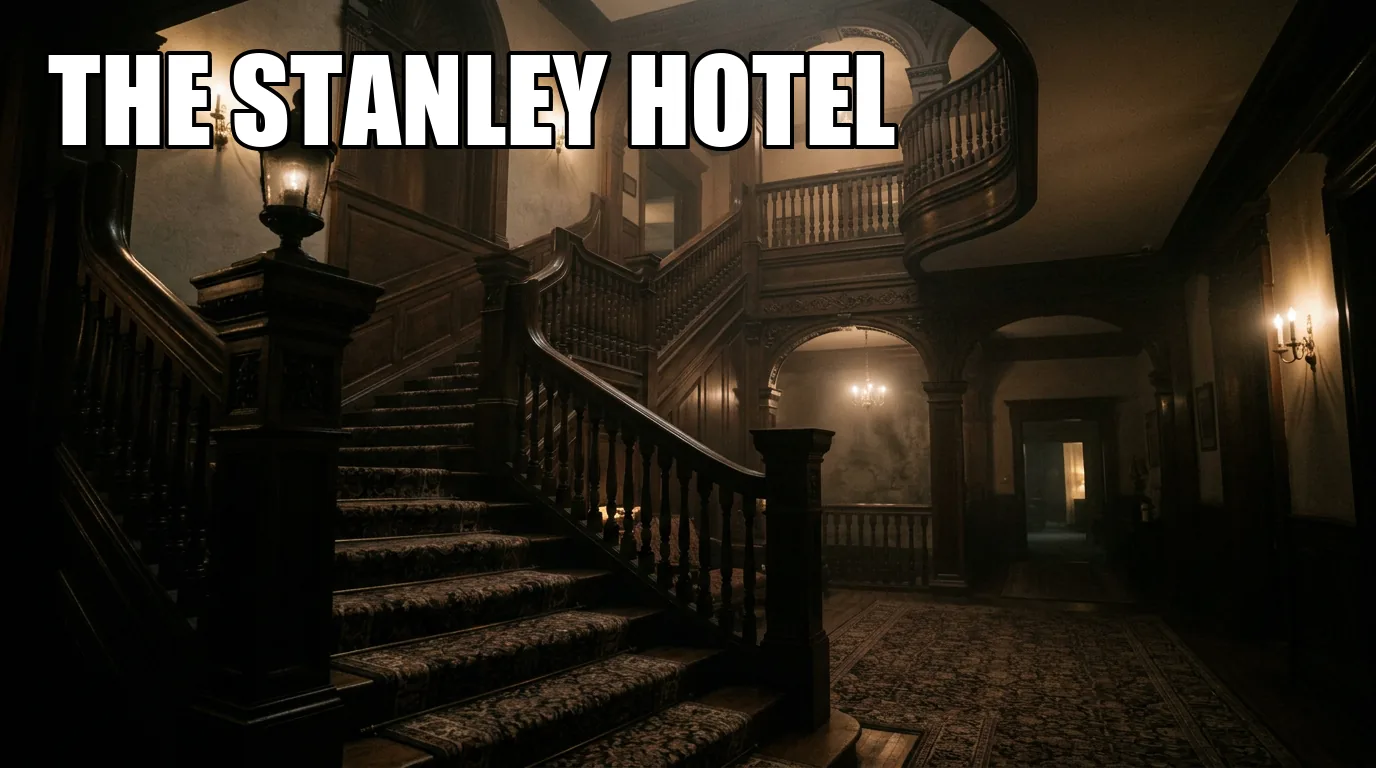
If one property deserves to be studied by other hotel operators rather than by ghost hunters, it is The Stanley Hotel. The paranormal layer is highly visible, but what really matters is the operating structure behind it. The current official ghost-tour page presents a 60-minute night tour at $30 per person, with a 20-person limit, advance reservations recommended, and an 8-plus age floor. The separate Paranormal Investigations product moves to a 3-hour format with a 13-plus age restriction.
Those are not decorative details. They tell you exactly how the property thinks about risk, pacing, staffing, and audience control. A haunted story without operational rules is just branding. A haunted story with duration, capacity, and age limits is a managed attraction.
The Stanley's most important public statement may be the bluntest one: the ghost tour will never go into guest rooms and will never go onto guest floors. That line should be read as a business decision, not just a courtesy note. The hotel is saying, in plain language, that paranormal revenue is welcome only so far as it does not degrade the core lodging product for ordinary overnight guests.
That is the heart of the Stanley model. It does not simply monetize its reputation. It fences it. The route is contained. The customers are screened by age. The experience is time-boxed. The hotel separates the thrill-seeking audience from the sleep-seeking audience and makes the boundary part of the product design.
The Stanley is still the best property-level case study for anyone trying to understand the difference between a ghost story and a formal haunted-hospitality operating model. Readers who want the place-first version can continue to Maison's Stanley ghost tour guide.
The broader lesson is not "Stanley is spooky." The lesson is that Stanley has product architecture: different paranormal intensities, different time commitments, and explicit guardrails around where that traffic can go.
That is why Stanley matters to a 2026 index. It gives public visibility to the machinery that many other hotels keep buried. Once you can see the machinery, the rest of the market becomes much easier to read.
The Crescent Model: Full Demographic Tiering
The 1886 Crescent Hotel & Spa scores at the top of the first Maison index because it does something more ambitious than simply run a haunted tour. It builds a paranormal ladder for different age groups and intensities. According to the current official source set used for this audit, Crescent's ghost-tour inventory includes a 45-minute Kids Ghost Tour for ages 5 through 12, an expanded adult-facing experience, and a Midnight Investigation staged in the property's morgue.
That matters because it shows a hotel thinking in audience segments, not in one-size-fits-all lore. A property that offers a children's format, a standard or expanded format, and a late-night investigative format is doing the same kind of menu-building that successful museums, attractions, and ticketed tours do in other categories. The haunted layer is being diversified.
The Crescent also captures the second-spend layer cleanly. It does not merely let the story sit on the tour route. It extends it into food-and-drink with a named cocktail, Theodora's Spicy Secret, tied to one of its signature spirits. That is exactly the kind of detail most mainstream coverage skips, and it is exactly the kind of detail that reveals a mature commercial ecosystem.
Once a spirit has both a tour narrative and a beverage identity, the story has crossed into repeatable hospitality packaging. The property can make money from believers, skeptics, casual guests, and people who only want to take a themed photo at the bar. That is why Crescent edges above Stanley in this first Maison pass. Stanley is cleaner operationally. Crescent is broader in audience design.
Crescent's real strength is range. It can sell a room legend, a family-friendly haunted product, an adult late-night investigation, and a themed drink without needing the guest to choose only one relationship to the property. For the room-specific angle, see Maison's Room 218 breakdown.
The bigger takeaway is national: once haunted hospitality starts segmenting by age, tone, and depth, it stops behaving like a novelty and starts behaving like a durable experience business.
Hotel del Coronado Sells Legitimacy As Much As Fear
Hotel del Coronado is one of the most instructive properties in the index because it shows that a luxury hotel does not have to imitate Stanley or Crescent to build a strong haunted business. Its advantage is different. It does not lean as heavily on visible age-gated ticket structure. Instead it sells a blend of room mythology, cultural legitimacy, and proprietary physical merchandise around the Kate Morgan story.
The current official source set used in this audit points back to a major internal legitimation move: a 1992 parapsychology assessment led by Christopher Chacon, described as a 12-month investigation involving 10,000 hours of continuous monitoring and interviews with 1,100 people. Whether a skeptical reader accepts any paranormal conclusion is almost beside the point. The hotel's haunted narrative has been given an aura of seriousness and institutional memory.
Then comes the retail layer. Hotel del does not only tell the story of Kate Morgan; it moves guests toward the Est. 1888 gift shop to buy Beautiful Stranger: The Ghost of Kate Morgan and the Hotel del Coronado. That is not just lore preservation. It is proprietary storytelling turned into physical merchandise on property.
This is what makes Hotel del such a strong score. The ghost does not live only in tour chatter. She lives in room-specific demand, in the store, in the hotel's own explanatory history surface, and in a long-running institutional narrative that makes the legend feel anchored rather than improvised.
For a flagship article, this case matters because it broadens the business model. Not every high-scoring property needs a complex ladder of guided experiences. Some can build a powerful haunted micro-economy around branded historical legitimacy and proprietary material sold inside the hotel itself.
The Offloading Model: Why La Fonda Still Scores Well
La Fonda on the Plaza is useful because it proves that a hotel can monetize a haunted identity without fully internalizing operations. In the current Maison source set, the property markets a ghost-tour package but instructs guests to coordinate directly with outside tour director Ken Ortolon at least 72 hours before arrival.
That makes La Fonda a strong example of what might be called the offloading model. The hotel keeps the haunted hook inside its own package surface, gains the conversion value of a paranormal angle, and still shifts key operating burdens to an external specialist. Staffing, route design, and perhaps some reputational risk are pushed outward even though the sales narrative remains on-property.
This is a meaningful middle tier in the market. A lot of historic hotels may want haunted demand without wanting to become full attraction managers. La Fonda shows one way to do that. The property captures the marketing benefit of the lore while outsourcing the most complicated parts of the experience.
That is why outsourced programming should not be dismissed as weak. It is a real commercial model. The score is lower than Stanley's because the operational sophistication is less internal. But it is still well above passive lore because the paranormal layer has clearly crossed over into package design and guest decision-making.
What The Low-Scoring Hotels Reveal
The lower end of the first Maison index is just as instructive as the top. A property like The Wort Hotel, with its beloved ghost engineer Bob, shows that a ghost can be commercially useful even without a dense ticketed apparatus. Bob works because he gives the hotel a back-of-house myth that fits the building's physical reality. Old systems, a legendary fixer, current engineers who still invoke him: that is extremely effective branding, even if it has not been expanded into a multi-layer consumer product.
Deerfield Inn sits in a similar zone from a different angle. The lore is active, the resident spirits are memorable, and the property has enough ghost identity to keep the story circulating. But the public product surface is still relatively light. That keeps the score down, not because the story is weak, but because the operational stack remains thin.
Fairmont San Francisco is the most important bridge case. It lands in the middle because it demonstrates seasonal prestige packaging rather than a hard-ticket attraction system. The property's ghost narrative is elegant, soft, and highly brand-safe. The HHA context used in this audit describes a "haunting with a heart" and a spooky seasonal afternoon tea. That is commercialization, but it is commercialization tuned for luxury, not for investigation culture.
Taken together, these lower-scoring cases clarify an important point: the Maison index is not ranking scariness. It is ranking how far the hotel has pushed lore into visible commercial structure. Some properties want a full haunted ecosystem. Others want haunted atmosphere as an accent. Both are real. They are just different business choices.
Why 2026 Coverage Should Stop Talking About Ghosts As If They Are Free
The deepest mistake in most haunted-hospitality coverage is the assumption that the ghost story is basically free. In reality, once the story becomes a formal product, it drags real operational and strategic consequences behind it. Somebody has to decide whether children are allowed. Somebody has to decide which floors are off-limits. Somebody has to decide whether to staff a tour, outsource it, sell a room book, name a cocktail, or tie the experience to a specific character.
That is why the phrase bookable inventory matters so much here. The moment haunted lore enters that category, it stops being just a narrative asset. It becomes a planning problem and a margin opportunity at the same time. This is especially true for historic hotels because age, eccentric architecture, and irregular circulation patterns can all be reframed as paranormal texture instead of operational inconvenience.
That reframing is where the index earns its keep. It gives a newsroom, investor, hotel operator, or travel editor a better language for understanding the category. We are not looking at a random pile of spooky stories. We are looking at a niche within hospitality that has learned how to convert folklore into differentiated product design.
Method, Limits, and What Comes Next
This first Maison index is intentionally narrow. It uses current public signals, not private accounting. That means it cannot prove exact occupancy lift, ADR impact, package conversion rate, or direct revenue contribution from haunted programming. Anyone pretending otherwise would be inventing certainty the current public record does not support.
But the absence of hotel financials does not make the audit weak. It simply changes the level of the claim. Maison is not saying, "We know exactly how much money these ghosts make." Maison is saying, "We can already see which properties have built the visible machinery of a haunted-hospitality business and which ones have not." That is still a meaningful analytic distinction.
The next version of this index should get wider and more technical. It should capture whether the property runs a dedicated landing page, whether the paranormal product is ticketed in-house or outsourced, whether a named room or floor is used as a demand anchor, whether food-and-drink is part of the haunted stack, and whether the hotel publishes explicit operational boundaries. A later version could add shoulder-season timing, event cadence, and a stronger room-led field.
That is also where the media value grows. Once Maison has a larger dataset and repeatable scoring logic, the piece becomes more than a good article. It becomes a newsroom reference. Reporters can cite the score, lift a local angle, or compare one region's haunted-hospitality strategy to another's. That is the level this category should be covered at.
Selected Source Base For The First Maison Index
- The Stanley Hotel: The Stanley Ghost Tour
- The Stanley Hotel: Paranormal Investigations
- The Stanley Hotel: Paranormal Days calendar page
- 1886 Crescent Hotel & Spa official haunted-tour source set
- The Sayre Mansion: official about page
- La Fonda on the Plaza: official packages and property pages
- Hotel del Coronado: official paranormal-investigation and Kate Morgan source set
- Historic Hotels of America haunted-hotel institutional context
- Ghost-tourism socio-spatial analysis methodology source