This analysis measures the operational commitment of major American historic sites to presenting a whole history to the general visitor. The central question is not whether a site acknowledges difficult chapters of its past, but how and when it does so. The Maison Whole-History Access Index evaluates whether histories of slavery, incarceration, labor, and racial terror are integrated into the standard, general-admission visitor journey, or if they are segmented into specialist tours, premium tickets, and secondary exhibits.
The index is built on a comparative analysis of a pilot sample of five scored U.S. sites, plus the Tenement Museum as an unscored comparison, selected to represent different models of historical interpretation: plantation museums, presidential estates, national monuments, and sites of conscience. The assessment is based on publicly available visitor information, including ticketing structures, tour descriptions, and site layouts. The core argument is that the most effective sites make their most challenging histories unavoidable, embedding them within the physical and programmatic design of the core visitor experience.
The sites scored in this 2026 pilot index are Whitney Plantation, the National Memorial for Peace and Justice, Manzanar National Historic Site, Mount Vernon, and Monticello. The Tenement Museum appears only as an unscored comparison point because the current research pass did not capture a strong enough source base for a full ranking.
Methodology: Scoring Whole-History Access
The index evaluates sites on a 100-point scale across five weighted categories that reflect the visitor's journey from purchasing a ticket to navigating the physical space. The methodology prioritizes the experience of a general-admission visitor, assessing how directly they encounter the site's complete history without needing to seek out specialized content or purchase premium access.
The scoring is allocated as follows:
- Inclusion in Base Visit (35 points): The highest weight is given to whether the site's most difficult and central historical narratives are a mandatory component of the standard, entry-level tour or general admission experience.
- Physical Footprint and Visibility (25 points): This category assesses how much of the physical site—through memorials, reconstructions, dedicated exhibit space, or landscape design—is dedicated to making hard history visible and unavoidable.
- Ticketing Simplicity (15 points): Sites score higher for simple, unified ticketing structures that grant access to the whole history. Points are deducted for multi-tiered systems where deeper historical context requires a separate, often more expensive, ticket.
- Interpretive Specificity (15 points): This measures whether the interpretation moves beyond generalities. Sites score higher for using specific data, personal narratives, documentary evidence, and artifacts that make history concrete for the visitor.
- Free or Low-Barrier Learning Signals (10 points): This category awards points for signals of broad public access, such as free admission, extensive no-paywall digital resources, or the inclusion of free-to-access core exhibits and films.
Based on their total score, sites are classified into one of four tiers: Unavoidable Whole-History Access (85-100), Strong Integration (70-84), Visible but Layered (55-69), and Side-Room History (below 55). This framework provides a clear measure of a site's operational choices in presenting its past.
The Integrated Model: History as the Core Experience
The highest-scoring sites in the index are those that have structured their entire visitor experience around a direct and unflinching confrontation with difficult history. For these institutions, the hard history is not a component of the visit; it is the visit. The National Memorial for Peace and Justice, Manzanar National Historic Site, and Whitney Plantation exemplify this integrated approach, each earning a rating of Unavoidable Whole-History Access.
The National Memorial for Peace and Justice in Montgomery, Alabama, is perhaps the purest example of this model. The site's official materials and its physical reality are one and the same: the curriculum is the architecture. The memorial uses over 800 corten steel monuments, each representing a U.S. county where a racial terror lynching occurred. The visitor path is a prescribed journey that begins with the monuments hanging at eye level and culminates with them suspended overhead, creating a powerful and physically oppressive sense of scale and loss. There is no alternative route or gentler narrative to choose. The confrontation is the purpose.
Similarly, Manzanar National Historic Site in California, operated by the National Park Service, hardwires the history of Japanese American incarceration into its core. Visitor materials direct guests to Block 14, where reconstructed barracks, a mess hall, and a women’s latrine make the loss of privacy and the stark reality of institutional life concrete. The site avoids abstraction by focusing on the tangible. The regular, free screening of the 22-minute documentary Remembering Manzanar in the visitor center further ensures that every visitor has access to a baseline of historical context. As an NPS site, its no-paywall access model makes it a benchmark for low-barrier public history.
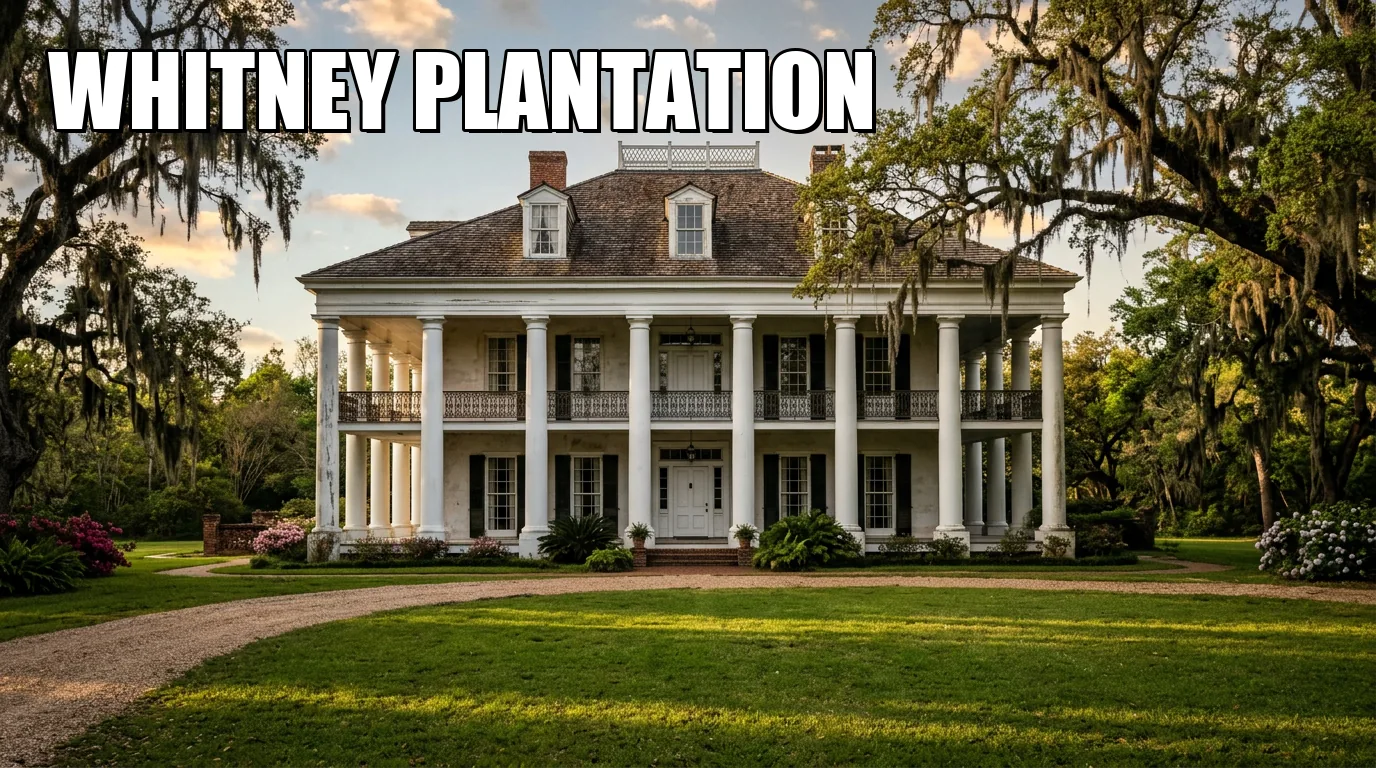
Whitney Plantation in Louisiana distinguishes itself by being, according to its own materials, the only plantation museum in the state focused exclusively on the lives of the enslaved. The standard $25 self-guided audio tour takes visitors on a 14- or 15-stop route across the 200-acre property, centering the experience on memorials and historic structures from the perspective of the enslaved. Free exhibits on the transatlantic slave trade and Louisiana slavery are included in general admission, reinforcing the core mission. While access to the upper floors of the main house requires a separate guided tour, the fundamental experience delivered to the vast majority of visitors is one of whole history, not an ancillary add-on.
The Hybrid Model: Presidential Estates and Layered Access
In contrast to the fully integrated sites, the nation’s most famous presidential estates, Mount Vernon and Monticello, represent a hybrid model. At these sites, the history of slavery is explicitly acknowledged as central to their operation, yet the visitor's access to that history is often layered and segmented through ticketing and tour structures. Both sites score well on including slavery in the base visit but lose significant points for ticketing complexity, which creates a hierarchy of historical access.
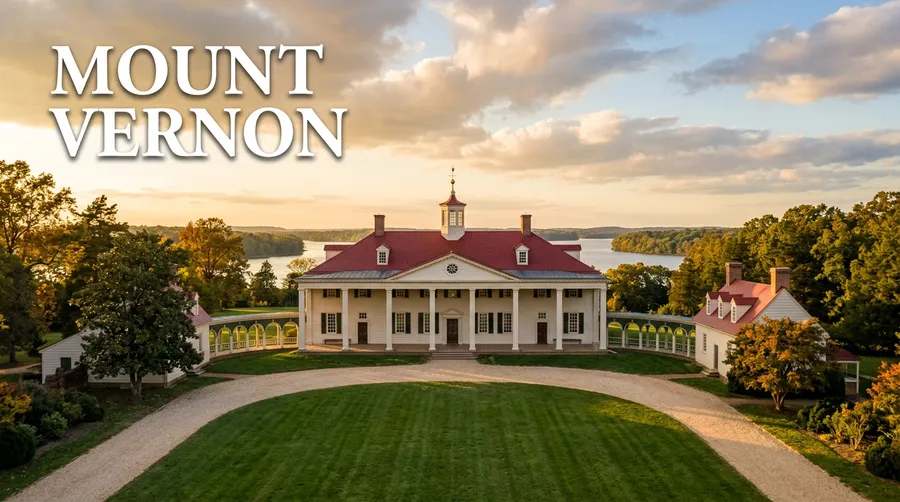
At George Washington's Mount Vernon, general admission covers the expansive estate, including the grounds, outbuildings, and museums where interpretation explicitly addresses the labor of the hundreds of enslaved people who lived and worked there. The site's leadership has made a clear commitment to treating slavery as central to the plantation's function. However, the system is operationally segmented. Access to the iconic mansion itself requires a separate, timed ticket. This structure, while logistically understandable for crowd control, creates a division in the visitor experience. The main draw—the house—is separated from the broader context, placing it on a different tier of access than the stories of the enslaved, which are integrated into the general estate experience.
Thomas Jefferson's Monticello demonstrates an even more pronounced segmentation. The standard offering, the $42 Highlights Tour, is a 45-minute guided experience that covers Jefferson, his architecture, and the history of slavery on the plantation. This ensures every visitor receives a baseline of whole-history interpretation. However, the model quickly stratifies. A deeper, 90-minute Behind the Scenes Tour offers access to the upper floors and the celebrated Dome Room for a premium. More significantly, a dedicated 2.5-hour From Slavery to Freedom tour exists as a separate product. While the existence of this tour is a testament to the institution's investment in this history, framing it as a specialized, longer, and distinct offering categorizes it as an add-on for the particularly motivated visitor rather than a fundamental part of the standard experience. This is the definition of a segmented model: the hard history is available, but it requires a second decision and, often, a separate transaction.
Physicality and Place: How Design Dictates the Narrative
The physical design of a historic site is its most powerful interpretive tool. The layout of paths, the reconstruction of buildings, and the placement of memorials can either guide a visitor toward a difficult truth or allow them to bypass it. The highest-scoring sites in the index leverage their physical footprint to make history tangible and unavoidable.
Manzanar National Historic Site provides a master class in this approach. By reconstructing the stark, communal women’s latrine and a crowded mess hall in Block 14, the site moves the experience of incarceration from an abstract concept to a visceral reality. A visitor does not simply read about the loss of privacy; they stand in a space that embodies it. This use of reconstruction as a primary source of information is a deliberate choice to ground the historical narrative in physical experience.
The National Memorial for Peace and Justice achieves a similar outcome through monumental art and landscape architecture. The journey through the 800 steel columns is a choreographed experience of confrontation. The sheer number of monuments, their stark uniformity, and their changing elevation relative to the visitor are designed to evoke the scale and brutality of racial terror lynching. The open-air design makes the memorial a public space, but its structure leaves no room for interpretive ambiguity. The physical path is the argument.
Whitney Plantation uses its 200-acre landscape to tell its story. The self-guided tour directs visitors through a specific sequence of historic structures and modern memorials. The focus is not on the grandeur of the “Big House”—access to its upper floor is even restricted on the standard tour—but on the spaces inhabited and defined by the enslaved. This deliberate allocation of physical space and visitor time is a powerful statement of interpretive priority. By comparison, sites that relegate difficult histories to a single room or a small collection of text panels score lower in this category, as their physical design implicitly frames that history as secondary.
Ticketing and Tour Structure as Interpretive Barriers
A visitor's first interaction with a historic site is often its ticketing page. The structure of ticket options and tours sends an immediate signal about what the institution considers core versus optional. The index reveals a sharp divide between sites with simple, unified access and those with complex, multi-tiered offerings that can function as barriers to a complete historical understanding.
Manzanar's position within the National Park Service framework provides a model of low-barrier access. The core experience is free and open, removing financial considerations from the visitor's decision to engage with the site's difficult history. The National Memorial for Peace and Justice, while not an NPS site, is described as a public memorial, and its power lies in its singular, unified purpose. There are no “upgrades” to a more intense version of the memorial; the memorial itself is the complete experience.
Whitney Plantation’s $25 self-guided tour represents a clear, single-product offering for its primary experience. While not free, the price point provides access to the entire core narrative. The visitor understands that this ticket delivers the intended story. This contrasts sharply with the models at Mount Vernon and Monticello, where the visitor is immediately faced with a menu of choices. At Monticello, the existence of the specialized From Slavery to Freedom tour, while valuable, can inadvertently signal to the visitor of the standard Highlights Tour that they are receiving an incomplete or introductory version of that history. It segments the audience into those who are content with the overview and those willing to invest more time and money for the “real” story.
This segmentation is a critical finding of the index. When a site like Monticello offers a premium tour for its upper floors and a separate, long-form tour on slavery, it creates a hierarchy of knowledge. This model can be compared to that of New York's Tenement Museum, which has historically relied on a model of separate, apartment-specific guided tours. While effective for storytelling in confined spaces, this structure requires the visitor to choose which family's story to hear, knowing they will miss others. The operational challenge for all such sites is how to present a holistic narrative when the business model is built on partitioned access.
From Generalization to Specificity
The most impactful interpretation of history is specific. It uses names, dates, documents, and personal accounts to connect visitors to the past. Sites that score high on interpretive specificity move beyond broad statements about hardship and instead provide concrete evidence and focused narratives.
The National Memorial for Peace and Justice is built on a foundation of data. The inscription of each county and the number of victims on the 800 steel monuments is an act of radical specificity. It transforms a diffuse historical horror into a documented, verifiable catalog of places and events. The visitor is not just told that lynchings happened; they are shown where they happened, county by county.
At Manzanar, the 22-minute film Remembering Manzanar provides a crucial layer of specificity through firsthand accounts and historical footage. This documentary, shown regularly and integrated into the visitor center experience, ensures that the reconstructed buildings are populated with real stories and voices. It acts as an interpretive anchor, giving context to the physical environment.
Whitney Plantation's free exhibits on the transatlantic slave trade and Louisiana slavery supplement the main tour with specific historical context. By focusing exclusively on the experience of the enslaved, the entire interpretive framework is geared toward specificity—recounting the origins, labor, and lives of individuals rather than presenting them as a backdrop to the story of the plantation owner. This contrasts with a model where the lives of the enslaved are discussed only in relation to their enslaver, a common pitfall in older interpretive frameworks that the sites in this index are actively working to overcome.
The 2026 Index: Results and Rankings
The Maison Whole-History Access Index demonstrates that a historic site's commitment to telling its complete story is an operational choice, reflected in its ticketing, tour structure, and physical design. The analysis of the five scored sites reveals a clear distinction between those that integrate hard history into a single, unavoidable narrative and those that present it within a layered, hybrid model.
The results place three sites in the top tier of Unavoidable Whole-History Access, distinguished by their singular focus and integrated design. Two presidential estates fall into the middle tiers, reflecting their successful inclusion of difficult history but also their reliance on segmented access models that can dilute the impact for a general visitor.
| Site | Base Visit Inclusion (35) | Physical Footprint (25) | Ticketing Simplicity (15) | Interpretive Specificity (15) | Low-Barrier Signals (10) | Total Score (100) | Rating |
|---|---|---|---|---|---|---|---|
| National Memorial for Peace and Justice | 35 | 25 | 15 | 15 | 10 | 100 | Unavoidable |
| Manzanar National Historic Site | 35 | 25 | 15 | 15 | 10 | 100 | Unavoidable |
| Whitney Plantation | 35 | 25 | 13 | 15 | 7 | 95 | Unavoidable |
| Mount Vernon | 30 | 20 | 5 | 13 | 3 | 71 | Strong Integration |
| Monticello | 30 | 20 | 5 | 10 | 2 | 67 | Visible but Layered |