Architecture Styles

Unearthing America's 18th-Century Architectural Soul

Find Nearby Hotels

Book Flights

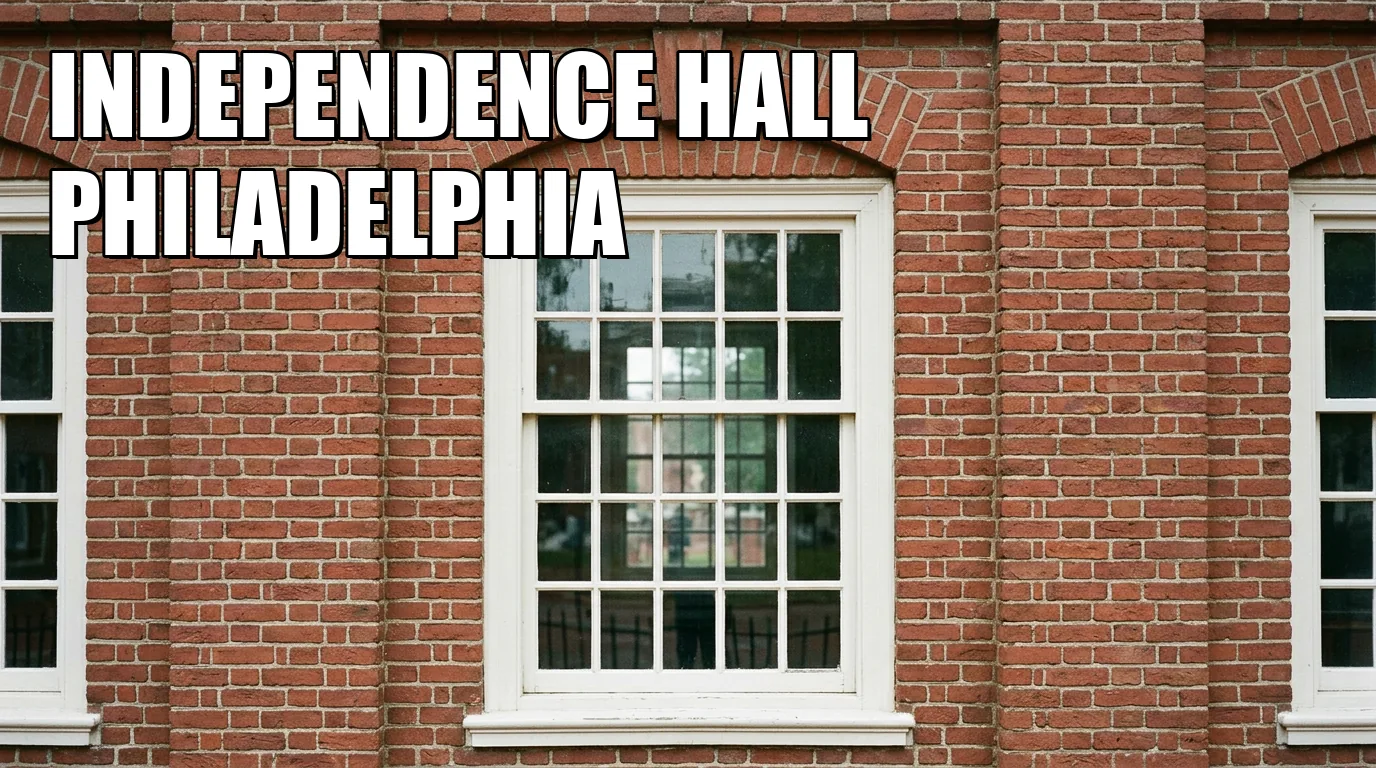
The past isn't merely a collection of dates and names; it’s etched into the very structures we inhabit and admire. For decades, I've crisscrossed the United States, not just seeing historic buildings but attempting to *feel* the ambitions, compromises, and sheer will that brought them into being. To truly understand 18th-century American architecture is to grasp the complex birth of a nation, seeing how European ideals were reinterpreted, adapted, and sometimes awkwardly forced onto a new landscape with nascent resources. It’s a study in evolving identity, from the imposing statements of colonial power to the subtle shifts towards a uniquely American aesthetic. Forget the dry textbooks; these buildings hum with stories, if you know where to listen. ### Philadelphia's Enduring Legacy: Inside Independence Hall Walking toward Independence Hall in Philadelphia, it’s easy to get swept up in the patriotic fervor. Flags wave, tourists mill about, and the weight of "birthplace of America" hangs heavy in the air. Yet, strip away the narrative for a moment, and you find a masterful example of American Georgian architecture, one that laid a foundational blueprint for public buildings across the nascent nation. Designed by attorney Andrew Hamilton and realized by master builder Edmund Woolley between 1732 and 1753, this wasn't just a state house; it was a grand statement, carefully proportioned with symmetrical facades, glazed headers, and those distinctive rubbed brick window jambs. What often gets lost in the rush to see the Assembly Room or the Liberty Bell (which, by the way, has its own fascinating, if slightly overplayed, narrative) is the sheer *quality* of the original craftsmanship. The effort to achieve classical proportions in brick and wood, without the vast resources of European patrons, speaks volumes about the colonists’ aspirations. It’s a building that projects authority and stability, a critical message for the Pennsylvania State House of its time. During peak season, particularly from May through September, expect significant crowds and mandatory timed tickets, which you absolutely must reserve in advance online. Arriving early on a weekday morning is your best bet for a more contemplative visit, allowing you a moment to truly absorb the silence of a room where giants debated. ### Westover Plantation: Virginia's Grand Statement, Beyond the Gates Virginia’s James River plantations offer a glimpse into a very different kind of ambition, and Westover Plantation stands out as a premier example of English Georgian architecture transplanted to American soil. You might expect another grand house, but Westover, constructed around 1730-1754, is a testament to the sophisticated tastes of William Byrd II, a man whose library contained more architectural treatises than most towns in the colonies. His copy of William Salmon’s *Palladio Londinensis* wasn't just for show; it was a guiding hand in the mansion's design, seen in its perfectly symmetrical red brick facade and paneled interiors. However, the true marvel, often appreciated only by those who linger, are the three elaborate wrought-iron gates. They aren't merely decorative; the birds woven into their intricate designs serve as a heraldic rebus—a visual pun—for the Byrd family name. It's a subtle flourish that speaks to an owner confident enough in his status to embed personal insignia into his architectural statement. Beyond the house, the formal gardens and the rare iron clairvoyée (an ornamental viewing window) overlooking the James River reveal a deliberate integration of landscape and architecture, a desire to control and frame nature itself. While still privately owned, Westover offers grounds tours year-round, typically for a modest fee ($5-$10 per person), and house tours are available during specific events or by special appointment, making a weekday visit outside of summer preferable for a quieter experience. ### Mount Vernon: Washington's Evolving Vision George Washington’s Mount Vernon is more than a historical landmark; it’s a living autobiography in timber and stucco. Most visitors envision the stately Palladian mansion from postcards, but the reality is far more compelling: this was a home that grew with its owner, transforming from a modest farmhouse built by Washington’s father in 1734 to the sprawling, elegant estate we see today. Washington himself, not a professional architect, meticulously directed its expansions between the 1750s and 1770s, drawing inspiration from architectural treatises and other Virginia estates. This personal touch is critical to understanding the estate. What truly fascinates me about Mount Vernon is its "loose Palladian style." Washington wasn’t rigidly adhering to rules but adapting them to American materials and an evolving aesthetic. The iconic columned portico, added to the east front facing the Potomac, was revolutionary for its time, dramatically altering the perception of the original, smaller structure. Yet, beneath this grand facade lies an underlying asymmetry, a testament to its organic growth rather than a singular, planned design. It’s a building that, despite its final visual harmony, tells a complex story of additions, compromises, and personal ambition. While the estate can be overwhelmingly busy, especially on weekends and during school holidays, planning your trip for shoulder seasons (April-May or September-October) and arriving within the first hour of opening can offer a significantly more intimate experience, allowing you to walk the grounds and explore the meticulously preserved interiors without feeling rushed. ### Williamsburg's Governor's Palace: Recreated Grandeur Stepping into Colonial Williamsburg, one might initially question the authenticity of a reconstructed site. Is it merely a theme park, or does it offer genuine historical insight? The Governor's Palace, completed around 1722, serves as a powerful argument for the latter. This wasn't just any building; it was the most ambitious civic architecture of early colonial Virginia, a deliberate symbol of royal authority. Governor Edward Nott’s successful plea to the General Assembly in 1705 for £3,000 to construct it underscores its monumental importance at the time. While the original structure tragically burned in 1781, its meticulous reconstruction in the 1930s on the exact site, using extensive archaeological and historical research, allows us a vivid understanding of its scale and grandeur. The five bays laid up in Flemish bond, the glazed headers, the eleven wine bins in the cellar – these details bring to life a structure that demanded no less than 25 servants and enslaved workers to maintain. It was home to seven royal governors and later, post-independence, to Patrick Henry and Thomas Jefferson. Far from being a mere replica, the Palace provides a critical spatial and material context for understanding colonial governance and elite life. Plan to spend a significant portion of your day exploring Colonial Williamsburg; a single admission ticket covers the Palace and numerous other attractions, usually around $50-$65 for adults, and it's best experienced on a guided tour to truly appreciate its history. ### Charleston's St. Michael's: A Steeple Touched by Time Charleston, South Carolina, is a city steeped in history, and its architecture is a testament to its enduring spirit. St. Michael's Anglican Church, constructed between 1751 and 1761, stands as one of the most sophisticated ecclesiastical buildings of the colonial era. Forget the notion that all colonial churches look the same; St. Michael's broke new ground with its monumental two-story Roman Doric portico – reportedly the *first giant portico* built on a Georgian church in the American colonies. This wasn't a minor detail; it was a bold architectural declaration, clearly influenced by the grand English traditions of Sir Christopher Wren and James Gibbs. Its most distinctive feature, however, is the majestic 185-foot steeple, rising in diminishing octagonal sections to a terminal spire. This steeple has seen it all: its bells, cast in London in 1764, were captured by the British in 1782, recast after Civil War damage, and still ring today, a living link to the past. The interior, with its coved ceiling and low side galleries, is finished in exquisite waxed and polished red cedar, creating an atmosphere of quiet reverence. President George Washington himself worshipped here in pew number 43 during his 1791 southern tour. St. Michael's is not just a museum piece; it remains an active parish, and visitors are welcome to attend services or take self-guided tours during designated hours (usually free, though donations are appreciated), offering a unique opportunity to experience history as a living entity. These five structures, though disparate in function and geography, collectively paint a rich picture of 18th-century American architecture. From the civic grandeur of Independence Hall to the private opulence of Westover, the evolving vision of Mount Vernon, the reconstructed power of the Governor's Palace, and the enduring spiritual presence of St. Michael's, each brick, beam, and column whispers tales of a nation finding its footing. To journey through them is to understand not just *what* was built, but *why* it mattered, and how these early architectural statements continue to shape our understanding of America's enduring identity.

Understanding Colonial America: A Complete Guide to 18th-Century American Architecture

What is the history of 18th-century American architecture?
18th-century American architecture evolved from European styles brought by colonial settlers, with Georgian becoming the dominant style throughout the century, reflecting the colonies' growing prosperity and formal design aspirations. By the late 18th century, Federal (or Adam) style emerged following the American Revolution, blending neoclassical influences with American innovation.
What was the early American style of architecture?
Early American colonial architecture included styles such as First Period English, Dutch Colonial, French Colonial, and Spanish Colonial, but Georgian became the most prevalent style throughout the 18th century in English colonies. Regional variations existed, including Cape Cod and Saltbox homes in New England and Southern Colonial styles in Maryland, Virginia, and the Carolinas.
What influenced eighteenth-century American architecture?
Georgian architecture was primarily influenced by English classical design, Renaissance principles, and pattern books that arrived from Britain around 1700, while Federal-style architecture was influenced by the English Adam style and neoclassical European movements, particularly from Italy and France. Enlightenment thinking and archaeological discoveries at Pompeii and Herculaneum also inspired neoclassical elements in later 18th-century American buildings.
What happened in the 18th century in America?
The 18th century saw the growth and development of the thirteen British colonies, including major events like the Great Awakening (1730s-1740s), increasing conflicts with Native Americans, and escalating tensions with British rule. The American Revolution (1775-1783) resulted in independence, fundamentally transforming the colonies into the United States of America.
What was the 18th century best known for?
The 18th century is best known for the American Revolution and the establishment of American independence, the development of democratic ideals and self-governance, and the flourishing of colonial commerce and expansion. Architecturally, it is known for the refinement of Georgian design and the emergence of Federal style as a distinctly American architectural expression.
What was the American Dream in the 18th century?
The 18th-century American Dream, shaped by colonial ideals, emphasized freedom, democracy, opportunity for upward mobility, religious liberty, and the possibility of achieving material success through individual effort. Puritans fleeing religious persecution and settlers seeking economic opportunity were primary drivers of this vision of a new land offering freedom and prosperity.
What events happened in the 18th century in America?
Major 18th-century events included colonial expansion westward, the Seven Years' War with France (1756-1763), the Stamp Act (1765), the Boston Massacre (1770), the Boston Tea Party (1773), and the Continental Congress meetings. The Declaration of Independence (1776), the Constitutional Convention (1787), and the establishment of the federal government (1789) also shaped this transformative century.
What major events happened in America in the 1800s?
Early 1800s events included the Louisiana Purchase (1803), the War of 1812, westward expansion, the Missouri Compromise (1820), and the establishment of Washington, DC as the capital (1800). The 19th century eventually led to the Civil War (1861-1865) and the abolition of slavery, marking fundamental transformations in American society.
What happened in America between 1776 and 1783?
The American Revolutionary War (1775-1783) was fought between the Continental Army under George Washington and British forces, with key battles including Lexington and Concord (1775), the Declaration of Independence adoption (July 4, 1776), the Siege of Yorktown (1781), and the Treaty of Paris (September 3, 1783) formally recognizing American independence.
What are the best locations to visit for 18th-century architecture?
Top destinations include Colonial Williamsburg, Virginia (89 original 18th-century buildings), Philadelphia (Independence Hall), Monticello in Charlottesville, Virginia, Charleston, South Carolina, Savannah, Georgia, and Boston, Massachusetts. Other notable sites are Historic Deerfield in Massachusetts, Jamestown, Virginia, and Alexandria, Virginia's Old Town.
What are the key architectural features of 18th-century American buildings?
Common features include symmetrical facades, centered front doors with flanking windows, double-hung sash windows (often 6-over-6 panes), brick or wood construction, pitched roofs, classical columns or pilasters, and decorative crown moldings over entrances. Georgian buildings typically feature elaborate details, while Federal-style structures emphasize elegant simplicity and refined proportions.
What is the difference between Georgian and Federal architectural styles?
Georgian architecture (1700-1780s) is characterized by ornate details, elaborate moldings, and more formal classical elements, while Federal or Adam style (1780-1830) emphasizes simplicity, refined proportions, and understated classical influences. Federal style is considered an evolution of Georgian, adapting its principles with a more restrained American aesthetic.
How can I visit Colonial Williamsburg and what are the admission costs?
Colonial Williamsburg is open year-round (365 days) with most historic sites open from 10:00 AM to 5:00 PM; admission tickets can be purchased online at ColonialWilliamsburg.org or at the visitor center. Multi-day passes and combination tickets with other attractions offer various pricing options starting from single-day admission rates.
Which famous 18th-century American buildings should not be missed?
Must-see buildings include Independence Hall in Philadelphia (1753), Monticello designed by Thomas Jefferson (1769-1809), Colonial Williamsburg's Governor's Palace and Capitol, George Washington's Mount Vernon, and the White House, which exemplifies Federal architecture. Each represents significant architectural and historical importance in American development.
What building materials were most commonly used in 18th-century American architecture?
Wood was predominant in New England due to abundant forests, creating iconic clapboard and shingle homes, while brick became common in Southern colonies for durability and fire resistance. Stone was used extensively in Pennsylvania and other regions with stone deposits, and combinations of these materials were often employed in larger public buildings.