For decades, I’ve walked the hallowed halls of America's most iconic historic sites, searching for those quiet corners, the overlooked details, and the untold stories that truly bring the past to life. The Smithsonian Institution, that behemoth of American culture and science, offers far more than just its famous museums. Tucked away in plain sight, or sometimes in surprising locales, are a collection of historic homes and foundational buildings that serve as invaluable time capsules. These aren't just pretty facades; they’re laboratories of history, revealing layers of human experience from indigenous inhabitants to Gilded Age titans.
Most visitors to Washington, D.C., or even New York City, might stroll past these architectural gems without fully grasping their significance. But for those willing to dig a little deeper, to look beyond the immediate museum exhibits, a rich tapestry of American life unfolds. Let's delve into five such properties, each offering a distinct lens through which to view our nation’s complex heritage, always with an eye for what typical guidebooks won't tell you.
Peeling Back Centuries: Woodlawn House's Layered Past in Maryland
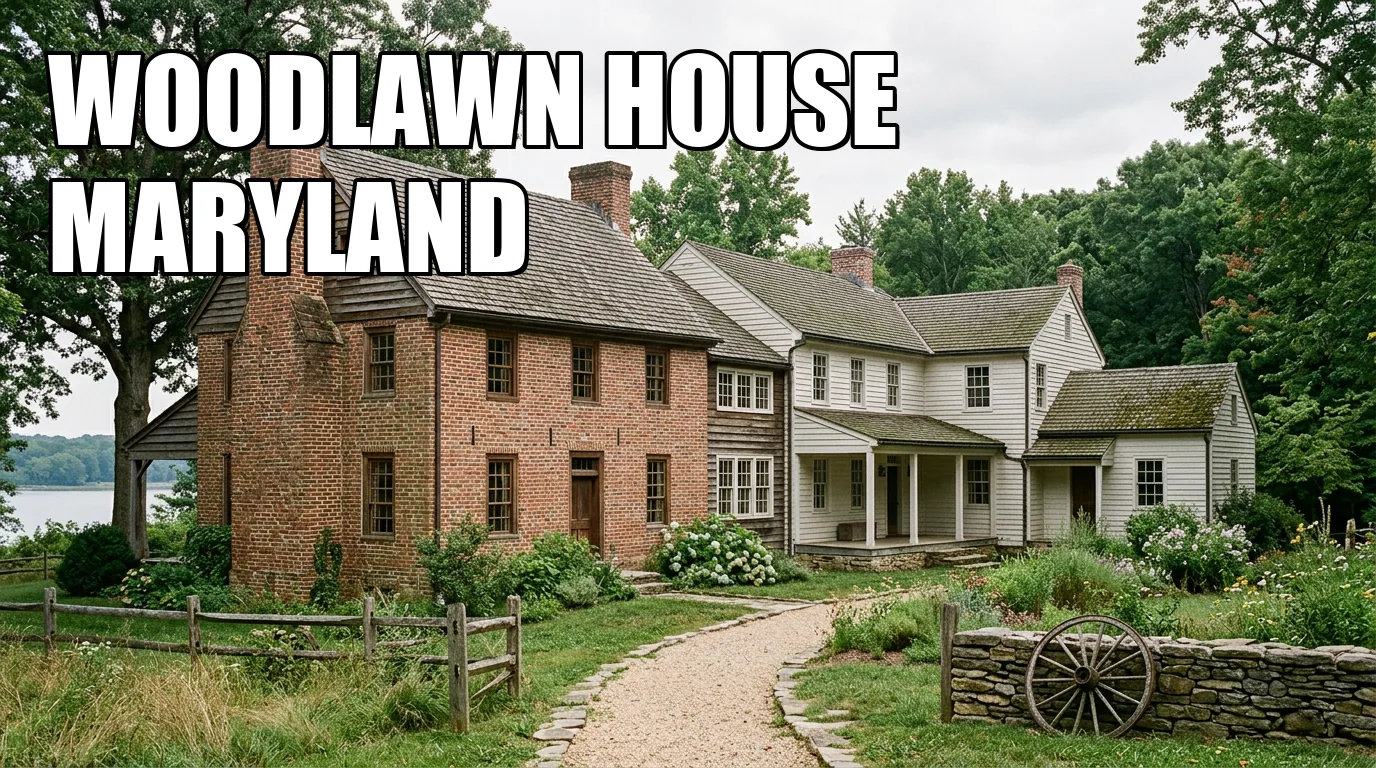
Imagine a single structure bearing witness to nearly three hundred years of American life, constantly adapting, absorbing new architectural styles, and silently recording shifts in society. That's Woodlawn House in Edgewater, Maryland. Built in 1735 by tobacco planter William Sellman, this isn't some grand colonial mansion designed to impress from afar. No, the original Woodlawn was a far more modest, pragmatic affair – a one-story, two-room dwelling reflecting the realities of 18th-century agrarian life. It’s an invaluable lesson in how most of colonial America actually lived, a refreshing counterpoint to the overblown estates often highlighted.
What truly fascinates about Woodlawn is its visible chronology. The Sellman family lived here for six generations, and each era left its mark. You can literally walk from the humble 1735 core, through the elegant 1841 Federal/Greek Revival addition—a testament to newfound prosperity and changing tastes—and finally into a remarkably modern, energy-efficient passive solar wing added in 1979. This last addition, born out of the 1970s energy crisis, feels almost jarringly contemporary against the older sections, but it's a brilliant illustration of continuous adaptation. Where else do you find such an honest, unbroken architectural timeline in one building?
Don't just look at the walls; consider the ground beneath your feet. The Smithsonian Environmental Research Center actively conducts archaeology here, with citizen scientists unearthing artifacts ranging from ancient Native American projectile points—a stark reminder that this land was occupied long before any Europeans arrived—to humble glass milk bottles from a more recent dairy farm. The history isn't just about the Sellmans; it's about the Indigenous peoples, the enslaved individuals whose labor fueled the plantation economy, the indentured servants, and later sharecroppers who also called this landscape home. Their stories, often obscured in mainstream narratives, are slowly being brought to light by the dirt itself.
Thinking about a visit? Plan your trip carefully. Woodlawn House isn't open daily; the Woodlawn History Center typically welcomes guests on Saturdays from 10:00 a.m. to 4:00 p.m. and some Sundays from 1:00 p.m. to 4:00 p.m. It’s a bit off the beaten path, sitting on 2,650 acres of protected land near the Chesapeake Bay, meaning you’ll want a car. While you won't face city crowds, the limited hours mean you should check their website for exact dates before making the drive. The upside? You can explore a self-guided Woodlawn History Trail, extending your understanding beyond the house itself.
The Castle's Enduring Spirit: More Than Just a Symbol
Every visitor to Washington, D.C. encounters the Smithsonian Institution Building, affectionately known as "The Castle." Its striking red sandstone façade and Norman Revival towers are instantly recognizable, a quintessential D.C. landmark. But how many truly understand its tumultuous past, or look beyond its current role as a visitor information center? Designed by the celebrated architect James Renwick Jr. and completed in 1855, The Castle was the Smithsonian's very first museum building, a bold architectural statement for a nascent institution.
What’s often glossed over is the building’s dramatic brush with disaster. On January 24, 1865, a massive fire ripped through The Castle, consuming much of its upper stories, including precious library collections and art. Imagine the devastation, just as the Civil War was drawing to a close! The extensive reconstruction, which lasted twelve years and cost $125,000 (a fortune then), required meticulous craftsmanship to restore Renwick's original vision, even incorporating more fire-resistant materials in the process. This isn't just a pretty building; it's a testament to resilience, a phoenix rising from the ashes of its own history, a detail easily missed when rushing to the National Air and Space Museum.
Historically, the building’s construction also carries a weightier question. While definitive evidence is scarce regarding direct involvement in the Castle's erection, scholars widely believe enslaved labor was employed in quarrying the distinctive Seneca red sandstone from Montgomery County, Maryland. This chilling possibility reminds us that even our nation’s most esteemed institutions have complex, often uncomfortable, roots intertwined with the institution of slavery.
Planning a visit in the near future? Be aware that The Castle began its first major renovation in over 50 years in 2023. While it’s always a prominent landmark, significant internal access will be limited until its planned temporary reopening in summer 2026. When it does reopen, it will continue to serve as the institution's information hub, but take a moment to truly absorb the architectural blend of Norman, Romanesque, and Gothic Revival styles – it’s a masterclass in 19th-century eclecticism, not just a photo op.
Gilded Age Grandeur with a Purpose: Carnegie's Uptown Legacy
New York City's Upper East Side is synonymous with Gilded Age opulence, but few mansions combine sheer scale with such a clear sense of purpose as the Andrew Carnegie Mansion, now home to the Cooper Hewitt, Smithsonian Design Museum. Built between 1899 and 1902, this 64-room marvel wasn't just a display of wealth; it was a functioning hub for one of history's greatest philanthropists. Carnegie himself, a man who believed in the "Gospel of Wealth," consciously built his home far north of his social peers, securing enough land for one of Manhattan's only private enclosed gardens—a shrewd, independent move characteristic of the man.
The mansion’s architectural prowess, designed by Babb, Cook & Willard, combined the solid comfort of an English Georgian country house with refined Beaux-Arts accents. But what truly sets it apart, and what most visitors walk right past, are its hidden innovations. This was the first private residence in the United States to feature a structural steel frame, a revolutionary construction technique. It also boasted one of New York's earliest residential Otis passenger elevators (which you can now see at the National Museum of American History). Imagine the audacity and foresight required to incorporate such industrial-scale engineering into a private home! Beyond the grand rooms, you can still observe elements of its original mechanical systems, from its pioneering central heating to a miniature train track in the cellar that transported coal to colossal boilers. These details aren't just curiosities; they show how cutting-edge technology was integrated into the daily lives of the ultra-wealthy.
Carnegie’s private office within these walls was no mere study; it was the command center for his staggering philanthropic endeavors. From here, he dispensed approximately $350 million, funding thousands of public libraries, educational institutions, and peace initiatives. This home wasn't just where he lived; it was where he actively shaped the intellectual and cultural landscape of the world. The transformation of this private residence into the Cooper Hewitt museum in 1976 feels entirely fitting, a continuation of Carnegie's mission to foster knowledge and design appreciation.
Visiting the Cooper Hewitt offers a unique blend of museum experience and historical immersion. Admission is required, and while you can wander the museum, consider taking one of their public 45-minute tours offered daily at 1:30 p.m. to truly appreciate the mansion's historic significance. The museum is located at 2 East 91st Street and is open 10:00 a.m. to 6:00 p.m. daily. It’s a bustling part of the city, so factor in subway travel and prepare for the energetic pace of Manhattan.
From Civil War Barracks to Beaux-Arts Gem: The Renwick's Surprising Revival
Just across from the White House stands the Renwick Gallery, an architectural confection that often leaves visitors scratching their heads. Is it a museum? A government building? It's both, and its tumultuous history is one of resilience and a testament to the power of preservation. Designed by James Renwick Jr. (yes, the same architect as The Castle) and completed between 1858 and 1859, it holds the distinction of being the first building in the United States designed expressly as an art museum. Commissioned by banker William Wilson Corcoran, it was conceived as a symbol of America's burgeoning cultural sophistication, a challenge to European artistic supremacy.
Its early years, however, were anything but genteel. The Civil War intervened, and the uncompleted building was commandeered by the Union Army, serving as offices and storage during the conflict. After the war, it endured decades of rough use by various government agencies, suffering extensive damage and neglect. It’s a common fallacy that historic buildings are always cherished; many, like the Renwick, were nearly lost to indifference and repurposing. It wasn't until the mid-20th century, largely due to First Lady Jacqueline Kennedy's passionate Pennsylvania Avenue restoration initiative, that its true historical and architectural value was recognized. Transferred to the Smithsonian in 1965, it underwent a painstaking renovation, reopening in 1973 as the Renwick Gallery we know today.
The Renwick is a superb example of Second Empire architecture, a style characterized by its steep mansard roof, intricate decorative elements, paired columns, and ornamental embellishments. Keep an eye out for the carved medallions with the initials "WWC" (William Wilson Corcoran) on the exterior, subtle nods to its founder. Inside, the grand salon, often used for contemporary craft exhibitions, retains much of its original Gilded Age splendor, a stark contrast to its wartime past. The museum's programming, focusing on craft and decorative arts, often surprises those expecting traditional fine art, making it a dynamic space that honors its roots while looking forward.
Located at 1661 Pennsylvania Avenue NW, its prime location offers incredible views of the White House complex, but also means heightened security and potentially tricky parking – public transport is highly recommended. The Renwick is open to the public, and hours can be confirmed on the Smithsonian American Art Museum website. Take your time here; it’s not just an art gallery, but a living testament to America's evolving relationship with art, war, and preservation.
A Collector's Vision Cast in Stone: Understanding the Freer Gallery of Art
Step onto the National Mall, and amidst the grand classical structures, the Freer Gallery of Art stands with a quiet dignity, almost blending in. Yet, this institution, constructed between 1916 and 1921, holds a unique place in Smithsonian history: it was the first Smithsonian museum dedicated exclusively to fine arts collections. Its very existence is owed to the extraordinary vision and personal fortune of Detroit industrialist Charles Lang Freer, who not only donated his extensive collection of Asian, American, and Middle Eastern art but also funded the museum's construction and research. It's rare to find a museum so singularly shaped by one man's aesthetic and philanthropic impulses.
Freer, deeply inspired by Italian palazzo architecture, personally guided the design by Charles A. Platt. The result is a masterpiece of Italian Renaissance style, characterized by its horizontally massed design, perfectly symmetrical layout, and elegant use of gray Milford, Massachusetts granite on the exterior and Tennessee marble within. This isn’t just a building; it’s a carefully composed environment, designed to cradle and display art in a specific, contemplative manner. Its serene courtyards and classical proportions aim to evoke a sense of timelessness, creating a stark contrast to the often bustling, didactic approach of other museums.
What’s often overlooked is the profound personal tragedy intertwined with its creation. Charles Lang Freer never saw his magnum opus completed; he died in 1919, four years before the gallery opened to the public in 1923. Imagine dedicating your life and fortune to such a magnificent gift, only to be denied the satisfaction of witnessing its realization. This poignant detail imbues the Freer with a unique melancholic beauty, making it more than just a repository of art but a monument to a collector’s ultimate sacrifice and unwavering belief in cross-cultural understanding.
The Freer Gallery, part of the Freer|Sackler complex, offers a tranquil escape on the National Mall. Admission is free, like most Smithsonian museums, and you can easily combine a visit here with neighboring institutions. Take the time to appreciate not just the world-class art within, but the building itself – its perfectly symmetrical frame, large pillars, and decorative friezes all contribute to an experience designed to slow you down and invite deeper contemplation. It’s a quiet testament to the power of individual passion and classical design, a nuanced experience that rewards deliberate exploration.