There’s a common misconception that all late 19th-century homes dripping with ornamentation fall under a single, generic "Victorian" umbrella. While that’s broadly true chronologically, to truly appreciate the era's architectural audacity, we need to talk about Queen Anne. This style, exploding onto the American scene from roughly 1880 to 1910, wasn’t just a trend; it was a jubilant rejection of staid formality, a riot of towers, turrets, bay windows, and every conceivable surface embellished with intricate woodwork. It celebrated asymmetry and individuality, drawing on a dizzying array of historical influences. Having crisscrossed the country to study these architectural marvels, I’ve found that the best examples don't just stand as pretty relics; they tell vivid stories of their time, their owners, and the evolving American landscape. But here’s the rub: some of the most famous are tantalizingly out of reach, while others offer unexpectedly intimate encounters.
California's Opulent Echoes: Timber Fortunes and Painted Façades
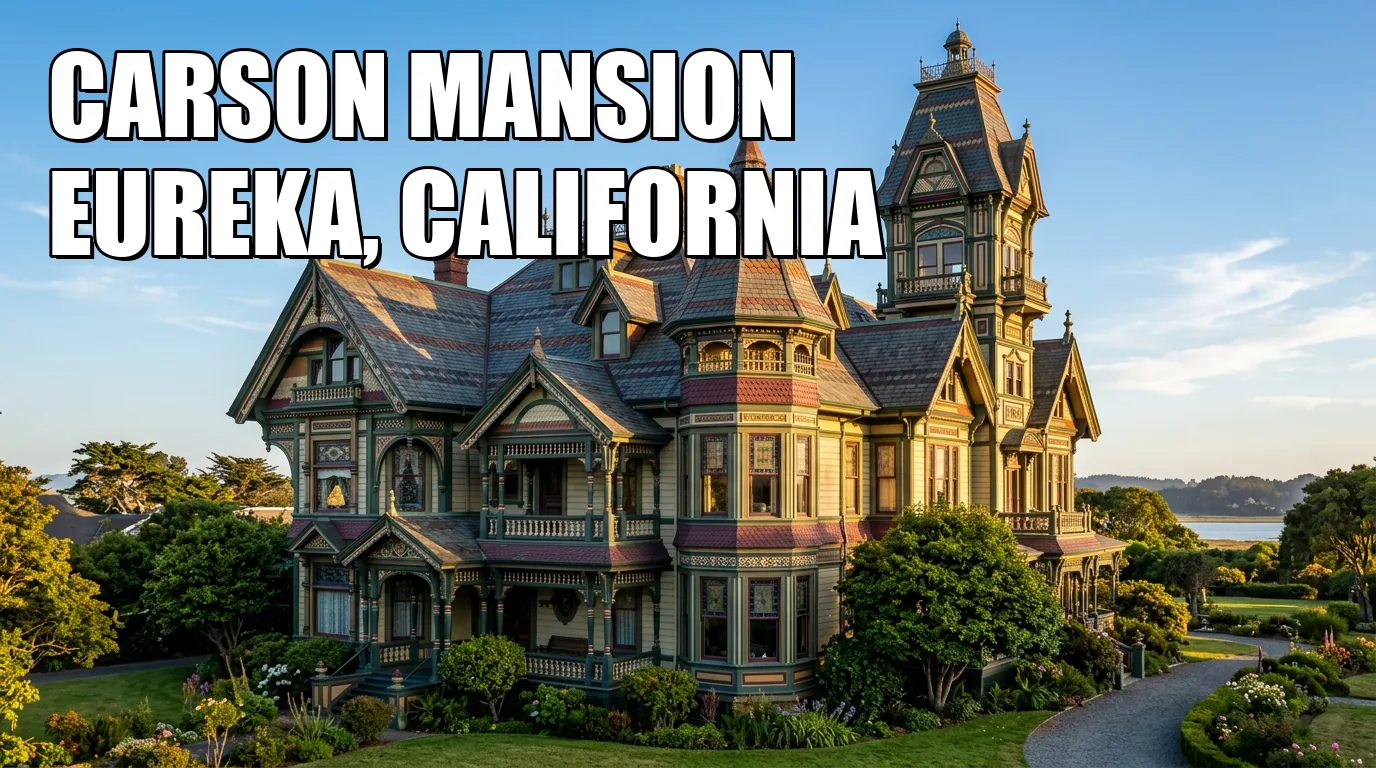
No discussion of American Queen Anne can begin without acknowledging Eureka, California. Nestled in the heart of redwood country, this town is an absolute treasure trove, largely thanks to its lumber barons. The Carson Mansion, completed in 1886, isn't just a house; it's a statement, a three-dimensional thesis on Queen Anne exuberance. Built for William Coleman Carson, a timber magnate, it required over 100 workers and two years to construct. Imagine that! Its eighteen different exterior paint colors, a symphony of turrets and towers, and a dizzying array of Stick-Eastlake, Gothic, and even French and Italian influences make it utterly unique. You won't find a more sculptural, more unapologetically ornate residential building anywhere. However, here's the unavoidable truth: you can't go inside. Since 1950, it has been privately owned by the Ingomar Club. While its exterior is a marvel to photograph freely from the sidewalk – and trust me, you absolutely should – don't expect a guided tour of its primavera "white mahogany" interiors or onyx details. It’s a magnificent tease, a monument to wealth that remains largely private, prompting one to question what it truly means to "experience" an architectural icon when its soul remains hidden.
Directly across the street, offering a fascinating counterpoint, stands the Pink Lady, or the J. Milton Carson House. This 1889 confection was a wedding gift from William Carson to his son, J. Milton, and it’s a brilliant study in familial architectural rivalry, or perhaps, respectful imitation. While smaller and perhaps slightly less bombastic than its paternal counterpart, the Pink Lady nevertheless boasts its own large domed turret, bay windows, and delicate cornices, all constructed of redwood with exquisite Eastlake ornamental details. Here’s the crucial difference: this one actually welcomes you in! It operates as a boutique accommodation, meaning you can not only tour the historic home but also book an overnight stay. Imagine sleeping in the turret room, surrounded by original stained glass and period furnishings, with views of Humboldt Bay. It offers a tangible, immersive experience that the grander Carson Mansion can only hint at. If you plan to visit Eureka, aim for a weekday outside of peak summer season (July-August) to better secure a room in this architectural gem, with prices varying but often starting around $250 a night.
Moving south to San Francisco, the Painted Ladies (710–720 Steiner Street) are undeniably iconic, almost to a fault. Constructed between 1892 and 1896 by developer Matthew Kavanaugh, these seven row houses, with their vibrant, multicolored paint schemes (a relatively modern addition from the 1960s, mind you, not original), front-facing gables, and bay windows, have been immortalized in countless films and, most famously, the opening credits of *Full House*. Everyone knows them. Everyone photographs them. But here’s what typical guides won’t emphasize: they are, first and foremost, private residences. Standing in Alamo Square Park, snapping that perfect shot with the city skyline behind, is a quintessential San Francisco moment, and it costs nothing. However, the idea of a "tour" is often overhyped. While one homeowner *occasionally* offers private tours of their blue-painted house (expect a significant fee, likely in the hundreds of dollars for a specialized private experience), and some tour companies offer neighborhood drives, the experience remains largely external. Don't go expecting to wander through multiple homes. It's a façade experience, beautiful but ultimately superficial for the true architectural enthusiast. Go for the view, not the deep dive, unless you've booked something very specific and costly.
Unexpected Oases: Victorian Grandeur Beyond the Expected Coasts
Who expects a quintessential Queen Anne in Phoenix, Arizona? I certainly didn't, not initially. But the Rosson House, built in 1894-1895 for Dr. Roland Lee Rosson, Phoenix’s mayor, proves that architectural trends don't always follow a linear path. This is a brilliant example of the Stick-Eastlake Queen Anne style, distinguished by its varied wall textures, patterned shingles, and dense Eastlake ornamental detailing. What truly makes it fascinating are the subtle multicultural elements: a Chinese moon gate, Italianate hooded windows, and a French octagonal turret, all converging in the desert. It’s a testament to the diverse influences shaping American architecture even in seemingly remote locales. Furthermore, for its era, this 2,800 square-foot home was remarkably modern, boasting electric lights, hot and cold running water, and even an indoor upstairs bathroom—luxuries often taken for granted today but revolutionary back then. You can take a docent-guided tour through the Rosson House at Heritage Square in Downtown Phoenix, which typically lasts 45-60 minutes and requires an admission fee (check their website for current pricing, usually around $15 for adults). It’s a surprisingly well-preserved and thoughtfully interpreted glimpse into late 19th-century life in the Southwest, a truly unique entry in the Queen Anne catalog.
Just a bit further west, in Riverside, California, you’ll find the Heritage House, also known as the Bettner House. Constructed in 1891-1892 for Catherine Bettner, the widow of a citrus pioneer, this 4,000-square-foot residence beautifully exemplifies the Queen Anne style with its large bay windows and ornate detailing. What sets Heritage House apart, beyond its elegant design, is its role as a vibrant community hub. Operated by the Museum of Riverside, it’s a living museum, hosting seasonal events like Victorian teas and an Ice Cream Social. This isn't just a static display; it's a place where history is actively engaged with. Docent-led tours are available Friday through Sunday, from 12:00 noon to 4:00 p.m. (last tour at 3:15 p.m.), operating from September through June, with a suggested donation of $5. This makes it one of the most accessible and community-oriented Queen Anne experiences on this list, proving that grandeur doesn't always come with a hefty price tag or restricted access. Plan your visit for a Friday afternoon to avoid potential weekend crowds, and consider checking their event calendar for special programming.
A Maine Marvel: The Victoria Mansion's Opulent Foresight
Stepping into Portland, Maine, the Victoria Mansion, also known as the Morse-Libby House, feels like traveling back to a different, perhaps even grander, era. What's truly striking about this property is its construction date: 1858-1860. This makes it an extraordinarily early example of what would evolve into the full-blown Queen Anne style, incorporating elements of the Italian Villa style with brownstone construction. It was built for Ruggles Sylvester Morse, a wealthy New Orleans hotelier, and his wife, Olive. The house is a symphony of 19th-century opulence, from its breathtaking 25-foot stained-glass skylight in the main hall to silver-plated doorknobs and intricately carved marble mantlepieces. The home was a technological marvel for its time, featuring hot and cold running water, flush toilets, central heating, and gas lights. The Turkish smoke room, an exotic and fashionable space for gentlemen, is a particular highlight, offering a glimpse into the global influences that shaped Victorian tastes. Unlike many homes that later adopted Queen Anne styles, this one was built with unparalleled craftsmanship from the outset. Guided tours and self-guided passes are available from May 1 through October 31, and again for a special holiday season (the day after Thanksgiving through early January). Admission is $16 for adults, $14 for seniors, and $5 for students. Arrive right when they open on a weekday morning for a more intimate tour experience, especially if you want to soak in the details of the mahogany carved staircase without a throng of people.
Chicago's Quiet Revolution: The Glessner House and the Birth of Modernism
Now, here's where we challenge conventional wisdom. The John J. Glessner House in Chicago, built between 1885 and 1887, is ostensibly a Queen Anne, but it's a Queen Anne that broke all the rules. Designed by the visionary architect Henry Hobson Richardson for John Jacob Glessner, a farm machinery magnate, this house is a radical departure from the flamboyant ornamentation typically associated with the style. Its rusticated granite exterior, streamlined design, and unique floor plan centered around a private courtyard were almost monastic in their simplicity compared to the Carson Mansion's joyful chaos. This isn't just another pretty Victorian; it's a precursor to modern architecture, a groundbreaking approach that profoundly influenced Louis Sullivan, Mies van der Rohe, and a young Frank Lloyd Wright. It argues for the power of form and material over superficial decoration, a quiet rebellion in an era of maximalism. The house contains nearly 3,000 original volumes in its library, alongside the largest collection of furniture by designer Isaac Elwood Scott, offering a deep dive into the intellectual and aesthetic life of its original occupants. Standard tours are offered Wednesday, Friday, and Saturday at specific times (11:30 a.m., 1:00 p.m., and 2:30 p.m.), with exclusive architecture tours available for $30 per person that delve into areas not seen on public tours. If you truly want to understand the *evolution* of American architecture, this house is non-negotiable. It forces you to rethink what "Victorian" truly means, illustrating that innovation was thriving even within, or perhaps in opposition to, prevailing styles.
More Than Just Pretty Porches: A Connoisseur's Take on Queen Anne's Enduring Appeal
After visiting these diverse properties, one realizes that Queen Anne architecture is far more than just a collection of ornate details. It’s an architectural language that spoke to aspiration, individuality, and a burgeoning American identity. These homes, whether the show-stopping spectacle of the Carson Mansion or the groundbreaking austerity of the Glessner House, each tell a distinct story. They underscore the era’s technological advancements, from modern plumbing to electric lights, and reflect a global curiosity that pulled in influences from China to Italy. What often goes unmentioned in general guides is the sheer audacity of these structures—they were designed to be noticed, to stand apart, and in many cases, to flaunt new money with an almost childlike glee. But that doesn't mean they were without serious architectural thought or careful craftsmanship; quite the opposite, as seen in the extensive use of redwood, marble, and intricate millwork.
The practicalities of visiting these architectural treasures can vary wildly. Some, like the Carson Mansion and the majority of the Painted Ladies, offer spectacular exterior views but remain frustratingly private inside. Others, such as the Victoria Mansion, Rosson House, Heritage House, and Glessner House, provide invaluable public access, often through dedicated house museum staff who are passionate experts in their field. For the truly immersive experience, the Pink Lady in Eureka offers a unique opportunity for an overnight stay, transforming a visit into a living history lesson. My advice? Don't just tick off a list. Instead, consider the context: what does a Queen Anne in the Phoenix desert tell you versus one overlooking the Pacific? What does the *lack* of access to some homes reveal about wealth, privacy, and preservation? Think critically, plan strategically, and let these incredible structures transport you to an era of unparalleled architectural daring. They are, after all, some of the most flamboyant, intricate, and utterly human creations in America’s built landscape, offering insights that go far beyond superficial beauty.