
The historic house museum, a staple of cultural tourism, has long been defined by its focus on the preserved interiors and the biographies of its most prominent residents. The visitor is typically guided through a series of decorated rooms, invited to admire the architecture, furnishings, and aesthetic choices of a past era. This model, however, often presents a frictionless and incomplete history, one in which the house appears to have run itself. This article introduces the inaugural Maison House Museum Interpretation Index, a pilot study designed to measure a different quality: the degree to which a museum interprets the house not as a static collection of objects, but as a dynamic, working system.
The central argument of this index is that the most compelling and historically responsible house museums in 2026 are those that have stopped pretending the house ran on its own. They actively expose the mechanisms that powered the domestic interior: the kitchens, the laundries, the service circulation paths, the technologies of the era, the complex labor of household staff, and the brutal economics of enslaved labor. This index evaluates how and when visitors are given access to these stories and spaces. Is the narrative of labor integrated into the primary tour, or is it relegated to a specialty program or a basement plaque?
This pilot index analyzes a sample of six American house museums selected to represent a spectrum of interpretive strategies. The sample includes: the Gibson House Museum in Boston, Massachusetts; the Pabst Mansion in Milwaukee, Wisconsin; the Rosson House in Phoenix, Arizona; Whitney Plantation in Wallace, Louisiana; and the presidential estates of Mount Vernon and Monticello in Virginia. By comparing their approaches, we can map the landscape of current practice and identify the models that are defining a more complete and challenging form of public history.
Methodology: Measuring the Whole House
To move beyond subjective preference, the Maison Interpretation Index uses a scoring model designed to quantify a museum’s commitment to presenting a holistic view of the domestic environment. Each institution in the pilot sample was evaluated against a 100-point standard, with scores allocated across five core categories. This framework is not a measure of a museum’s curatorial quality or architectural significance in general, but a specific evaluation of its interpretive strategy as presented to the standard, non-specialist visitor.
The scoring is weighted to prioritize the integration of labor and systems into the core visitor experience:
- Labor-History Integration (35 points): This metric assesses whether the stories of domestic staff, service workers, or enslaved people are a central and unavoidable part of the main tour. A high score indicates that these narratives are woven into the interpretation of every relevant space, rather than being confined to a single room or an optional tour.
- Working-Space Visibility (25 points): Points are awarded for including non-public, “back-of-house” areas in the standard visitor pathway. This includes kitchens, laundries, pantries, staff quarters, basements, attics, and outdoor work areas. The more a visitor sees the machinery of the house, the higher the score.
- Clarity of Visitor Pathway (15 points): This evaluates how effectively the museum’s layout and tour structure (guided, self-guided, audio) communicate its interpretive priorities. A clear pathway guides the visitor through a coherent narrative, whether it’s about social hierarchy, technological change, or the economics of labor.
- Interpretive Range (15 points): This category measures the museum’s willingness to address themes beyond the biography of the primary owner. This can include class structure, gender roles, LGBTQ+ history, technological innovation, or the site’s connection to broader economic and social histories.
- Accessibility and Workaround Honesty (10 points): A museum scores well here by providing clear, upfront information about physical accessibility constraints and offering robust digital or alternative means to experience inaccessible parts of the site. This reflects an institutional commitment to welcoming the broadest possible audience.
Based on their total score, museums are placed into one of four tiers, providing a clear snapshot of their interpretive approach:
- 85-100: Working-System Museum. Interpretation consistently and effectively frames the house as a complex system of labor, technology, and social hierarchy.
- 70-84: Strong but Partly Gated. The museum possesses deep interpretive content on labor and systems, but some of the most significant spaces or stories are reserved for specialty tours.
- 55-69: Decorative Core with Real Side Layers. The primary focus remains on architecture and the owner’s story, but meaningful, well-executed programs on other topics are available.
- Below 55: Parlor-First Interpretation. The standard visit is overwhelmingly focused on the decorative arts, architecture, and the family’s public life, with labor and systems largely invisible.
This methodology provides a consistent lens through which to analyze the curatorial choices that shape public understanding of the past.
Score Breakdown: Gibson House Museum (100/100)
The Re-centered Model: Whitney Plantation
Among the sites in this index, Whitney Plantation offers the most radical and complete departure from the traditional house museum model. It is the only institution in the pilot group that defines its primary purpose as telling the story of the enslaved people who lived and worked there. This is not an additive or parallel narrative; it is the central curriculum of the visitor experience. The property is not presented as the “home of” its owners, but as the site of enslavement for hundreds of individuals.
This re-centering is achieved through a series of deliberate interpretive choices. The default visitor pathway, facilitated by a powerful audio tour, prioritizes the grounds, the restored slave cabins, and the memorials. The experience begins with the stories of enslaved children and moves through the landscape of labor, including the brutal realities of sugar cultivation. The “Big House,” the architectural centerpiece of a conventional plantation tour, is treated differently here. Access rules and the narrative framing effectively de-center it, presenting it not as a home to be admired but as the administrative hub of a forced-labor camp.
By inverting the typical hierarchy of spaces, Whitney Plantation forces the visitor to confront the system of slavery as the property’s fundamental organizing principle. The memorials, which list the names of the enslaved, and the direct, first-person narratives used in the tour make the human cost of the enterprise unavoidable. The museum does not offer a “balanced” view that gives equal weight to the owner’s story; it argues, through its very structure, that such a balance would be a historical distortion.
In the context of the Maison Index, Whitney Plantation achieves a near-perfect score not because it is a museum about slavery, but because of how it interprets the site as a complete, albeit brutal, working system. The logistics of labor, the geography of control, and the economic engine of the plantation are the main subjects. It serves as the benchmark for total narrative integration, demonstrating that the most powerful stories are often found by looking away from the grand façade and focusing on the landscape that supported it.
Integrated Interpretation: Gibson House and Mount Vernon
While Whitney Plantation achieves its goal by completely inverting the narrative, other high-scoring institutions demonstrate that integration can also be achieved within more traditional frameworks. The Gibson House Museum in Boston and George Washington's Mount Vernon, though vastly different in scale and subject, both succeed by weaving the story of labor and social structure directly into the fabric of the standard visitor experience. They represent a powerful model of a whole history approach.
The Gibson House Museum is an exemplary case of urban domestic interpretation. Its official materials and guided tours explicitly frame the house through an “Upstairs, Downstairs” lens, giving equal weight to the Gibson family and the domestic staff who served them. The standard tour encompasses four floors of the home, and crucially, this includes the original ground-floor kitchen. By making the primary workspace of the house a non-negotiable part of the visit, the museum ensures that no visitor can leave with the impression that the family’s lifestyle was self-sustaining. The labor is made visible.
This integration extends beyond physical spaces. The interpretation actively discusses the roles and lives of the staff, transforming them from anonymous background figures into historical subjects. Furthermore, the Gibson House demonstrates a commitment to a broader interpretive range by incorporating LGBTQ+ history into its official narrative, acknowledging the complex lives of all the home's inhabitants. It is a masterclass in using the architecture of a house to tell a story about class, labor, and social hierarchy in a dense urban setting.
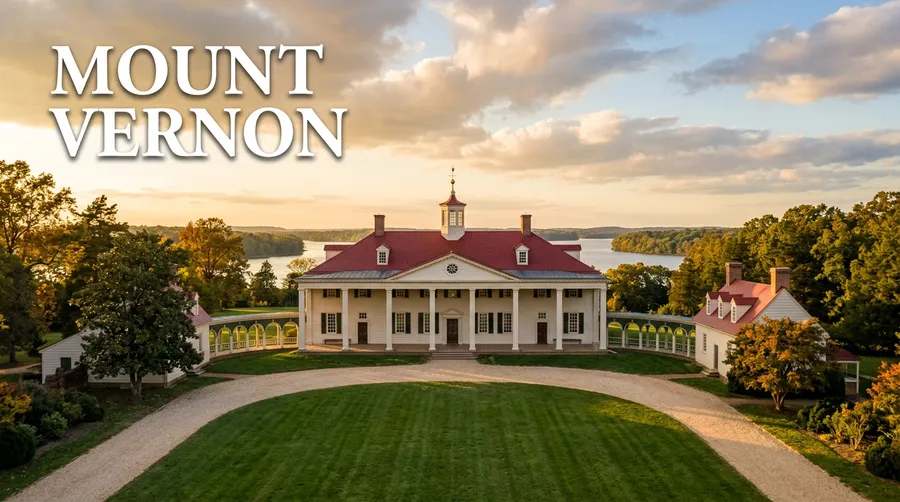
Mount Vernon, as a sprawling presidential estate, faces a different set of challenges. The mansion remains the undeniable visual and symbolic anchor of the site. However, verified project analysis confirms that the institution has made the history of slavery central to its interpretation of the estate. The visitor experience is designed to be more than just a tour of the mansion. It includes the grounds, numerous outbuildings, gardens, and dedicated museum galleries that, taken together, present the estate as a complex agricultural and industrial enterprise powered by the labor of hundreds of enslaved people.
The physical and interpretive inclusion of spaces like the reconstructed slave quarters and the workspaces for artisans and field hands makes the system of labor tangible. While the figure of Washington is central, the official interpretation frames his role as a manager of this vast operation and, critically, as an enslaver. Mount Vernon thus operates as a successful hybrid model. It does not de-center the “Big House” to the extent that Whitney does, but it uses the entire landscape to ensure the visitor understands that the mansion cannot be understood apart from the system of bondage that created and sustained its wealth.
The Gated Experience: Pabst Mansion and Monticello
A significant number of house museums occupy a middle ground. They possess rich historical information about labor, technology, and social hierarchies, but they strategically segment access to that information. This “gating” creates a tiered interpretive system where the standard visitor receives a traditional, parlor-focused tour, while the deeper, more complex stories are reserved for those who seek out a specialty tour or supplementary program. The Pabst Mansion and Thomas Jefferson’s Monticello serve as instructive examples of this model.
The Pabst Mansion in Milwaukee is a premier example of Gilded Age architecture, and its daily guided and self-guided tours expertly showcase this. The standard tour focuses on the Pabst family, the building’s design, and the opulent decorated rooms across the first three floors. The story presented is one of wealth, taste, and civic leadership. According to the museum’s own materials, however, a more complete story of the house as a working system is available. Specialty “behind-the-scenes” tours offer access to the full scope of the building, from the basement to the attic, revealing the spaces where the work of running such a grand household took place.
This is the essence of gated interpretation. The information exists, and the museum has invested in its preservation and study. Programs centered on women’s history and the lives of staff are part of the museum’s offerings. But by making them optional and separate from the base ticket, the museum reinforces a hierarchy of knowledge. The default experience remains one of aesthetic appreciation, while the story of the labor that made that aesthetic possible is an add-on. For the purposes of this index, this choice results in a lower score for labor integration and working-space visibility, as the core experience omits the system for the showcase.
Monticello, a UNESCO World Heritage Site, presents a more complex and evolved version of this model. Following extensive research and a multi-decade interpretive shift, the history of the enslaved community is now a significant part of the Monticello story. The base-level “Highlights Tour” explicitly covers Jefferson, his ideas, the architecture, and the reality of slavery. The landscape of Mulberry Row, the industrial heart of the plantation where enslaved people lived and worked, is central to the site. This represents a major step beyond older, hagiographic models of presidential homes.
However, Monticello also offers a dedicated, 2.5-hour “From Slavery to Freedom” tour, which provides a much deeper and more focused engagement with the lives of the enslaved community. While the base tour acknowledges slavery, the most profound interpretation is, in part, specialized. This mixed model is highly effective and represents a strong commitment to historical honesty. Yet, it remains a form of gating. The casual visitor taking the shortest tour will learn about slavery, but they will not receive the same depth of understanding as someone on the specialized tour. This structure places Monticello in a higher tier than Pabst, but it illustrates that even at the most advanced institutions, choices are made about how, and to whom, the most difficult histories are told.
The Visible and the Invisible: Kitchens, Basements, and Service Spaces
The architectural layout of historic houses is a physical manifestation of social hierarchy. The separation of family spaces from service spaces, of public rooms from private work areas, was a fundamental design principle. A museum’s decision to either respect or transgress these original boundaries in its visitor pathway is one of the most powerful interpretive choices it can make. The inclusion or exclusion of kitchens, basements, attics, and servant quarters from the standard tour directly impacts whether a visitor perceives a house as a beautiful object or a functioning workplace.
The Gibson House Museum’s inclusion of its original ground-floor kitchen is a prime example of an effective interpretive strategy. By routing visitors through this space, the museum makes the source of the family’s meals—and the labor required to produce them—an integral part of the story. The kitchen is not an optional detour; it is part of the home’s essential grammar. This contrasts sharply with institutions where the kitchen, if shown at all, is a footnote, or where the tour is confined to the “public” living and entertaining floors.
The Pabst Mansion’s specialty tours, which grant access from basement to attic, highlight what is missing from the standard visit. The basement would have housed the laundry and other essential systems, while the attic may have contained staff quarters. These are the engine rooms of the house. Keeping them behind a secondary paywall or access gate means that the average visitor sees the product of the labor but is never shown the factory. The house appears to float on a cloud of effortless gentility, an illusion that the original owners might have appreciated but which a modern museum has a responsibility to dispel.
At larger estates like Mount Vernon and Monticello, this principle extends to the entire landscape. The outbuildings—kitchens, smokehouses, workshops, and living quarters for the enslaved—were deliberately sited to be functional yet separate from the main house. A modern interpretive plan that guides visitors through these spaces, as both Mount Vernon and Monticello do, effectively reconnects the landscape of labor with the landscape of leisure. It makes the system visible. Conversely, a site that focuses a tour exclusively on the “Big House” and its immediate gardens is perpetuating the historical fiction of a self-sufficient mansion, ignoring the network of dependencies that made it possible.
The Rosson House in Phoenix, described as focusing its tours on the main living areas, serves as a useful case study of the traditional model. While the preservation of its Victorian architecture is the primary goal, this focus can inadvertently render the home’s operational side invisible. Without explicit access to or interpretation of the spaces where cooking, cleaning, and maintenance occurred, the visitor is left with an incomplete picture of life in the house, for both the family and any staff who may have worked there.
Comparative Analysis: Six Approaches to Domestic History
Analyzing the six pilot institutions side-by-side reveals the distinct strategic choices that shape the public’s encounter with history. The table below synthesizes the core data points for each museum, illustrating the spectrum from a fully integrated, systems-based approach to a more traditional, parlor-focused presentation. The patterns show a clear correlation between access to working spaces and the integration of labor history into the primary narrative.
| Museum | House Type | Base Tour Format | Working Zones in Base Visit | Labor History Integration |
|---|---|---|---|---|
| Whitney Plantation | Plantation | Self-guided audio | Grounds, cabins, memorials, Big House (exterior/limited) | Total Re-centering: Enslaved experience is the main story. |
| Gibson House Museum | Urban Townhouse | Guided | Four floors including ground-floor kitchen. | Fully Integrated: “Upstairs, Downstairs” is the default frame. |
| Mount Vernon | Presidential Estate | Mansion tour + self-guided grounds | Mansion, outbuildings, gardens, slave quarters, museum. | Highly Integrated: Slavery is central to the estate-wide story. |
| Monticello | Presidential Estate | Guided tour + self-guided grounds | Mansion, Mulberry Row, grounds. | Integrated in Base Tour: Deeper dive available in specialty tour. |
| Pabst Mansion | Gilded Age Mansion | Guided / Self-guided | Mainly decorated family floors (1-3). | Gated: Deep labor/systems content is in specialty tours. |
| Rosson House | Victorian Home | Guided | Living areas. | Unclear / Limited: Official materials focus on architecture. |
Whitney Plantation and the Gibson House Museum represent the most complete integration. Despite their vastly different scales and subject matter, both have made the story of labor the central axis of their standard tour. They demonstrate that whether the subject is a Boston townhouse or a Louisiana sugar plantation, it is possible to structure a visit so that the house’s function as a workplace is inescapable. Mount Vernon follows closely, using its large campus to embed the story of enslaved labor into the physical experience of the site.
Monticello and the Pabst Mansion illustrate the complexities of the “gated” model. Monticello has successfully integrated the topic of slavery into its main tour—a significant achievement—but still holds its most intensive treatment in a separate program. Pabst Mansion draws a harder line, maintaining a clear distinction between the aesthetic experience offered to all and the systems-level knowledge offered to a few. This is not a critique of the quality of their specialty programs, which are often excellent, but an observation about the interpretive priorities conveyed to the general visitor.
Rosson House, based on its public-facing materials, appears to represent the classic “parlor-first” model. Its focus on the preserved living areas and architecture is a valid and important form of historic preservation. However, in the context of this index, it highlights what is lost when the story of labor and domestic systems is not made an explicit part of the interpretation. The house is presented as a beautiful object, but the human and mechanical engine that made it run remains out of sight.
The 2026 Interpretation Index and Scorecard
The final scores for the six pilot institutions reflect their varying success in interpreting the historic house as a complete working system. The results place two museums in the top tier as “Working-System Museums,” with two more joining them at the threshold of that category. The remaining institutions fall into the middle and lower tiers, indicating a more traditional focus or a reliance on gated interpretation. This scorecard provides a snapshot of current practices and a benchmark for future evaluation.
Final Scores: 2026 House Museum Interpretation Index
Working-System Museum (85-100)
- Gibson House Museum (100): A perfect score reflecting its seamless integration of staff and family life, full access to work and living spaces across four floors including the kitchen, and a broad interpretive range. It is the benchmark for urban domestic history.
- Whitney Plantation (98): Achieves near-perfect marks for its radical and effective re-centering of the narrative around the enslaved, making the entire site a testament to the system of labor.
- Mount Vernon (90): A top-tier score for its successful hybrid model, making slavery central to the visitor experience across the estate, even while the mansion remains a focal point.
- Monticello (85): Sits exactly on the threshold of the top tier. Its integration of slavery into the base tour and the prominence of Mulberry Row are commendable, marking it as a leader among presidential sites. The reliance on a specialty tour for the deepest dive is what separates it from the very top scores.
Decorative Core with Real Side Layers (55-69)
- Pabst Mansion (58): A strong score in this tier, reflecting an institution with excellent programming that is, for the standard visitor, gated. The base tour focuses on the decorative core, while the rich history of the house as a system is reserved for specialty experiences.
Parlor-First Interpretation (Below 55)
- Rosson House (46): Represents the traditional model where the primary emphasis is on the preserved living areas and architecture. The lower score reflects the lack of visible interpretation of service or labor systems in the standard tour as described in public materials.
This index is not a final judgment on the worth of these institutions, all of which perform a vital function of preservation and education. Rather, it is an argument for a new standard of excellence—one that judges a house museum not by the beauty of its parlors alone, but by its courage to tell the whole story of the systems and the people who made that beauty possible.