There's a certain magic to stepping across the threshold of a building that has stood for centuries, each creak of the floorboards a faint echo of lives lived long ago. For me, the allure of a historic bed and breakfast isn't just about a comfortable night's sleep; it's an immersive dive into the past, a tactile connection to the narrative of a place. Yet, navigating the landscape of "historic" stays can be tricky. Many claim the mantle, but few truly deliver an experience that transcends mere age. What truly defines a historic B&B? Is it simply the year it was built, or does it demand a deeper resonance with American history, a unique architectural narrative, or perhaps even a lingering spectral presence?
Before we delve into specific properties, a quick clarification: the term "Beaux Arts" gets thrown around a lot, especially when describing grand, old buildings. True Beaux Arts architecture, a style born from the École des Beaux-Arts in Paris during the late 19th and early 20th centuries, emphasizes classical harmony, monumental scale, intricate ornamentation, and a hierarchical arrangement of spaces. You see it most often in grand civic buildings, train stations, and opulent mansions. Finding a traditional bed and breakfast that *authentically* fits this very specific, often monumental style is, frankly, rare. Most "historic" B&Bs, while magnificent, lean into other significant American architectural movements. However, a few exceptions stand out, offering a glimpse into this distinct aesthetic.
Boston's Beaux Arts Bastion: XV Beacon and the City's Pulse
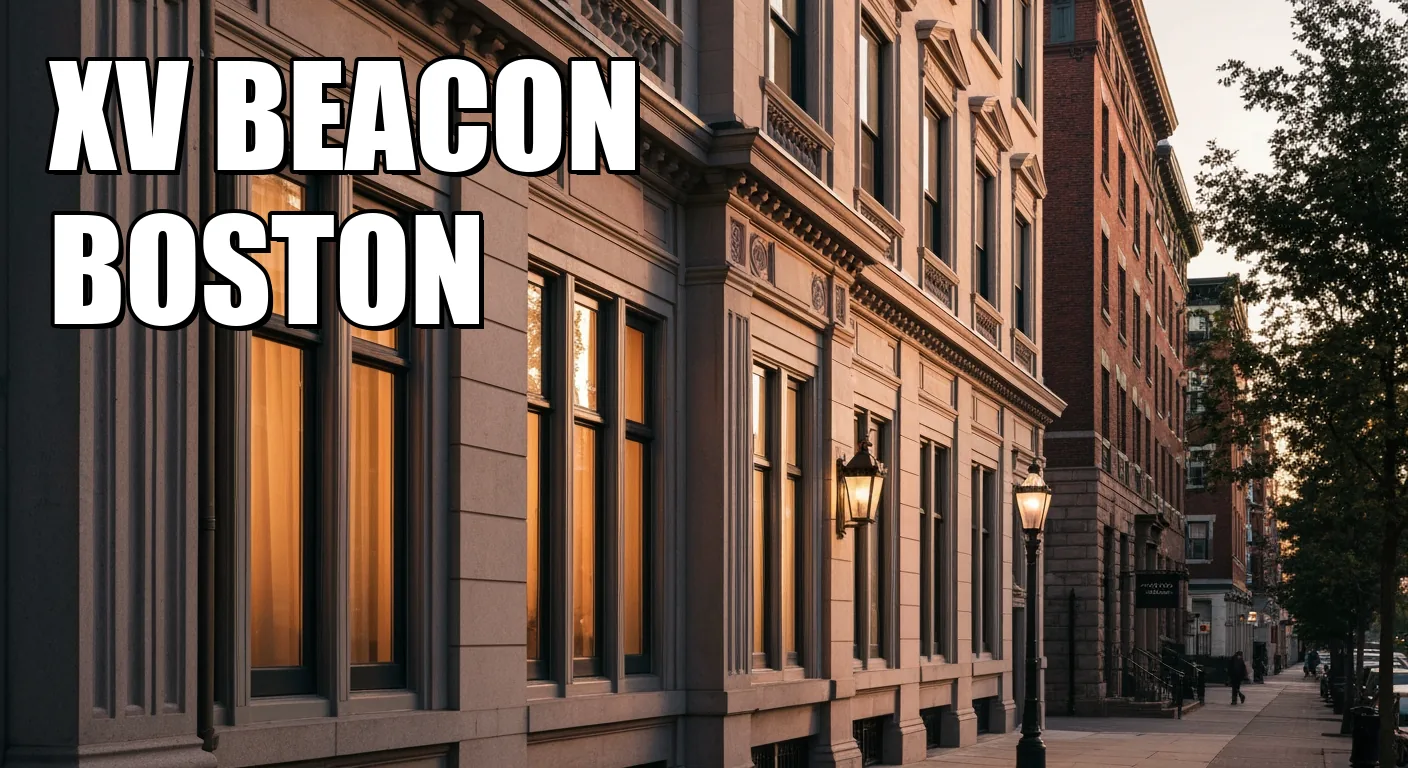
If you're truly seeking a taste of authentic Beaux Arts in a more intimate, B&B-like setting—though it operates as a boutique hotel—then look no further than XV Beacon in Boston. Erected in 1903, this structure originally housed the Boston Transit Commission, a rather significant detail as this was the nation's first public transportation agency, responsible for pioneering Boston's renowned subway system. Its architect, William Gibbons Preston, was indeed a graduate of the École des Beaux-Arts, and you feel that pedigree in the building's robust, classical proportions and elegant, understated details. It's a structure that speaks of permanence and civic ambition, not just lavish living.
Beyond its architectural gravitas, XV Beacon holds a powerful human story. In 1965, the building witnessed a pivotal 114-day civil rights protest led by Reverend Vernon E. Carter, a "Freedom Vigil" against Boston's segregated public schools. This isn't just a place to sleep; it’s a tangible link to a pivotal struggle for equality. When considering a stay, inquire specifically about Room 8. It uniquely incorporates the building's original caged-glass elevator and a segment of the grand marble staircase right within its view—an unexpected architectural feature that makes it truly distinctive. Expect to pay around $595 per night on a weekend, a price that, while steep, reflects its prime location on Beacon Hill and the quality of its immersive historical experience. Visiting Boston in the shoulder seasons—April-May or September-October—can offer pleasant weather and slightly fewer crowds, though this property remains popular year-round.
Newport's Smuggler's Enclave: The Francis Malbone House and Colonial Intrigue
Leaving the urban sophistication of Boston, we journey to the coastal charm of Newport, Rhode Island, home to The Francis Malbone House. This isn't Beaux Arts by any stretch; it's a stunning example of Georgian Colonial architecture, dating back to 1760. What makes this property particularly compelling is its backstory, dripping with colonial-era drama. Colonel Francis Malbone, a wealthy shipping merchant, built this residence with a secret: subterranean passages supposedly connected directly to the Newport Harbor pier. These tunnels were, by local lore, essential for smuggling goods and evading British taxes—a quiet defiance woven into the very foundations of the house.
The saga deepens. During the American Revolution, British forces seized the mansion, transforming it into a temporary vault for looted gold and other treasures, earning it the evocative moniker "the treasure house." When you stay here, you’re not just in an old building; you're in a silent witness to rebellion and wartime plunder. The Harborside Room 2, a serene pilgrim blue room within the original mansion, offers a limited but charming glimpse of Newport Harbor, making it a highly sought-after booking. Weekend rates hover between $595-$650 per night, a premium for its historical pedigree and prime location. Book well in advance, especially for summer or fall foliage visits, as Newport is a perennial favorite. While the history here is rich, be prepared for the realities of a very old house: charming quirks, perhaps slightly smaller bathrooms than modern expectations, and the delightful creaks of history settling in for the night.
Alaskan Resilience: Copper Whale Inn and the Echoes of a Quake
From the East Coast's storied past, our compass swings dramatically northwest to Anchorage, Alaska, and the Copper Whale Inn. Built in 1939, this isn't a grand estate or a civic marvel, but rather a remarkable piece of historic residential architecture. Its significance isn't tied to presidents or pivotal battles, but to sheer survival against nature's fury. This was the first architecturally designed home in Anchorage, a point of local pride. More critically, it was one of the scant few structures that endured the colossal magnitude 9.2 Great Alaska Earthquake of March 27, 1964—the second most powerful earthquake ever recorded. To stand in a building that has literally weathered such a cataclysm is to feel a profound connection to the land and its formidable power.
The Inn provides a grounded, authentic Alaskan experience. Its Inlet View Room lives up to its name, offering truly stunning panoramas across Cook Inlet to the majestic Alaska Range and the formidable Mt. Spurr Volcano. The views alone are worth the visit, grounding you in the wild beauty of the state. Rates here are refreshingly accessible, ranging from $120-$180 per night on weekends. This makes it an ideal base for exploring Anchorage and the surrounding wilderness without breaking the bank. Given Anchorage’s climate, the best time to visit is typically June through August, when the days are long and temperatures mild, though this also means higher demand. If you're looking for a quaint, historic stay that tells a unique tale of resilience, far removed from the typical Gilded Age glamour, Copper Whale Inn offers a powerful narrative.
Gothic Grandeur in the South: The Empress of Little Rock's Enduring Mystery
Journeying south, we arrive in Little Rock, Arkansas, to encounter The Empress of Little Rock. Constructed in 1888, this Gothic Queen Anne Victorian mansion is less about formal Beaux Arts lines and more about exuberant, almost theatrical, ornamentation. It was originally known as the Hornibrook Mansion, built by one of Little Rock's most successful saloon keepers—a surprising origin for such an elegant edifice. What makes this B&B truly stand out is its fearless embrace of intricate architectural elements: a magnificent divided stairway that makes an entrance in itself, a commanding three-and-a-half-story corner tower that dominates the skyline, and a breathtaking stained-glass skylight that bathes the interior in jewel-toned light. It’s a riot of Victorian design, challenging the sometimes staid expectations of historic southern homes.
The mansion’s original owner is honored in the Hornibrook Room, though I found the Petit Jean room equally, if not more, captivating with its spaciousness and thoughtful appointments. Staying here is like stepping into a perfectly preserved period drama. Weekend rates typically fall between $180-$210 per night, offering excellent value for such a meticulously maintained historic property. Little Rock experiences hot, humid summers, so consider visiting in spring (April-May) or fall (September-October) for more comfortable exploration. While some might dismiss Queen Anne as "too fussy," the Empress showcases how this style, when executed with such flair and scale, becomes a genuinely impressive piece of architectural art, defying any notion of it being a mere "dollhouse."
Asheville's Charm: Sweet Biscuit Inn and the Art of Southern Hospitality
In the arts-rich mountains of Asheville, North Carolina, the Sweet Biscuit Inn presents a different facet of historical accommodation. Built in 1915, its Colonial Revival style speaks to an early 20th-century interpretation of American architectural heritage, a period when Asheville was rapidly developing as a cultural hub, partly due to the nearby Biltmore Estate. This inn isn't about monumental scale or dramatic historical events, but rather about refined comfort and the enduring appeal of Southern hospitality. It offers a counterpoint to the more opulent Gilded Age mansions of the region, providing a sense of approachable elegance.
The most luxurious guest room, Room 6, is a testament to this blend of tradition and comfort, boasting a king bed with a sophisticated black velvet headboard, a baroque gold mirror, and a marble dressing bench, all bathed in light from its six windows. It manages to feel both grand and inviting. Weekend rates typically range from $240-$260 per night, which is reasonable given Asheville's popularity. Given Asheville's vibrant arts scene and beautiful mountain setting, spring and fall are undoubtedly the best times to visit, when the weather is ideal for exploring and the natural scenery is at its peak. While it might not have a grand political history, Sweet Biscuit Inn perfectly captures the genteel charm and architectural aspirations of a burgeoning Southern artistic community.
Santa Fe's Literary Retreat: Inn of the Turquoise Bear, Where Legends Lingered
Our journey next takes an artistic turn to Santa Fe, New Mexico, and the Inn of the Turquoise Bear. Dating back to the mid-1800s, this property embodies the distinctive Spanish-Pueblo Revival style, a uniquely Southwestern architectural expression that marries the earthy, organic forms of ancestral Puebloan architecture with Spanish colonial influences, often using adobe, vigas (exposed wooden beams), and deep-set windows. Its historical significance isn't rooted in political events or architectural movements per se, but in its exceptional roll call of guests.
Once home to poet and playwright Witter Bynner, the Inn became a veritable salon for some of the 20th century's most luminous figures: D.H. Lawrence, Ansel Adams, Igor Stravinsky, Martha Graham, Georgia O'Keeffe, Robert Frost, and W.H. Auden all graced its rooms. To walk these halls is to literally tread where artistic legends once conversed, debated, and created. The Witter Bynner Room, a spacious king bedroom on the second floor, complete with a private spa shower bath, offers a chance to sleep in the footsteps of the very host who drew this incredible constellation of talent. Weekend rates, hovering between $406-$474 per night, reflect this unparalleled literary and artistic heritage. Santa Fe's high-desert climate makes spring and fall the most comfortable times to visit, avoiding the summer heat and winter chill. This isn't just a historic building; it’s a living archive of American artistic and intellectual life.
Gold Rush Ghosts and Sierra Charms: The Groveland Hotel's Timeless Tales
Finally, we venture into California's Sierra Nevada foothills to The Groveland Hotel, a true relic of the Gold Rush era. Constructed in 1849, it stands as the region's sole example of Monterey Colonial Architecture, a style that blends Spanish Colonial elements with New England influences, often featuring two stories, a low-pitched roof, and a distinctive second-story balcony. This hotel isn't just old; it's a testament to the pioneering spirit that built California, and it's also gained a certain notoriety for its spectral residents.
Room 15, affectionately known as "Lyle's Room," is famous for its association with Lyle, a gold panner who reportedly died in 1927 and whose presence is said to still linger, moving objects and even activating faucets. Whether you believe in ghosts or not, this narrative adds an undeniable layer of intrigue, transforming a simple stay into a potential encounter with the past. Average weekend rates are quite reasonable, estimated between $150-$200 per night, making it an accessible historical experience. Its proximity to Yosemite National Park means spring and fall are ideal for combining historical immersion with natural exploration, bypassing the intense summer crowds and winter road closures that can plague park access. This isn't just a hotel; it’s a portal to the raw, untamed days of California's most transformative period, with a resident phantom to boot.
The Art of Choosing: Navigating Authenticity in Historic Accommodations
When selecting a historic B&B, particularly those claiming a specific architectural style like Beaux Arts, always dig a little deeper than the glossy photos. As we've seen, many truly historic and architecturally significant properties embody styles other than the strictly defined Beaux Arts. Ask about the original purpose of the building, the architect's background, and what specific historical events unfolded within its walls. A genuine connection to history is often a more profound experience than adhering strictly to a style label.
Consider the practicalities, too. While charming, very old buildings might have smaller bathrooms, steeper stairs, or less soundproofing than modern constructions. That's part of their character, of course, but it’s worth setting expectations. Conversely, some properties, like XV Beacon, have masterfully integrated modern luxury within their historic shell, offering the best of both worlds. The real joy of these stays comes from the stories they tell, the palpable connection to a past era, and the distinct sense of place they offer. It’s about more than just a room; it’s about experiencing a piece of American history, one beautifully preserved night at a time.