Photo by Benjamin Stone for Cornerstone Mansion · March 4, 2026
For years, the narrative of America's origins has been dominated by a singular colonial lens, often overlooking the profound and enduring influence of Spain. Yet, from Florida's ancient coastlines to the high deserts of New Mexico, and even along the Mississippi, a rich tapestry of Spanish heritage persists, beautifully preserved in structures that invite us not just to observe, but to *inhabit*. Forget the predictable museum tour; I'm talking about waking up in a place where history breathes, where sun-drenched courtyards and intricate wrought iron tell stories far older than the Republic itself.
### St. Augustine's Enduring Iberian Heartbeat
St. Augustine, Florida, often touted as the nation's oldest continuously inhabited European-established settlement, certainly lives up to its billing, but the *depth* of its Spanish influence often gets lost amidst the sheer volume of tourist attractions. You might expect cobblestones and ancient forts – and you'll find them – but the architectural subtleties of its B&Bs often hold the most compelling stories.
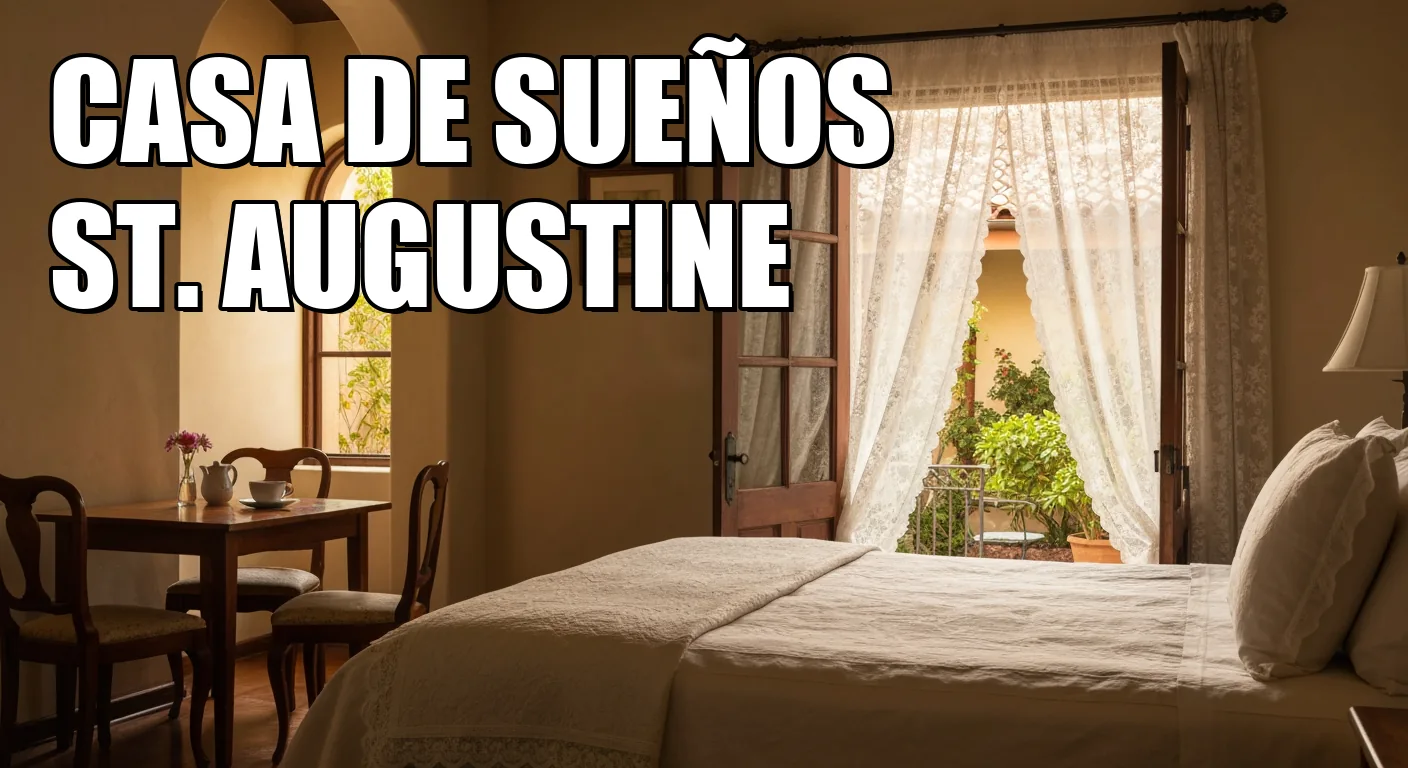
Consider the Casa de Sueños, tucked away on Cordova Street. While many might stroll past, captivated by the Castillo de San Marcos, this early 1900s structure offers a fascinating architectural evolution. Its prominent Palladian windows, a hallmark of classical design, integrate surprisingly well with the Mediterranean-style archways and French doors, creating light-filled spaces that speak to a specific moment in American design – the Spanish Colonial Revival. What’s often missed here is its strategic location along the 18th-century Rosario Line, an earthen defensive wall from the First Spanish Period. You're not just sleeping in a pretty room; you're within steps of where colonists once braced against British invasion. For those truly seeking to immerse themselves, I'd strongly recommend booking the Valencia Room. Its Hemingway-themed decor, with its jetted tub and private balcony, doesn't just offer luxury; it subtly evokes a sense of timeless adventure that feels right at home in St. Augustine. Expect to pay between $159 to $299 nightly, a fair price for such prime historical real estate. For the best experience, try visiting in the shoulder seasons, April-May or September-October, to avoid the sweltering summer heat and peak spring break crowds.
A short walk away, the 44 Spanish Street Inn provides a slightly different, yet equally authentic, lens into St. Augustine's Spanish past. While Casa de Sueños leans into Revivalism, this 1920s boardinghouse offers a more direct portal to that era's quintessential charm. The original hardwood floors and vintage courtyard aren't just decorative; they echo the post-1915 Panama-California Exposition boom when Spanish Colonial Revival architecture surged in popularity across the U.S. What makes this inn unique is its "breakfast cottage" setting, transporting guests into a beautifully restored 1920s Spanish design element – a subtle but powerful reminder of how domestic life adopted these styles. Forget the crowded chain hotel breakfasts; this is intimate. The Fitzgerald Room, with its private ground-floor entrance and king-sized bed, often goes quickly. Its original hardwood floors and luxurious bath are a testament to the period's understated elegance. Nightly rates here typically fall between $172 and $218. Don't just book a room; ask about the inn's history and its connection to the city's architectural evolution.
### New Mexico's Adobe Soul: Where Spain Meets Pueblo
Venturing west, New Mexico’s Spanish Colonial identity merges seamlessly with indigenous Pueblo traditions, creating a distinct aesthetic known as Pueblo Revival. This isn't just about superficial decor; it's a deep cultural blending that has shaped the very fabric of the landscape. Many guides will point you to Santa Fe, but the entire region is rich with these connections.
In Farmington, the Casa Blanca Inn stands out, not for its ancient origins, but for its meticulous adherence to authentic colonial design principles from its 1953 construction. Its distinctive solarium breakfast rooms with transparent walls, showcasing lush gardens and water fountains, are a deliberate nod to the Spanish Colonial hacienda design, which prioritized the integration of indoor and outdoor spaces. This focus on natural light and connection to the landscape feels incredibly modern, yet draws from centuries-old wisdom about living harmoniously with the arid environment. While it lacks the centuries-old patina of some sites, its commitment to the *spirit* of colonial design is remarkable. With average rates hovering around $150-$162 per night, it offers an accessible entry point to this architectural style. Suites often feature fireplaces and kitchenettes, ideal for longer stays or those seeking a home-away-from-home feel.
Further south, in the vibrant heart of Santa Fe, Piñon Court by La Fonda presents perhaps the most iconic expression of Pueblo Revival Spanish Colonial style. This site has welcomed travelers since 1607 – a truly staggering timeline. The current structure, a masterpiece designed by Isaac Hamilton Rapp and later expanded by John Gaw Meem and Mary Elizabeth Jane Colter, isn't just a hotel; it's a living museum. You'll encounter adobe walls, wooden roof beams called *vigas*, and furnishings crafted by local artisans. The original artwork commissioned by Willard Clark in the 1930s blends Moorish, Renaissance, and Byzantine influences, illustrating the complex global lineage of Spanish design. What surprised me here wasn't just the beauty, but the profound sense of continuity; it feels like stepping into a deeply rooted cultural story. Rates average $225-$259 nightly, with king suites featuring kiva fireplaces being especially popular. Book well in advance, particularly if you're aiming for the autumn months, when the aspens turn and the Santa Fe Plaza buzzes with art markets.
And then there's Taos, a place of raw beauty and fierce cultural pride. The La Doña Luz Inn captures this spirit perfectly. This quaint adobe inn isn't grand, but its traditional Taos architectural elements – colorful adobe construction, kiva fireplaces (the iconic beehive-shaped adobe fireplaces common in the Southwest), and a wealth of authentic Native American and Spanish Colonial antiques – create an immersive experience that feels utterly organic. Its location directly across from Kit Carson's historic house underscores Taos's pivotal role in 19th-century territorial history, a period deeply shaped by its Spanish colonial legacy dating back to the 1600s. Forget the polished perfection of some luxury resorts; La Doña Luz offers an honest, soulful connection to Northern New Mexico's heritage. The Luxury Penthouse, with its king bed, hot tub, and mountain views, is a coveted choice, though standard rooms hover around $150-$200+ nightly depending on the season. If you want a genuine taste of Taos, arrive in the morning and explore the nearby Kit Carson Home and Museum before checking in.
### San Antonio's Grandeur and Missouri's Hidden Gem
San Antonio, Texas, often evokes images of the Alamo, but its Spanish Colonial roots run far deeper, influencing much of its urban fabric and hospitality. The Noble Inns collection, particularly the Oge House, beautifully illustrates this. While the Oge House itself is an antebellum neoclassical mansion, it boasts significant Spanish Colonial Revival influences – expansive wrought-iron railings, marble baths, and period fireplaces in every room. This blending isn't an accident; it reflects San Antonio's journey from a Spanish military garrison and mission center founded in 1718. You're not just observing; you're *living* in a tangible link to the city's foundational history, right next to the iconic River Walk. What often surprises visitors is the sheer elegance of the accommodations; the Oge House suites, with their luxurious granite bathrooms and Whirlpool tubs, feel more like a grand European retreat than a typical B&B. Expect rates from $104-$239 nightly, a range that allows for both accessible and premium experiences. Booking direct through nobleinns.com is usually the best bet.
Perhaps the most unexpected outpost of Spanish Colonial influence lies along the Missouri River in St. Charles. Boone's Colonial Inn offers a remarkable glimpse into a forgotten chapter of American history: the 40-year period (1769-1804) when St. Charles was under Spanish rule. Housed within circa-1830s limestone buildings with three-foot-thick stone walls and 190-year-old logs, the inn masterfully adapts Spanish Colonial design to the frontier context. Heavy carved wooden doors, spiraled columns, and period-appropriate marble baths create a sense of stepping into a different era. The most unique aspect here? The innkeepers' dedication to preserving this specific historical window, even offering period dining experiences that replicate authentic 1804-1810 menus. It's a living history lesson, served with genuine hospitality. The Spanish Colonial Suite, with its exposed 179-year-old stone wall and Spanish tile, is a popular choice for obvious reasons, offering an air-jetted tub and spa products for a truly indulgent, yet historically resonant, stay. This isn't just a place to sleep; it’s an immersive narrative. Rates can be confirmed by calling them directly at (636) 493-1077. This is a perfect destination for history buffs looking for a less-traveled story.
These bed and breakfasts are more than just places to lay your head; they are portals to understanding a foundational, often understated, part of America's story. They challenge the monolithic narrative, revealing how Spanish architectural and cultural traditions adapted, blended, and endured across diverse landscapes. From the sun-drenched courtyards of St. Augustine to the adobe-walled serenity of New Mexico, and the surprising echoes on the Missouri River, each offers a unique, deeply human encounter with history. So, next time you plan a trip, consider stepping beyond the obvious. Choose a stay that doesn't just *show* you history, but invites you to *live* it, however briefly, and discover insights that no ordinary guidebook could ever convey.
Historic Inns and B&B Stays Worth Booking
Use this section for real inns with a clear property story, a defined location, and an overnight stay people can actually plan around.
Exploring Spanish Colonial Bed and Breakfasts: Your Traveler's Companion
What is the origin of bed and breakfast?
Bed and breakfast accommodations originated during the Middle Ages in England and Europe, where travelers would stay in private homes and receive lodging and meals from families, evolving from the commercial coaching house model.
When did bed and breakfast become popular?
B&Bs gained significant popularity after World War II when Americans traveling to Europe stayed at European B&Bs and brought the concept back to the United States, with a major resurgence beginning in the 1980s as properties were renovated and new ones opened.
When did breakfast become popular in the United States?
Breakfast became popular in the United States during the 19th century, especially during the Victorian Era when wealthy families dedicated rooms to breakfast, and it exploded further with industrialization and the introduction of packaged breakfast foods in the late 1800s and early 1900s.
Why did Nobility avoid eating breakfast?
Medieval and early modern nobility avoided breakfast because physicians considered it a form of gluttony and believed the body needed more time to digest the previous night's meal, though the Catholic Church and religious leaders also condemned the morning meal as promoting 'lustful' appetites.
What is the 510 rule in hotels?
In New York City, the 22-510 rule refers to the Displaced Hotel Service Workers Act, which addresses protections for hotel employees during changes in ownership, rather than a specific regulation about B&B operations or services.
What are bed and breakfasts called now?
Bed and breakfasts are now also called inns, guesthouses, guest accommodations, or boutique hotels, with the abbreviation B&B remaining the most common term used in the hospitality industry.
How much did a hotel room cost in 1950?
In 1950, the average hotel room rate was $5.91 per night in the United States, though prices varied from approximately $5 to $20 depending on the location and quality of the establishment.
What is the bed and breakfast rule?
A bed and breakfast is typically defined as a small, owner-occupied lodging establishment with fewer than 10 guest rooms that provides overnight accommodation and breakfast, often operating from a residential property with personalized service.
What is the 30 day rule for bed and breakfasting?
The 30-day rule is a tax regulation that requires a 30-day window between selling and repurchasing an investment to claim capital losses for tax exemption purposes, not a rule specific to lodging establishments.
What is the history of Spanish colonial bed and breakfast in the United States?
Spanish colonial B&Bs in the US draw from the Spanish Colonial Revival architectural movement that flourished between 1915 and 1931, particularly in Florida, Texas, California, New Mexico, and Arizona, with properties featuring authentic colonial design, arches, courtyards, and local antiques.
Where are the best Spanish colonial bed and breakfasts located in the US?
Top locations for Spanish colonial B&Bs include St. Augustine, Florida (the nation's oldest city with historic colonial structures), Taos and Santa Fe, New Mexico, and various parts of Arizona, where authentic and revival-style Spanish colonial architecture is prevalent.
What is the average cost of staying at a bed and breakfast in 2025?
According to 2025 data, the average daily rate for a B&B in the US is approximately $208 per night, with prices ranging from around $97 to $303 depending on location, season, and amenities, with January being the least expensive month.
How far in advance should I book a bed and breakfast?
The optimal booking window for a bed and breakfast is approximately 45 days in advance, which allows sufficient time for availability while ensuring competitive rates and accommodating special requests.
What should I know before staying at a bed and breakfast for the first time?
First-time B&B guests should expect a more personal experience than hotels, communicate dietary restrictions and special requests in advance, book directly with the property when possible, plan to check in at specified times, and understand the innkeeper's house rules regarding common areas and breakfast service.
What are the licensing and accreditation requirements for bed and breakfasts in the United States?
Licensing requirements for B&Bs vary by state and locality, generally requiring proper licensing, health department inspections, and compliance with state and local regulations, with many B&Bs being regulated similarly to hotels regarding safety and sanitation standards.
Why This Page Exists
Maison builds place guides to help readers plan a real visit or understand a real site. When a page makes present-day access, booking, or visitor claims, those details are revised against public-facing source material and editorial review. For the wider standards behind that work, see methodology.
The Cornerstone Brief
One historic place, once a week — what it is, why it matters, whether it's worth going. No filler, no paid placements.
Coming soon. Unsubscribe any time.
We use cookies to enhance your experience. By continuing to visit this site you agree to our use of cookies.