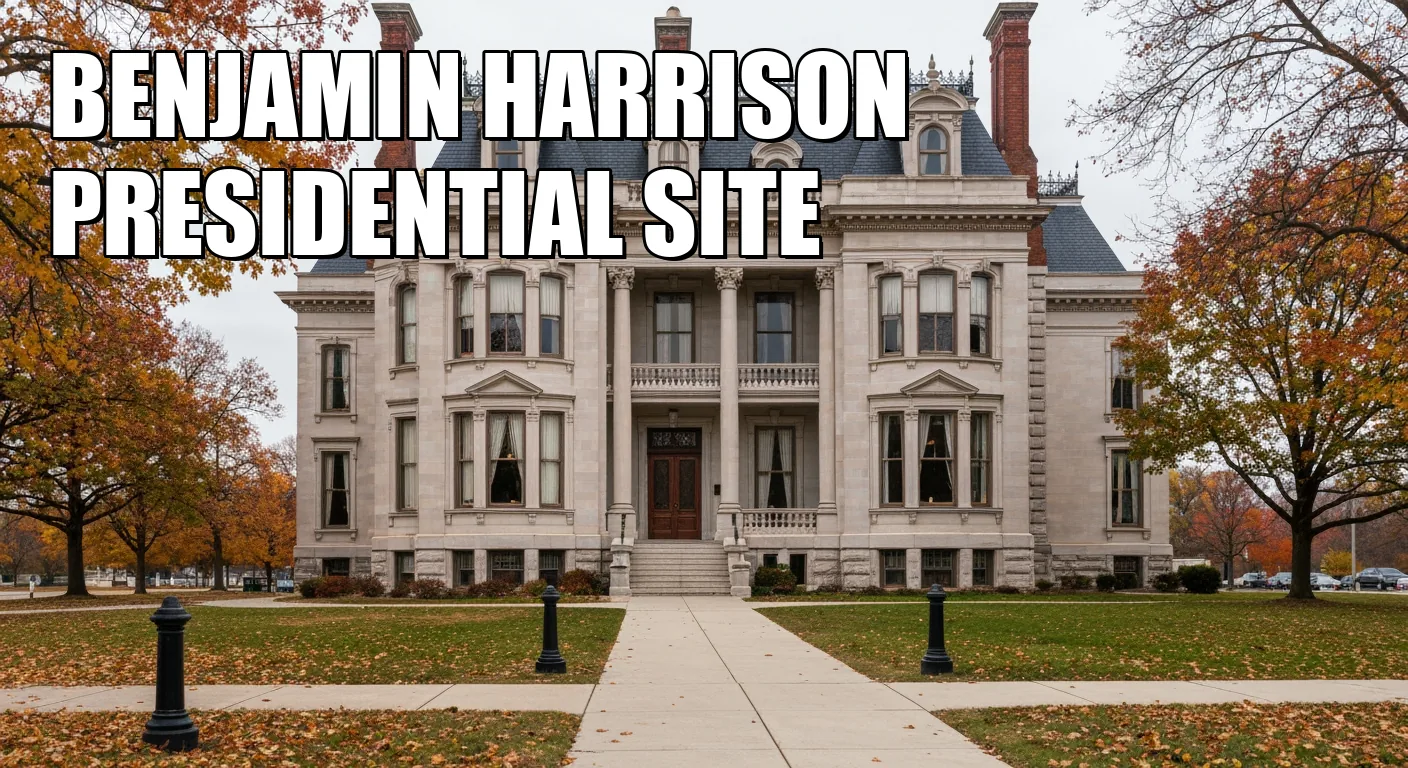
Stand on the brick walk at 1230 North Delaware Street, Indianapolis, and the Italianate mass of Benjamin Harrison’s house still reads like a lawyer-president’s private stage: tall windows, deep eaves, and a broad English-Regency porch that looks campaign-ready. Inside is guided-only presidential reality—about 70–90 minutes with a docent through 16 rooms and roughly 10,000 square feet, with about 75% of some 3,700 furnishings and memorabilia actually owned by the Harrison family. Tickets: $16 adult, $15 seniors/veterans, $11 ages 5–17 and college students with ID, free under 5 and members. Online code POTUS23 (when live) can shave a couple of dollars if you book 24+ hours ahead.
Benjamin Harrison Home 2026: Real house, real campaign lore, and who should book the tour before Old Northside lunch.
Hours, tours, access
Welcome Center (reconstructed carriage house / President’s Cabinet gift shop): typically Mon–Fri 9:30 a.m.–3:30 p.m., Sat 10–3, Sun 12–3. House tours only: Mon–Thu at 10, 12, 2; Fri hourly 10–2; Sat hourly 10–3; Sun hourly 12–3—confirm on bhpsite.org before you drive. Capacity is limited; same-day walk-ups lose when school groups fill the slot. 2026 blackout stretches include early January restoration (Jan 1–19), select spring/fall performance and holiday dates (e.g. Apr 5, Apr 26, May 23–25, Aug 8 croquet day, Sep 7 Labor Day, Oct 25, Nov 26, Dec 24–25, and late Dec into mid-Jan 2027). Parking lot off North Talbott / East Alley 1200 N; bus parking for groups. Site is wheelchair-forward: entrance ramps, elevator for first two floors, elevette to third-floor ballroom, loaner wheelchair, touch baskets and verbal description for low vision, written scripts and ASL for groups of 10+ with two weeks’ notice.
Groups 10–120 need advance booking at (317) 631-2717 or harrison@bhpsite.org weekdays 9–5; enactor welcomes cost extra. Grounds photography for portraits needs advance permission—do not stage wedding shoots without a permit.
What you walk through
Dining room with presidential china; parlors and library with recreated wallpaper; study with White House–era personal items including an Oval Office desk attributed to his presidency; master bedroom where the 23rd president died; third-floor ballroom for rotating shows. Docents work from interpretive notes rather than a rigid script, so two visits can emphasize different objects—campaign memorabilia one day, family letters the next. 2026 exhibit band: “Presidential Ink” (pen power, Mar 19–Dec 4) and “There at the Founding” (family generations into early 2027), timed for America 250 interest. First Fridays can add “Coffee with the Curator” (~$6/person class when sold) for close-up odd objects with coffee and donuts—pair with a house tour for a half-day history stack.
Neighborhood: Old Northside leaders’ streetscape—former homes of author Meredith Nicholson and suffragist May Wright Sewall, plus Morris-Butler House and the Indianapolis Propylaeum. Short hop to Mass Ave arts, Central Canal, Scottish Rite Cathedral, and the Children’s Museum if kids need a second stop. Sleep downtown or boutique (Bottleworks, Ironworks, Hotel Broad Ripple class) when making a weekend of Indy presidents-plus-culture rather than a 90-minute dash.
Real / legend / book
Presidency (documented): 1888 electoral win while losing the popular vote to Cleveland by ~100,000; Sherman Antitrust Act 1890; Land Revision Act 1891 making him the first president to reserve forest lands on the public domain; failed southern voting-rights and school-aid pushes. Front-porch campaign (half-myth on architecture): He did invent the modern front-porch style in 1888—80+ speeches to 80,000+ train-brought listeners outside this house. But the grand porch you photograph was added 1895–96 after the White House years; 1888 used a small left-front porch. Law office room (display vs fact): a furnished second-floor “law office” confuses visitors—Harrison practiced downtown in a demolished building, not in this residence. Caroline’s china (true): First Lady Caroline Scott Harrison’s hand-painted and designed china is the real deal—artist skill, not tour fluff.
Who yes, who no
Who yes: presidential completists, Indiana history teachers, accessibility-conscious museum goers, families with $11 youth tickets. Who no: self-guided mansion wanderers (not allowed inside), visitors who need same-day walk-up on peak capacity, anyone hunting a haunted-house product.
Three scenarios. (1) Solo buff: $16 (or ~$14 online)—70–90 min deep dive, then walk Delaware Street façades. (2) Family 2 adults + teen + toddler: ~$43 ($32+$11+free under 5)—accessible paths help strollers at the Welcome Center even if you skip the elevette. (3) Seniors + curator coffee: two senior tickets $30 + two coffee events ~$12 ≈ $42. Bottom line: Hoosier president, real furnishings density, and a porch story that needs a date check—book the guided slot, read the 1888 vs 1896 porch, and leave the downtown law office myth at the stairs.
The Cornerstone Brief
One historic place, once a week — what it is, why it matters, whether it's worth going. No filler, no paid placements.
Coming soon. Unsubscribe any time.