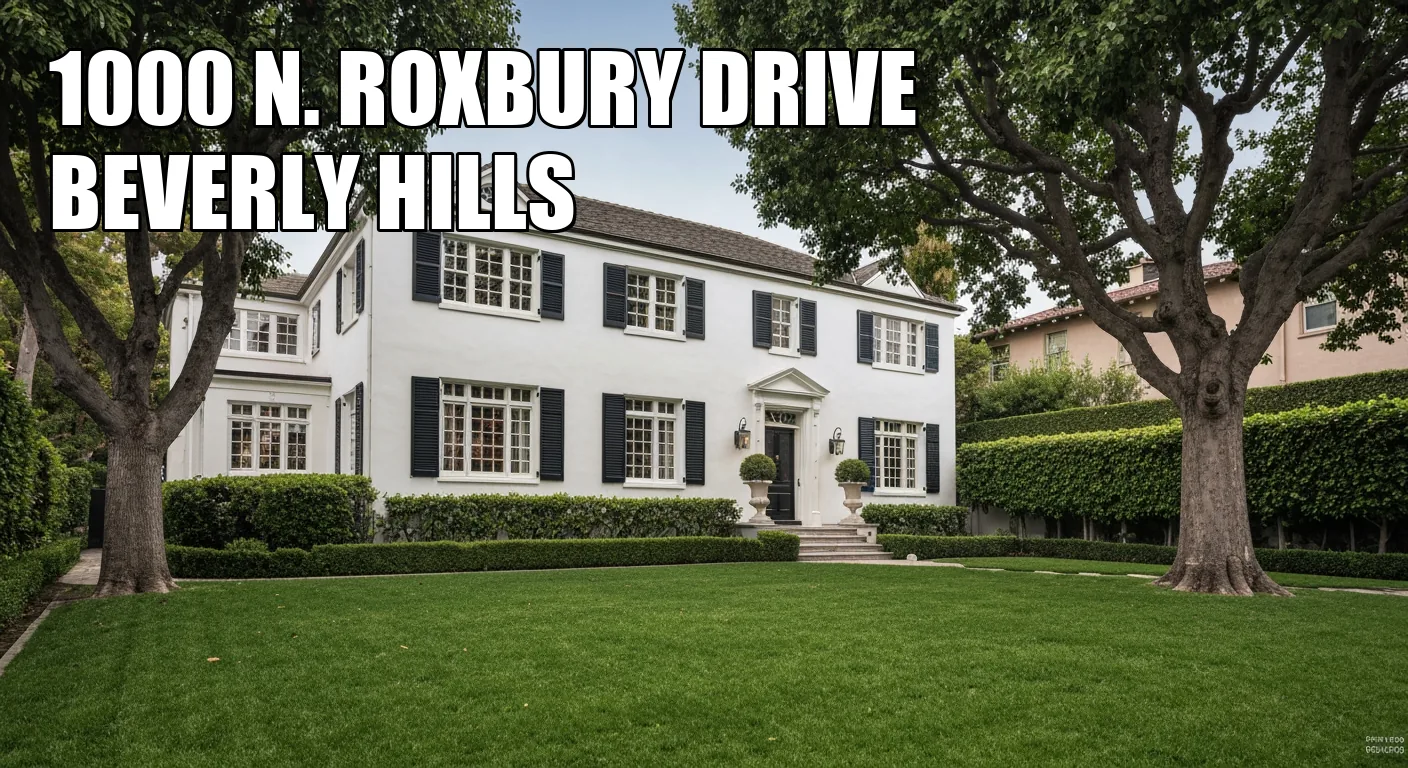
Before the ubiquitous celebrity home tours bus routes became as predictable as the sunrise, there was a time when Hollywood’s biggest stars lived in a semblance of neighborhood normalcy, albeit a highly gilded one. Lucille Ball, the fiery redhead who defined an era of television, called 1000 North Roxbury Drive in Beverly Hills her primary residence from 1954 until her passing in 1989. This wasn't merely a house; it was a stage for unscripted dramas and quiet moments alike, a place where the line between private life and public persona often blurred in the most unexpected ways.
### What Kind of Home Did Lucy Keep? Unpacking Her "Bastard American" Style
Walking past the original colonial-style home in its heyday, one would have observed a rather stately, yet classic, appearance. Built in 1936, this two-story structure spanned a generous 7,499 square feet, boasting six bedrooms and eight bathrooms on nearly an acre of prime Beverly Hills real estate. Its white stucco exterior, common for the period, projected an air of sophisticated grandeur, hinting at the star power within without being overtly ostentatious. This was a house built for comfort and presence, a place where a family could grow, rather than a mere showpiece for fleeting fame.
Yet, peel back that elegant exterior, and you'd discover an interior aesthetic distinctly Lucy. She famously described her decorative philosophy as "early Victorian meets bastard American," a phrase that perfectly encapsulates her approach to comfort over pure formality. Forget museum-quality art or stiff, untouched parlors; Ball’s home was warm, lived-in, and remarkably unpretentious for a star of her magnitude. When a journalist visited in 1985, they noted the living room contained little more than a painting of her second husband, Gary Morton, playing golf, and a backgammon table—a testament to her competitive spirit and preferred downtime activity. This wasn't a home curated for public consumption, but for genuine, daily life, a refreshing contrast to the often-stiff, perfectly posed celebrity interiors we see today.
### When Hollywood Came Knocking (Literally): Roxbury Drive's Unscripted Dramas
The neighborhood itself was a character in Lucy’s story, a veritable Who's Who of mid-century Hollywood royalty. Her immediate next-door neighbor was the legendary comedian Jack Benny, who lived at 1002 North Roxbury Drive. Family lore recounts Benny’s impromptu visits, none more memorable than the time he strolled into the Ball-Morton dining room mid-dinner, violin in hand, played a circuit around the table, and departed without uttering a single word. Such spontaneous, almost theatrical, neighborly interactions were par for the course in this unique enclave, offering a glimpse into a time when celebrity was perhaps more accessible, more human, than the carefully guarded personas of today.
Perhaps the most iconic intersection of Lucy’s private life and her public career occurred on May 30, 1955, when the exterior of her actual Roxbury Drive home became a backdrop for an episode of "I Love Lucy." In the Season 4 episode titled "The Tour," Lucy and Ethel famously attempt to swipe a grapefruit from what was purported to be actor Richard Widmark's yard. In reality, Widmark was uncomfortable with his home being featured, so producers, with Ball’s permission, used the exterior of her own residence instead. The brick wall seen in the episode was, in fact, Lucy's own property boundary, a detail that resonated so deeply with fans that they later attempted to climb that very wall, hoping to recreate the comedic chaos. This wasn't merely a filming location; it was a moment where the fiction of "I Love Lucy" became inextricably linked with the physical reality of its star’s life, transforming a private home into a piece of television history.
### Beyond the Gates: The Realities of Celebrity Living on Roxbury Drive
Life on Roxbury Drive, even for a megastar like Lucille Ball, wasn't always a parade of charming neighborly violin solos. The sheer magnetism of her fame meant constant intrusion, a far cry from the serene privacy one might expect from such an exclusive address. Ball frequently recounted incidents of tour buses stopping outside her home, with visitors going so far as to pack picnics and settle down on her front lawn, treating her private property like a public park. This wasn't just an annoyance; it was a profound breach of privacy, forcing the star to contend with an unrelenting gaze that few today could truly comprehend.
Enter Jimmy Stewart, another esteemed neighbor who lived just down the street at 918 North Roxbury Drive, offering a rather ingenious, if slightly mischievous, solution. Stewart, no stranger to the perils of celebrity, advised Ball to activate her sprinkler system whenever tourists began to make themselves at home on her lawn. It’s a wonderfully practical, quintessentially Hollywood anecdote that highlights both the challenges of fame and the camaraderie among those who bore its weight. This story offers a sharp counterpoint to the gilded image of celebrity, reminding us that even the most adored stars faced mundane, yet persistent, annoyances.
### The Ghost of Lucy's House: What Remains for the Modern Visitor?
For those hoping to visit Lucille Ball’s former residence today, a crucial piece of advice: manage your expectations. After Ball's death in 1989, the house was sold, and subsequent owners undertook extensive renovations. The once-familiar colonial facade, with its distinctive white stucco, was significantly altered, including the addition of new stucco that effectively rendered it virtually unrecognizable from its original appearance. This wasn't done out of malice, but likely as a deliberate strategy to discourage the very tourist invasions that plagued Ball during her lifetime.
So, for a modern admirer driving down North Roxbury Drive, the experience is less about direct recognition and more about historical imagination. You won’t find the iconic brick wall from "The Tour" episode, nor will you see the house that housed Lucy’s "bastard American" interiors. What you will find, however, is a street steeped in Hollywood legend, a quiet testament to a bygone era of celebrity. A drive-by is certainly possible; traffic is usually light on weekdays, though weekends can see a slight increase in curious sightseers. There's no admission fee, of course, as it remains a private residence. Parking can be found on side streets, but be mindful of posted restrictions and local residents' privacy.
### Roxbury's Enduring Allure: More Than Just Bricks and Mortar
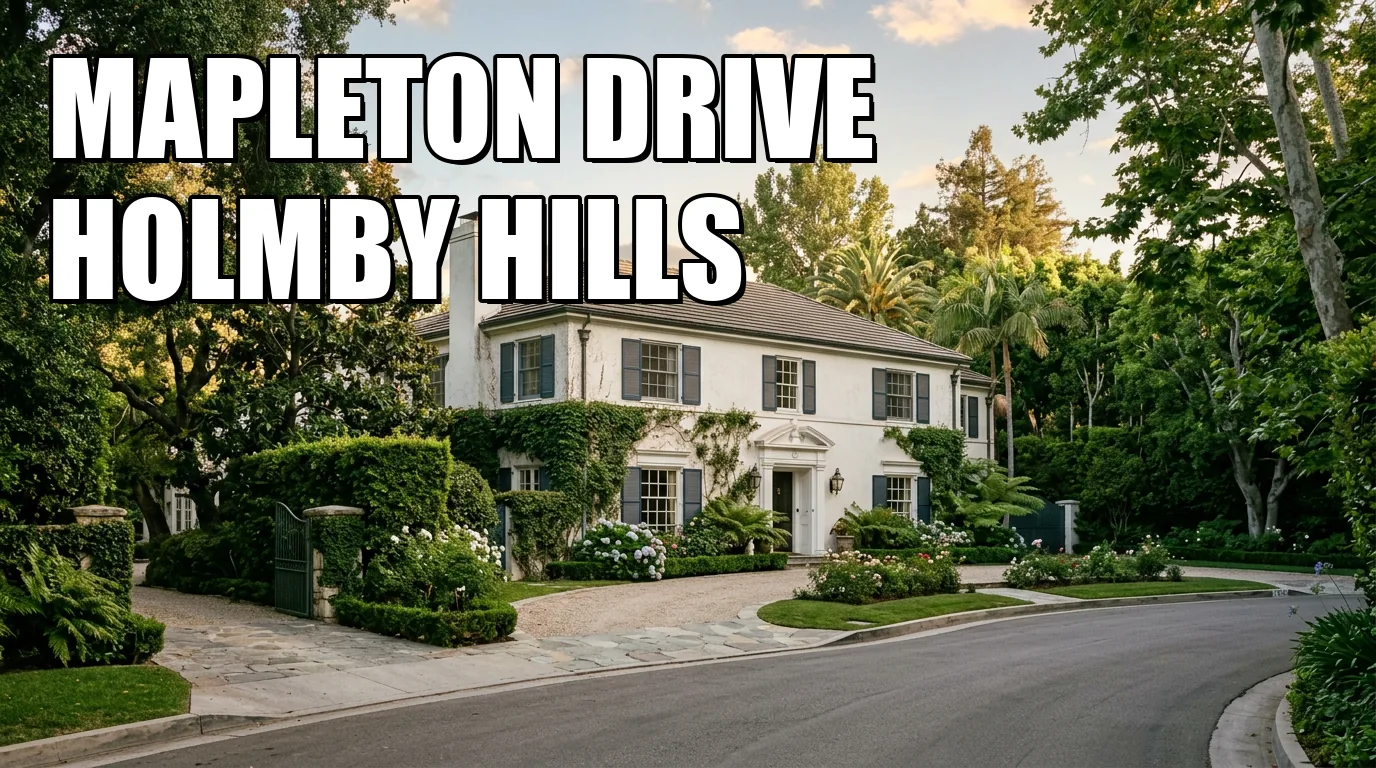
While the physical structure of Lucy's house might have changed dramatically, the historical significance of its location has not. Roxbury Drive was, and remains, one of Hollywood's most fabled streets. Beyond Ball and Benny, it was home to legends like Ginger Rogers, the compositional genius of George and Ira Gershwin, the formidable Agnes Moorehead, and the iconic Spencer Tracy. Driving along this tree-lined avenue, especially during the quieter months of late fall or early spring, allows for a meditative reflection on the sheer concentration of talent that once resided here.
This isn't merely a collection of fancy houses; it’s a living museum of Hollywood’s golden age, a street where the ordinary and extraordinary intertwined daily. Understanding that Lucy’s former home is now largely anonymous shouldn't deter a thoughtful visitor. Instead, it offers an unexpected lesson: that the true essence of these historical sites often lies not in their preserved facades, but in the stories they tell, the insights they offer into the lives lived within, and the powerful, enduring legacy of the people who called them home. What truly remains for the visitor to "see" is the context, the echoes of laughter, the spirit of a neighborhood that shaped, and was shaped by, some of America's most beloved figures.
Discover Lucille Ball: Your Complete Guide to Lucy's Heritage in Jamestown, New York
Where is the Lucille Ball Desi Arnaz Museum located?
The Lucille Ball Desi Arnaz Museum is located at 2 W 3rd St, Jamestown, NY 14701, in western New York near the Pennsylvania border, approximately 90 minutes from Buffalo and 4 hours from Rochester.
What are the current admission prices for the museum?
Adult tickets are $23.00, seniors (60+) are $22.00, college students and youth (13-17) are $20.00, children (6-12) are $18.00, and children under 5 are free. Dual admission to both the Lucy Desi Museum and National Comedy Center is $43.50 for adults.
What are the museum's hours of operation?
The museum is open Thursday through Monday from 10 AM to 5 PM and closed Tuesday and Wednesday (except Tuesdays during Memorial Day through Labor Day). Holiday closures include Thanksgiving, Christmas Eve, Christmas, New Year's Eve, New Year's Day, and Easter.
How long should I plan to spend at the museum?
Most visitors spend 1-2 hours exploring the museum, though you can easily spend longer if you want to view all exhibits and gift shop offerings.
What can I see and do at the Lucille Ball Desi Arnaz Museum?
The museum features exact recreations of the I Love Lucy TV studio sets, including the Ricardos' New York City apartment and their Hollywood hotel suite, along with Lucille Ball's Emmy Awards, original costumes, wardrobe, scripts, photographs, letters, and personal memorabilia from both Lucy and Desi's careers.