There's a curious allure to a truly old house, isn't there? Not just a century-old Victorian, but a structure whose timbers remember the rumble of muskets or the whispers of newly-arrived colonists. These aren't simply buildings; they're textbooks etched in wood and stone, though often, the most fascinating chapters remain unread by the casual tourist. My travels across the United States have continually pulled me towards these venerable edifices, particularly those bearing the distinctive gambrel roof – a roofline often associated with Dutch Colonial style, but one that took root in various forms across early America, particularly in New England.
A gambrel roof, for the uninitiated, is essentially a two-sided roof, each side having two slopes. The lower slope is steeper than the upper slope, which creates more usable space within the attic or second floor. Think of it as a barn roof on a house, but often with a more refined, elegant curve or angle. It’s a pragmatic design, maximizing headroom and minimizing building materials compared to a full gable. But beyond utility, these roofs became a signature, telling tales of settlement patterns, economic realities, and even the architectural whims of their eras. We're going to dive into five such houses, each claiming a significant place in the narrative of America's oldest, and each offering a unique window into our past, if you know where to look.
The Fairbanks House: Dedham, MA's Unvarnished Truth of Time
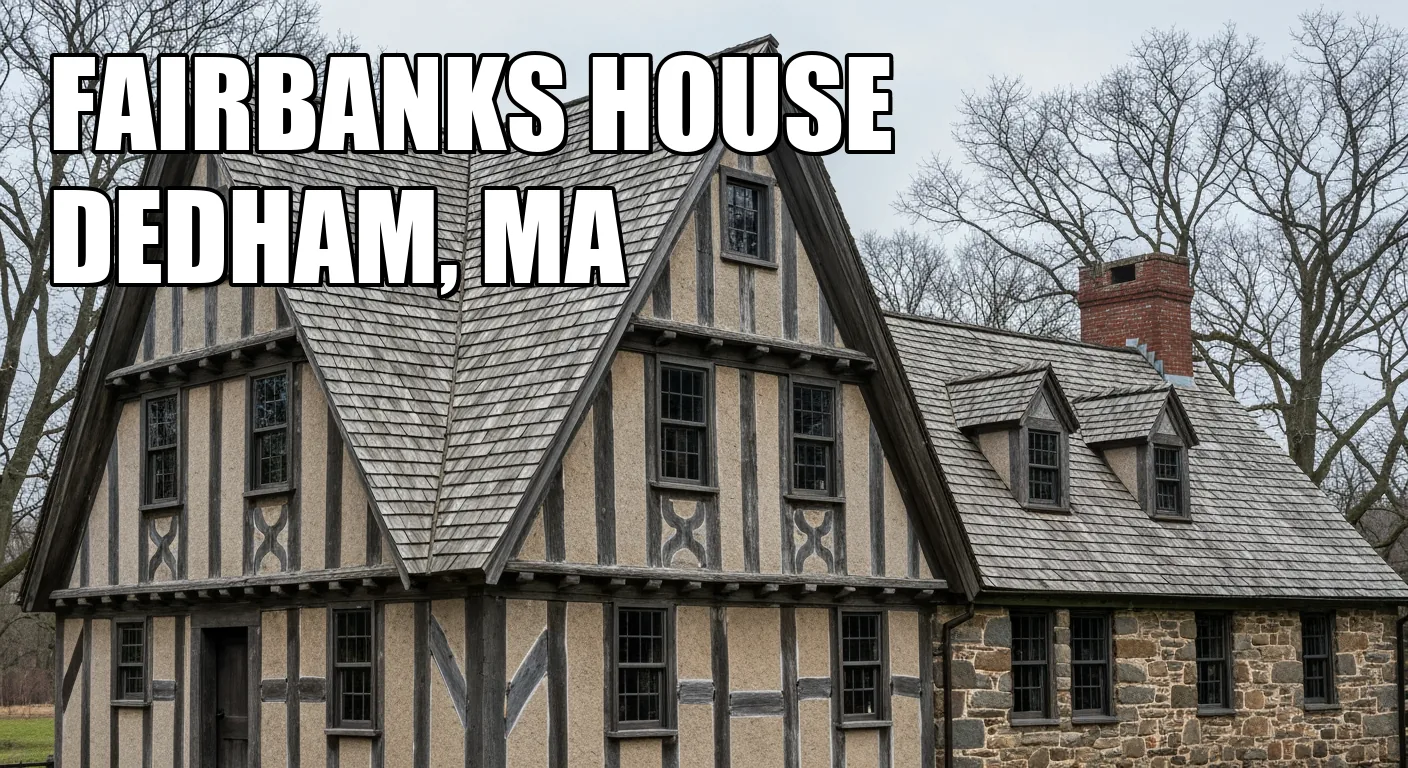
How many guides gloss over the nitty-gritty of survival? The Fairbanks House, tucked away in Dedham, Massachusetts, is often touted as the oldest surviving timber-frame house in North America. Built between 1637 and 1641 by Jonathan Fairbanks, who arrived from Yorkshire, England, this isn't a story of grand design, but of sheer, stubborn endurance. What I find most fascinating isn't just its age, determined by dendrochronology – tree-ring dating, which precisely pinpoints when the timber was felled (1637 for the hall summer beam, 1641 for a support post) – but *how* it managed to stay largely intact. Unlike many homes of the wealthy that were continually "modernized" into oblivion, the Fairbanks family's declining fortunes in the 1800s acted as an unintentional preservation mechanism. They simply couldn't afford to tear down and rebuild, leaving much of the original fabric relatively undisturbed.
Visiting the Fairbanks House today means stepping into a somewhat raw, authentic experience. This isn't a gilded mansion; it's a testament to early colonial life, where comfort was secondary to shelter. While extensive repairs, including replacing rotted timbers and treating powderpost beetles in the 1970s, have been necessary to keep it standing, these interventions aimed to stabilize, not beautify, in a way that sometimes feels jarringly honest. You won't find perfectly recreated interiors; instead, expect to see the sturdy, unvarnished bones of a home that predates most of what we consider American history. Its gambrel wings, likely added by 1668, are typical of early New England interpretations, functional and sturdy, rather than overtly decorative. To truly appreciate it, visit in the shoulder seasons – April/May or September/October – when the crowds are thinner, allowing you to linger and absorb the quiet weight of its history without feeling rushed.
Peter Tufts House: Medford, MA's Brick and Ambition, Masked by Revival
Just a stone's throw from the intellectual bustle of Boston, the Peter Tufts House in Medford offers a stark architectural contrast to the Fairbanks' timber frame. Erected between 1677 and 1680, this isn't just one of America's earliest gambrel roofs; it's also one of the oldest surviving brick houses in the United States. Peter Tufts Sr., having acquired land that included a brickyard, wisely commissioned English brick mason William Bucknam. What strikes me immediately are the walls – a colossal 18 inches thick – and the end chimneys cleverly integrated directly into those stout brick walls, a rarity for the time and region. The roof itself, described as having a "steep main roof slope (51°) truncated at the top," is a pure, early gambrel, a bold statement in an era dominated by simpler gables.
Yet, the story here isn't solely about original fabric. The Tufts family sold the property in 1728, and it subsequently passed through several hands. The real challenge for the historical purist comes with the 1887 purchase by General Samuel Lawrence, who, as a wedding gift for his daughter, embarked on a comprehensive Colonial Revival remodeling. This wasn't preservation as we understand it today; it was a re-imagining. Only the original ceiling beams and parts of the central hall staircase survived this transformation. Dormer windows and a front porch, defining features often associated with the house, were added during this 1890s renovation. So, while you're gazing at a truly ancient structure, you're simultaneously seeing a late 19th-century interpretation of colonial charm. It’s a fascinating paradox, revealing how different generations sought to connect with, and reshape, the past. Don't expect a perfect historical snapshot; instead, consider it a layered historical document. Parking can be tricky in this residential area, so aim for a weekday morning to avoid competition for street spots.
Dyckman Farmhouse: Manhattan's Resilient Rural Heart Preserved
Imagine finding a genuine 18th-century farmhouse, complete with a gambrel roof and curved spring eaves, smack dab in the middle of Manhattan. The Dyckman Farmhouse, built circa 1783-1785 by William Dyckman, is precisely that anachronism. It replaced an earlier family home destroyed during the American Revolutionary War, making this a story of resilience and rootedness in a landscape that would eventually become the world's most bustling metropolis. The construction, a charming mix of fieldstone, brick, and white clapboard, epitomizes the Dutch Colonial style, characterized by that distinctive sweeping, low-pitched gambrel roof that appears to extend gracefully, almost reaching the ground.
My initial visit left me with a profound sense of awe, not just at its age, but at its very existence against such incredible odds. By the early 20th century, it was a derelict anomaly, facing the wrecking ball. It was two Dyckman sisters, Mary Alice Dyckman Dean and Fannie Fredericka Dyckman Welch, who, in 1915, stepped in and purchased the property. Their 1915-1916 restoration, overseen by architect Alexander McMillan Welch, aimed to return the house to its "earliest appearance," even demolishing an 1830s northern wing. This decision reflects the early 20th-century preservation philosophy, which sometimes sacrificed later historical layers to achieve an idealized "original" state. The 1825 Dutch Colonial-style porches, however, were retained as they had become integral to the house's character. Today, it stands as Manhattan's only remaining 18th-century farmhouse in the Dutch Colonial style, a vivid reminder of the island's bucolic past. Plan your visit for a weekday, early in the day, to truly enjoy the quiet contemplation this place encourages before school groups or weekend crowds arrive. It's often free, but check their website for specific hours and any temporary exhibits.
Wyckoff House: Brooklyn, NY's True Oldest Home, Obscured by Time
Claiming the title of the oldest surviving structure in New York City and State is no small feat, and the Wyckoff House in Brooklyn wears it with a quiet dignity that belies its tumultuous history. While its construction date is debated, often estimated before 1641 on land purchased by Governor Wouter van Twiller, the Pieter Claesen Wyckoff family began occupying it around 1652. This house is a cornerstone of Dutch Colonial architecture, yet its roof offers an interesting ambiguity. Early descriptions sometimes reference a "salt-box" roof rather than a classical gambrel. However, later 17th-century Dutch moldings discovered within the original portion strongly suggest that the house, in its earliest form, carried that distinctive gambrel profile.
What truly sets the Wyckoff House apart is its lineage. It remained in the Wyckoff family's possession until 1901, a remarkable span of over 250 years. This long family stewardship, however, didn't prevent its eventual decline after being sold to the Brooklyn Realty Company. It took the dedicated efforts of Borough Historian James Kelly and, crucially, the Wyckoff family themselves, who reacquired and then gifted the property to the city in 1970, to save it from demolition. The extensive restoration work, opening it as a museum in 1982, and further restoration in 2001, highlight the immense commitment required to preserve such a fragile piece of history. Visiting the Wyckoff House isn't about grandiosity; it's about connecting with the very genesis of New York's European settlement. It's a humble, yet profoundly significant, structure that quietly challenges the notion that all "oldest" buildings must be visually dramatic. Check their events calendar before you go; they often host cultural programs that bring the house to life in unexpected ways. Parking is generally available on nearby streets, but public transport might be easier depending on where you're coming from in Brooklyn.
Jethro Coffin House: Nantucket, MA's Rebuilt Legacy, Twice Over
Nantucket, with its cobblestone streets and windswept charm, boasts its own "Oldest House," the Jethro Coffin House, built in 1686. This was a wedding gift for Jethro Coffin and Mary Gardner, uniting two prominent island families. Built on Gardner land with lumber shipped from New Hampshire, it embodies the industrious spirit of early colonial Nantucket. Its roofline, often described as a "catslide" on the north side with original twin front gables, reveals a regional adaptation of the gambrel concept, where practicality and local building traditions shaped the final form. The massive central fireplaces and small-paned windows are quintessential First Period New England features.
But the Coffin House’s story is less about continuous preservation and more about dramatic re-invention and resilience. Abandoned and even used as a barn by the late 19th century, it was a Coffin family reunion in 1881 that reignited interest in its fate. The Nantucket Historical Association acquired it in 1923, leading to a significant reconstruction starting in 1927. This restoration, by the Society for the Preservation of New England Antiquities, aimed to restore its "historic appearance," but sometimes with an interpretive hand; for example, replacing 18th-century double-hung sash windows with diamond-paned casements, reflecting a romanticized view of early colonial aesthetics. The most dramatic chapter, however, occurred on October 1, 1987, when lightning struck the house, toppling the chimney and destroying half the roof. The subsequent two-year, million-dollar reconstruction was a modern marvel of historical rebuilding. This isn't just an old house; it's a phoenix, rising twice from the brink of oblivion. When you visit, don't just admire its age; marvel at its tenacity and the dedication required to maintain such a fragile icon. Nantucket is a popular summer destination, so visiting in late spring or early fall means fewer crowds and a more intimate experience with the island and its oldest dwelling. Expect a small admission fee, typical for historical house museums.
These five houses, each with their gambrel roofs, offer far more than simple architectural lessons. They present a complex tapestry of survival, adaptation, and interpretation. They challenge our notions of "oldest" and "authentic," reminding us that even the most venerable structures are living documents, continually shaped by human hands, intentions, and sometimes, the sheer force of nature. To truly appreciate them, one must look beyond the facade, understand the choices made in their construction and preservation, and recognize the quiet tenacity required for something to simply *last* through centuries of change. It's a humbling and deeply rewarding journey into America's architectural soul.