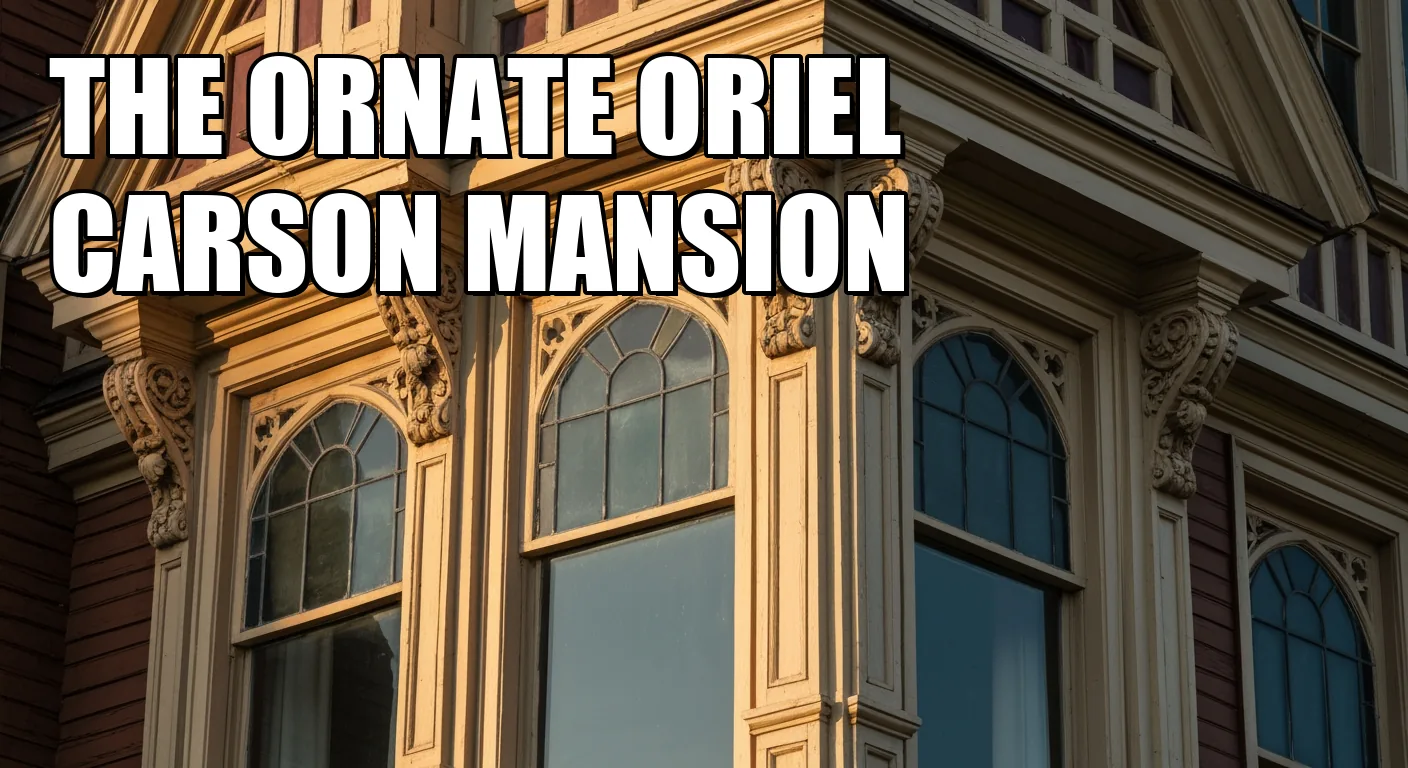
There's a curious charm about an oriel window, isn't there? It’s more than just a bulge on a building; it’s a confident assertion, a graceful projection from an upper floor, typically supported by decorative corbels or brackets. Unlike its ground-level cousin, the bay window, an oriel seems to defy gravity, offering a privileged perch, a small stage for observing the world or simply catching a shaft of morning light. For years, these architectural details have captivated me, sparking questions about the minds that conceived them and the eras that celebrated their distinct elegance.
My journeys across the American landscape have led me down countless streets and through grand edifices, always with an eye toward these subtle yet profound statements. What I’ve learned is that an oriel is rarely just an afterthought; it’s a deliberate choice, often signaling a particular architectural ambition or a desire for expanded light and space where it might otherwise be impossible. These aren't merely decorative elements; they function as a practical solution, particularly in urban settings where ground-floor footprints were constrained, yet homeowners craved panoramic views or simply a touch more elbow room indoors.
What Defines an Oriel, and Why Does it Matter?
Before we dive into specific examples, let's clarify what distinguishes an oriel, that cantilevered jewel box, from the more common bay window. While both project outward, a bay window typically rises from the ground floor, supported by its own foundation. An oriel, by contrast, is suspended above, often from the second story or higher, elegantly supported by brackets, corbels, or sometimes even integrated into a larger architectural mass. This seemingly minor structural difference carries immense significance, allowing for creative spatial solutions in dense urban environments and imparting a visual lightness that ground-supported bays can't quite achieve.
Historically, the oriel's roots trace back to medieval European castles, where they served as defensive lookout points or even private chapels. When the style migrated to domestic architecture, particularly during the English Gothic and Tudor periods, it retained an air of distinction and grandeur. American architects, particularly during the late 19th century’s eclectic revival styles, eagerly adopted the oriel, appreciating its ability to add architectural interest, maximize natural light, and provide coveted interior nooks that lent themselves to reading, conversation, or simply enjoying a broader vista. Understanding this lineage helps us appreciate why certain American buildings chose this particular embellishment.
Washington D.C.'s Scholarly Gaze: The Smithsonian Castle's Enduring Oriel
Stepping onto the National Mall, your eyes are inevitably drawn to the Smithsonian Institution Building, affectionately known as "The Castle." Completed in 1855, this iconic structure, designed by James Renwick Jr., embodies the Norman Revival style, a bold statement for a burgeoning nation. Its south tower boasts a particularly prominent oriel window, which Renwick deliberately incorporated to evoke the venerable, scholarly atmosphere of English colleges. And to a remarkable degree, it succeeds.
This isn't just a pretty window; it's a deliberate architectural whisper of aspiration. Standing below it, you can almost feel the weight of centuries of scholarship that inspired its design. It's a key feature of the building’s Gothic and Romanesque revival design, lending a sense of age and intellectual gravitas to what was, at the time, a relatively new institution. Many guides will point out its beauty, but few emphasize the *intentionality* of its medieval English inspiration—a subtle nod to intellectual heritage embedded in its very stone. Visitors flock to the Castle primarily for the exhibits within, often missing the detailed stories etched into its exterior. Take a moment to truly *look* at that oriel, and consider the ambition it represents for a young America seeking to establish its own centers of learning.
Gilded Age Grandeur in Chicago: Nickerson and Glessner's Contrasting Statements
Chicago, a city synonymous with architectural innovation, offers two fascinating, yet distinctly different, perspectives on the oriel window, both from its Gilded Age boom. The first is the Samuel M. Nickerson House, now the magnificent Richard H. Driehaus Museum. Designed by Edward J. Burling and completed in 1883, this mansion was an ostentatious display of wealth, reportedly costing $450,000—a staggering sum then. Here, an oriel window gracefully punctuates an upper-floor room, functioning as a charming observation point that captures views in three directions simultaneously. It's an obvious, elegant flourish, perfectly in tune with the mansion's refined Italianate exterior and lavish interior, where every detail screamed affluence.
A short distance away, however, lies a more understated, yet profoundly influential, example: the John J. Glessner House. Designed by the legendary Henry Hobson Richardson and completed in late 1887, this structure is a paradigm of Richardsonian Romanesque, known more for its robust, integrated window treatments than for freestanding oriels. While not primarily defined by oriel windows in the traditional sense, Glessner House’s courtyard elevation features projecting architectural elements and deeply set windows with finely carved capitals that achieve a similar spatial and visual effect of drawing light and view inward. Richardson wasn't interested in superficial ornamentation; his projections were about mass, shadow, and the tactile quality of stone, influencing a generation of Chicago architects. It challenges the notion that every grand house needed a decorative oriel; sometimes, the spirit of projection and light was achieved through deeper, more fundamental structural innovation. Visiting both offers a masterclass in contrasting architectural philosophies: one embracing overt stylistic detail, the other pursuing a more fundamental, almost primal, manipulation of form.
For those planning a visit to these Chicago treasures, both are accessible, though with different nuances. The Driehaus Museum (Nickerson House) typically charges an admission fee, and timed entry is often recommended, particularly on weekends. Parking can be a challenge in downtown Chicago, so consider public transport. The Glessner House Museum, a National Historic Landmark, also has an admission fee and operates on a guided tour schedule, which often provides invaluable insights you won't get from a casual stroll. Arriving early for the first tour often provides a less crowded, more intimate experience. Don't expect a café at either; plan your sustenance accordingly before or after your architectural deep dive.
San Francisco's Iconic Oriel Ballet: The Painted Ladies' Enduring Charm
No discussion of American oriel windows would be complete without a pilgrimage to San Francisco's Painted Ladies on Steiner Street, facing Alamo Square. These six Queen Anne-style Victorian houses, built between 1892 and 1896 by developer Matthew Kavanaugh, are a veritable ballet of architectural projections. Their vibrant colors and intricate details are instantly recognizable, gracing countless postcards and film scenes. But look closer than the picturesque facade; their numerous bay and oriel windows are far more than mere embellishments.
These windows are integral to the Queen Anne style's emphasis on asymmetry and maximizing interior space and light. The oriels, often supported by ornate brackets, create charming nooks within, adding depth and character to rooms that might otherwise feel confined. They embody a Victorian fascination with light, air, and connection to the streetscape, all while maintaining privacy. While often dismissed by some architectural purists as merely "pretty," these homes are a masterclass in how mass-produced, yet individually articulated, residential design can become iconic. The sheer number and variety of projecting windows across these houses create a dynamic streetscape that truly exemplifies late 19th-century residential architecture in a way few other American sites can.
Expect crowds at Alamo Square, especially during peak tourist season (summer) and around sunset. Parking is notoriously difficult, so walking or using ride-shares is advisable. While you can admire them from the park for free, remember these are private residences, so respect the occupants' privacy. Many typical guides simply direct you to the photo op, but the real insight comes from appreciating how these windows integrate into the overall Queen Anne aesthetic, demonstrating a clever blend of aesthetics and practicality in urban living.
Buffalo's Millionaires' Mile: An Oriel Gallery of Gilded Age Ambition
Finally, let's journey to Buffalo, New York, and its storied Delaware Avenue Historic District. Often overlooked in favor of flashier East Coast cities, Buffalo's "Millionaires' Mile" offers a staggering collection of Victorian mansions built between roughly 1880 and 1915, when the city was an industrial powerhouse. Here, oriel windows aren't confined to a single standout building; they are a pervasive architectural language, a common denominator across dozens of grand homes.
Walking through this district is like touring an open-air museum of Queen Anne and Romanesque Revival styles, where oriels, supported by decorative corbels and robust brackets, are signature design elements. They speak volumes about the era's prosperity and the architects' penchant for creating distinctive, irregular profiles that broke away from more classical symmetry. These oriels weren't just for show; they served practical purposes, adding valuable floor space and flooding interiors with natural light, especially important in a city with long, grey winters. What surprised me most was the sheer *variety* within the consistency—each mansion found its own way to interpret the oriel, from intricate wooden designs to heavier stone constructions, a testament to the individual wealth and taste of Buffalo's Gilded Age elite.
Many of these mansions are private residences, so interior access is limited to special house tours or events, often in summer or fall. However, a self-guided walking tour of the exterior is free and richly rewarding. Plan for at least two hours to truly absorb the architectural detail. Parking along Delaware Avenue can be found, but it's often metered. This district challenges the idea of a single "must-see" oriel; instead, it presents a cohesive *gallery* of them, inviting visitors to appreciate the collective impact of a popular architectural feature adapted across an entire street of grand homes.
The journey through America’s oriel windows is more than an architectural tour; it’s a peek into the ambitions, aesthetics, and practicalities of different eras. From the scholarly aspirations of the Smithsonian to the opulent statements of Chicago’s magnates, the charming density of San Francisco’s Victorians, and the collective grandeur of Buffalo’s Gilded Age, these projecting windows offer endless stories. Next time you travel, remember to look up, look closer, and let these architectural jewels reveal their hidden narratives. You might just find yourself discovering insights no guidebook could ever capture.