Photo by Christopher Wren for Cornerstone Mansion · November 11, 2025
For those of us who chase histories etched not just in stone but in chilling whispers, there's a distinct difference between a hotel *claiming* to be haunted and one where the veil between worlds feels genuinely thin. I’ve trekked enough creaking floorboards and stood in enough drafty corridors to recognize the faint tremor of something more than just old age in a building. Forget the staged ghost tours designed for a quick thrill; we’re talking about places where the fabric of time seems to fray, leaving residual energy, full-bodied apparitions, or something far more unsettling in its wake.
This isn't about jump scares or Hollywood theatrics. It's about genuine places where history, tragedy, and the inexplicable converge, offering a stay unlike any other. Let's delve into six of America’s most infamously haunted hotels, dissecting not just *what* happened, but *why* these stories persist, what to truly expect, and how to navigate the spectral side of your next American journey.
Is The Stanley Hotel More Than Just Stephen King's Muse?
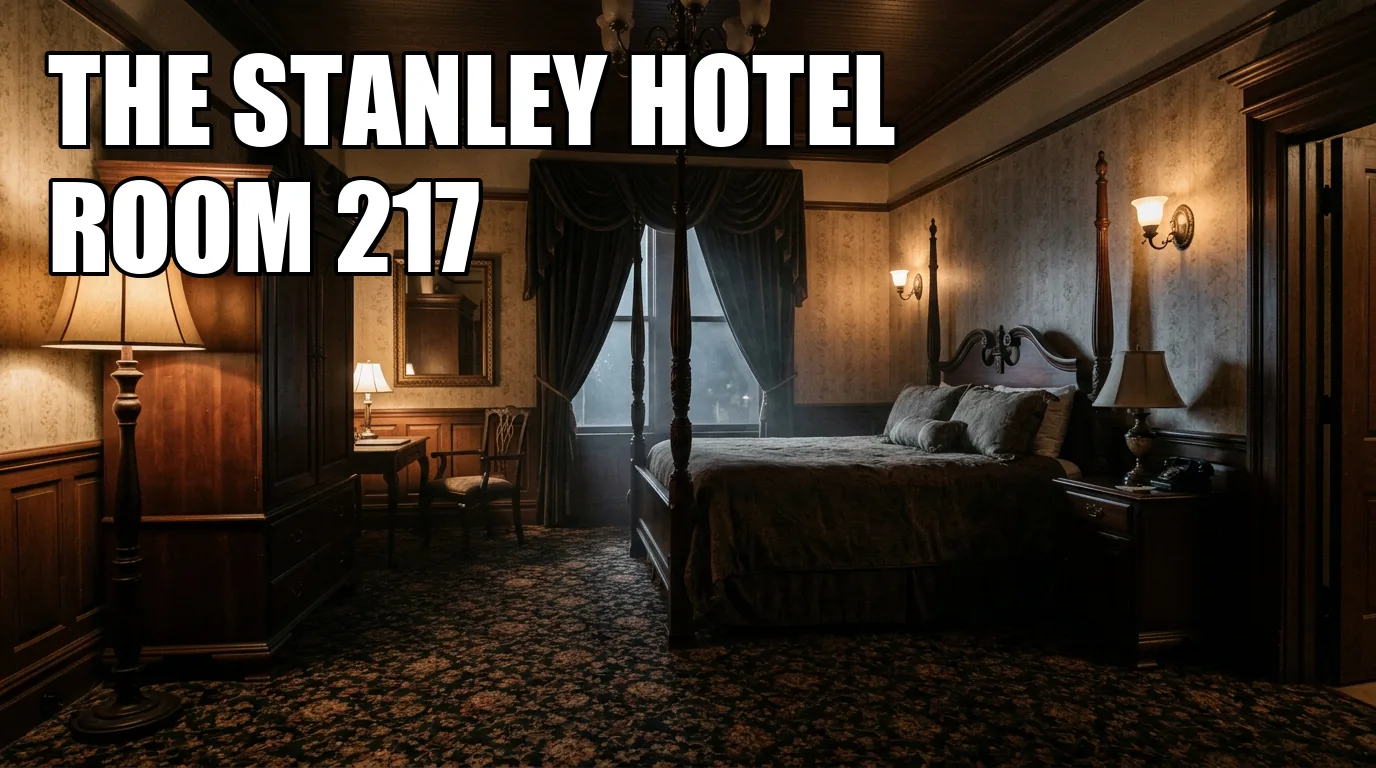
Nestled against the majestic backdrop of Estes Park, Colorado, the Stanley Hotel often feels more like a pilgrimage site for horror enthusiasts than a luxury lodge. Its enduring fame, of course, stems from Stephen King's 1974 stay, where a nightmare in Room 217 famously sparked *The Shining*. Yet, long before King’s terrifying vision, the hotel had its own spectral residents, most notably Elizabeth Wilson, the head chambermaid injured in a gas lantern explosion in that very room in 1911. Her spirit, it's said, remains diligent, tidying up guests' belongings and occasionally giving a gentle nudge to unmarried men.
Here’s the rub: the King connection, while undeniably powerful, has created an almost theme-park atmosphere, especially during peak seasons. You’ll find ghost tours packed tighter than a sardine can, often diluting the subtle, chilling ambiance that initially drew in paranormal investigators. My advice? To truly experience its eerie charm, consider a mid-week visit during the off-season—late fall or early spring—when the throngs have thinned, and the mountain air bites with a quiet intensity. Expect to shell out around $400 per night for a standard room, with Room 217 often booked months in advance. Are the lights flickering or is it just the outdated wiring? The beauty of the Stanley lies in that ambiguity, but don't arrive expecting a full-on Grady Twins encounter unless you're very, very lucky—or unlucky, depending on your perspective.
What Secrets Does San Diego's Grand Dame Whisper?
The Hotel del Coronado, a magnificent Victorian edifice standing proud on Coronado Beach, California, hardly looks like a hotbed of paranormal activity. Its red-turreted splendor and idyllic beachfront setting conjure images of sun-kissed luxury, not lingering spirits. But beneath its opulent façade lies a tragic tale: that of Kate Morgan, who checked into the hotel under an alias in November 1892 and was found dead days later—a death officially ruled a suicide. Her spirit, however, seems to disagree with that verdict, preferring to wander the halls, particularly around her former Room 302 (now renumbered 3327).
Unlike the Stanley, the "Del" doesn't lean into its haunted reputation quite so overtly. The paranormal activity here feels more like a quiet undercurrent to its grandeur. Guests report sudden cold spots, disembodied footsteps on the stairs, and the faint scent of a familiar perfume wafting through seemingly empty corridors. What makes this haunting unique is its subtlety; it rarely feels aggressive, more like a melancholic presence observing the passage of time. Don't come here seeking overt ghostly interactions; instead, appreciate the delicate balance between the hotel's vibrant present and its sorrowful past. A night here will set you back around $327, a price point that reflects its luxury resort status more than its spectral inhabitants.
When a Health Spa Becomes a Haunting Hotspot: The Crescent Hotel
Perched atop a hill in Eureka Springs, Arkansas, the Crescent Hotel & Spa boasts a particularly checkered and compelling history, transforming from a luxury resort to a college, then to a fraudulent cancer hospital run by charlatan Norman Baker, and finally back to a hotel. It’s this dark chapter, combined with earlier tragedies, that truly fuels its notoriety. The most famous early resident is Michael, an Irish stonemason who fell to his death during construction in 1886, forever linking his poltergeist to Room 218. But it’s the echoes of Baker’s "hospital"—where countless patients suffered and died under false hope—that give the hotel its genuinely heavy atmosphere.
This isn't just about a single ghost; it's about the residual imprint of suffering. Visitors often report a distinct shift in energy, especially in the basement morgue area, which frankly, few other hotels can boast. Strange occurrences in Room 218—doors opening, items moving, cold wisp dog licks—are common, but the truly unsettling experiences often stem from the hotel’s former medical wards. While ghost tours are popular here, the real insight comes from exploring the historical archives and understanding the sheer audacity of Baker’s deception. For roughly $215 per night, you're buying into a multi-layered narrative of both Gilded Age glamour and profound human despair. The hotel’s genuine commitment to preserving its history, rather than just exploiting it, makes the experience far more resonant.
The Driskill Hotel: Where Austin's High Society Meets Lingering Sadness
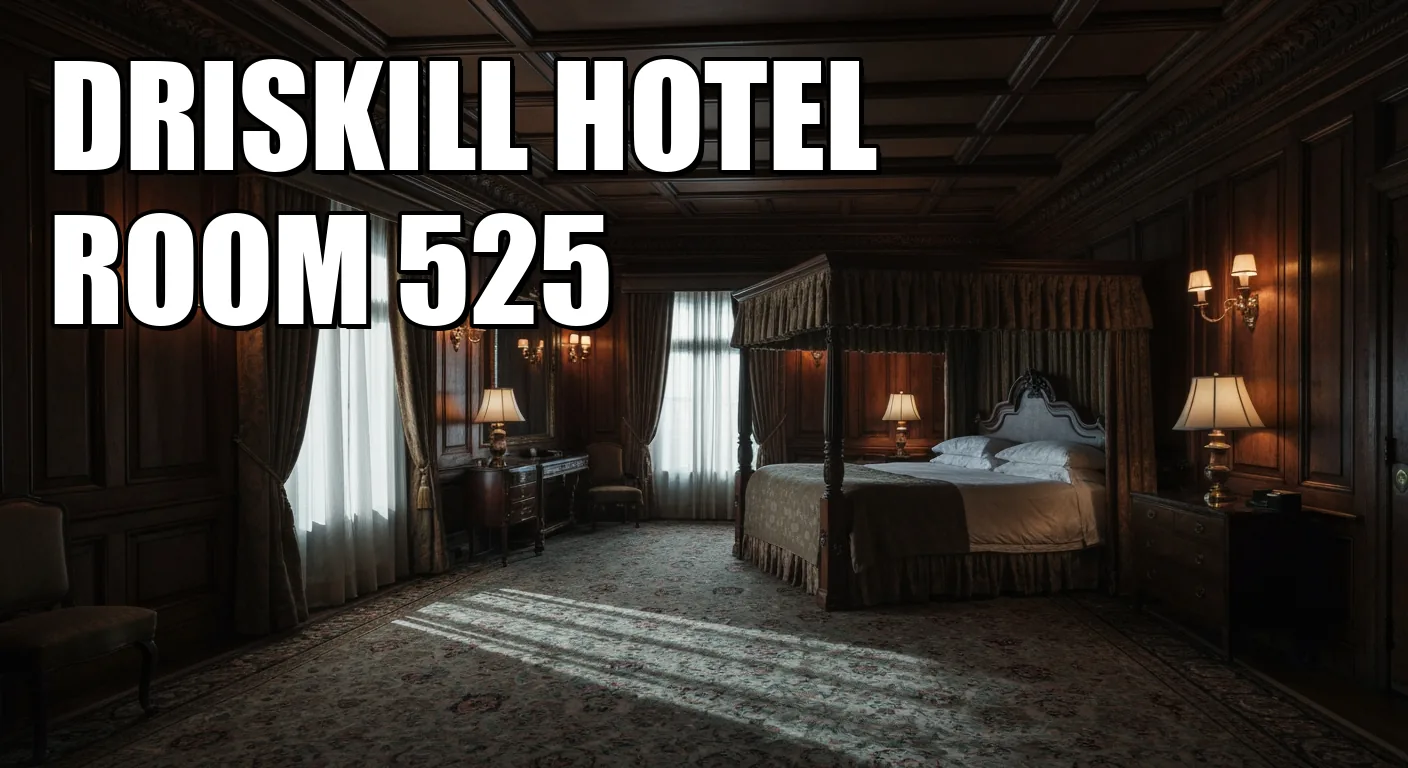
In the heart of bustling Austin, Texas, stands The Driskill Hotel, an architectural marvel since 1886. It's a place synonymous with Texas politics, grand events, and high-society elegance. But like many grand old dames, it harbors its own tragic stories. The most poignant tales revolve around Room 525, where two jilted brides, a century apart (one in the late 1800s, another in 1991), reportedly took their own lives. These heart-wrenching incidents have left behind apparitions in Victorian gowns, whispered sobs, and a profound sense of sorrow that transcends mere folklore.
What surprised me about The Driskill wasn’t a sudden cold spot, but the palpable sense of history mingling with modern luxury. The spirits here seem to be an intrinsic part of the hotel’s fabric, not an anomaly. Beyond the brides, a playful child's giggle and the bouncing of a ball are often heard on the grand staircase, thought to be the ghost of a senator’s daughter who died falling down the steps. The Driskill’s hauntings feel less overtly theatrical and more like subtle, enduring presences woven into the very structure of the building. You might encounter phantom shopping bags near the ladies’ restroom, a testament to the hotel’s long history as a social hub. A stay typically costs around $263 per night, a fitting price for a piece of Austin's vibrant yet melancholic past.
Chicago's Congress Plaza: A Grasping Hand and a Deep Urban Gloom
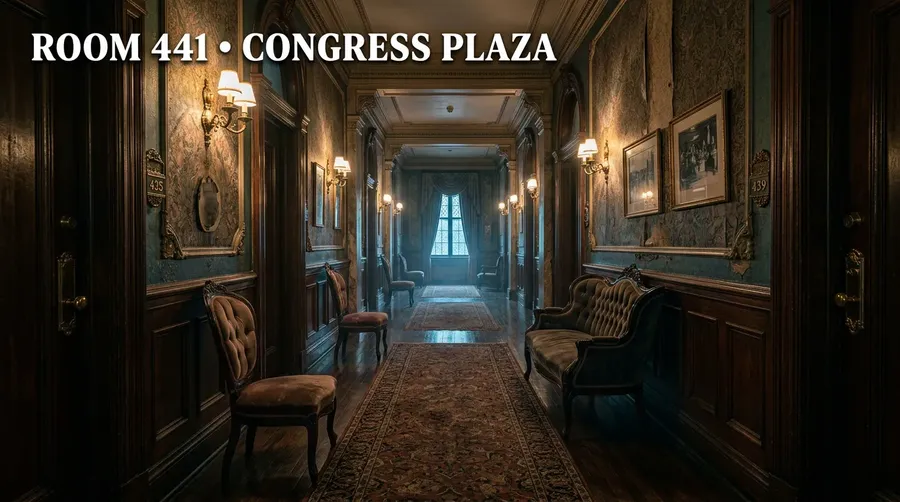
Few hotels in a major metropolis manage to maintain a truly unsettling atmosphere, but Chicago's Congress Plaza Hotel stands as a stark exception. Known as "The Home of the Presidents" and notoriously linked to Al Capone, this behemoth of a building, stretching an entire city block, has accumulated a grim legacy over its long life. Its most infamous resident is Captain Louis Ostheim, a war veteran who, in 1900, ended his life in Room 441 after a severe PTSD episode. His restless spirit is legendary for reaching out from under the bed, grasping the ankles of startled guests.
The sheer scale of the Congress Plaza, combined with its gritty urban location, gives its hauntings a different flavor than the more picturesque or isolated hotels. This isn’t a place of gentle whispers; it's a cavernous structure with a palpable sense of unease, particularly on the upper floors. Beyond Captain Ostheim, reports of phantom music from the ballroom, erratic elevator behavior, and even a malevolent entity known as "Peg Leg Louie" contribute to its formidable reputation. For an astonishingly low starting price of $98 per night, especially for a downtown Chicago location, it presents a compelling, if slightly harrowing, opportunity for budget-conscious ghost hunters. Just be prepared; the "Hand of Mystery" under the bed is no mere rumor to many who have stayed.
The Lemp Mansion: A Dynasty of Despair in St. Louis
If you seek a truly immersive, deeply tragic haunting, leave the grand hotels behind and book a room at the Lemp Mansion Inn in St. Louis, Missouri. This isn't just a hotel with ghosts; it's a historic home steeped in a multi-generational saga of wealth, power, and an almost unbelievable string of suicides. The Lemp Brewing Company was once an empire, but over decades, four members of the Lemp family took their own lives within the mansion’s walls, starting with patriarch William J. Lemp Sr. in 1904, and concluding with Charles Lemp in the Charles Lemp Parlor (formerly William II's office) in 1949.
This isn't a subtle haunting. The Lemp Mansion is, in essence, a monument to despair. Guests consistently report a heavy, oppressive presence, particularly in Charles's old parlor and near portraits of the family, where cold, cigar-scented breezes inexplicably manifest. Belongings are often displaced, disembodied footsteps are heard on floors above, and some claim to hear whispered threats. The mansion operates as a restaurant, a venue for murder mystery dinners, and, yes, an inn, with rooms available for around $180 per night on paranormal tour nights. What distinguishes the Lemp Mansion is the sheer density of its tragedy; it's a place where the weight of the past isn't just felt—it's almost tangible, making it a profoundly unsettling, yet undeniably captivating, experience.
So, how do you approach these spectral stays? Arrive with an open mind, but a healthy dose of skepticism. Don't go expecting Hollywood-level theatrics; the most profound paranormal experiences are often the most subtle and personal. Research the history *beyond* the ghost stories; understanding the human context of these tragedies often makes the encounters far more meaningful. Book during off-peak seasons if you crave solitude, and always inquire about specific haunted rooms in advance, as they're often the first to go. Whether you leave with a spine-tingling tale or merely a deeper appreciation for history, one thing is certain: these places ensure your journey into America's past will be anything but ordinary.
Haunted Hotels Worth Looking Up
Explore named hotels, famous rooms, and haunted stays tied to real properties people still search, book, and visit.
Haunting Escapes: Your Guide to America’s Spookiest Stays
Scary hotels experience
Many haunted properties now offer immersive ghost tours, overnight paranormal investigations, and themed events for thrill-seekers to explore historic hauntings firsthand.
Whats the scariest hotel ever?
The Crescent Hotel in Eureka Springs, Arkansas, often ranks as America’s scariest hotel thanks to countless reports of spectral sightings and ghost tours year-round.
What happened in room 441 of Congress hotel?
Guests report a female apparition in Room 441 tugging on bedcovers, and many avoid booking it unless specifically requested due to its intense paranormal activity.
Why is there no room 420 in hotels?
Hotels skip room 420 to deter cannabis-themed pranks and vandalism tied to the 4/20 marijuana culture, often renumbering it as 419+1 or omitting it entirely.
What happened in room 217 at the Stanley hotel?
Room 217 saw a gas-fired explosion in 1911 injuring chambermaid Elizabeth Wilson, whose spirit is said to tidy guests’ belongings and cause electrical disturbances.
What happened in room 407 at the Stanley Hotel?
In Room 407, guests have felt invisible hands tucking them into bed, heard whispered warnings, and seen lights flicker as if controlled by a restless spirit.
How much does it cost to book room 217 at the Stanley Hotel?
Rates for Room 217 start around $400 per night and it regularly sells out months in advance due to its haunted legend.
Did Jim Carrey stay in room 217?
Yes; while filming Dumb and Dumber he spent a night in Room 217, woke abruptly and requested to be moved to another hotel, though he hasn’t disclosed why.
Can you stay in Johnnys Cabin from Dirty Dancing?
Yes; at Lake Lure Inn & Spa in North Carolina you can book Johnny’s Cabin, a themed rental modeled on the film’s setting.
What is the difference between Club 33 and Royal 21?
Club 33 is a members-only Disney dining club requiring initiation fees and annual dues, while 21 Royal offers a one-time, all-inclusive private dinner for up to 12 guests at around $18,000 without membership.
How to book a haunted hotel experience?
Most haunted hotels and historic inns allow online reservations via their official websites or through Historic Hotels of America’s Top 25 Haunted Hotels list.
Why This Page Exists
Maison builds place guides to help readers plan a real visit or understand a real site. When a page makes present-day access, booking, or visitor claims, those details are revised against public-facing source material and editorial review. For the wider standards behind that work, see methodology.
The Cornerstone Brief
One historic place, once a week — what it is, why it matters, whether it's worth going. No filler, no paid placements.
Coming soon. Unsubscribe any time.
We use cookies to enhance your experience. By continuing to visit this site you agree to our use of cookies.