Architecture Styles

Unearthing Spanish Colonial Design's Hidden Stories

Find Nearby Hotels

Book Flights

Every seasoned traveler knows that the true magic of a place often hides just beneath the surface, past the glossy brochures and well-trodden paths. When it comes to Spanish Colonial interior design in the United States, that sentiment rings particularly true. We’re not just talking about red-tile roofs and stucco walls here; we're delving into a design philosophy born from centuries of conquest, adaptation, and artistic fusion, a legacy that still shapes some of our most stunning historic properties. This isn't merely a stylistic choice; it's a living archive, offering glimpses into bygone eras, colonial aspirations, and the extraordinary craftsmanship that endured through time. What defines *authentic* Spanish Colonial? Is it the heavy, hand-carved furniture, the vibrant Talavera tiles, or the cool, thick masonry walls designed to ward off the sun? Yes, and much more. It’s a sensory experience: the play of light through arched windows, the echo in a high-ceilinged hall, the scent of aged wood and stone. Over decades of crisscrossing this country, I've walked through countless examples, from the venerable missions of California to the grand Gilded Age resorts of Florida. What continually strikes me is the sheer diversity within the style, often reflecting local resources, Native American influences, and the particular vision of a given architect or patron. It's a testament to how design can tell a story far more compelling than any textbook.

St. Augustine's Grand Dames: More Than Just Spanish Revival Glitz

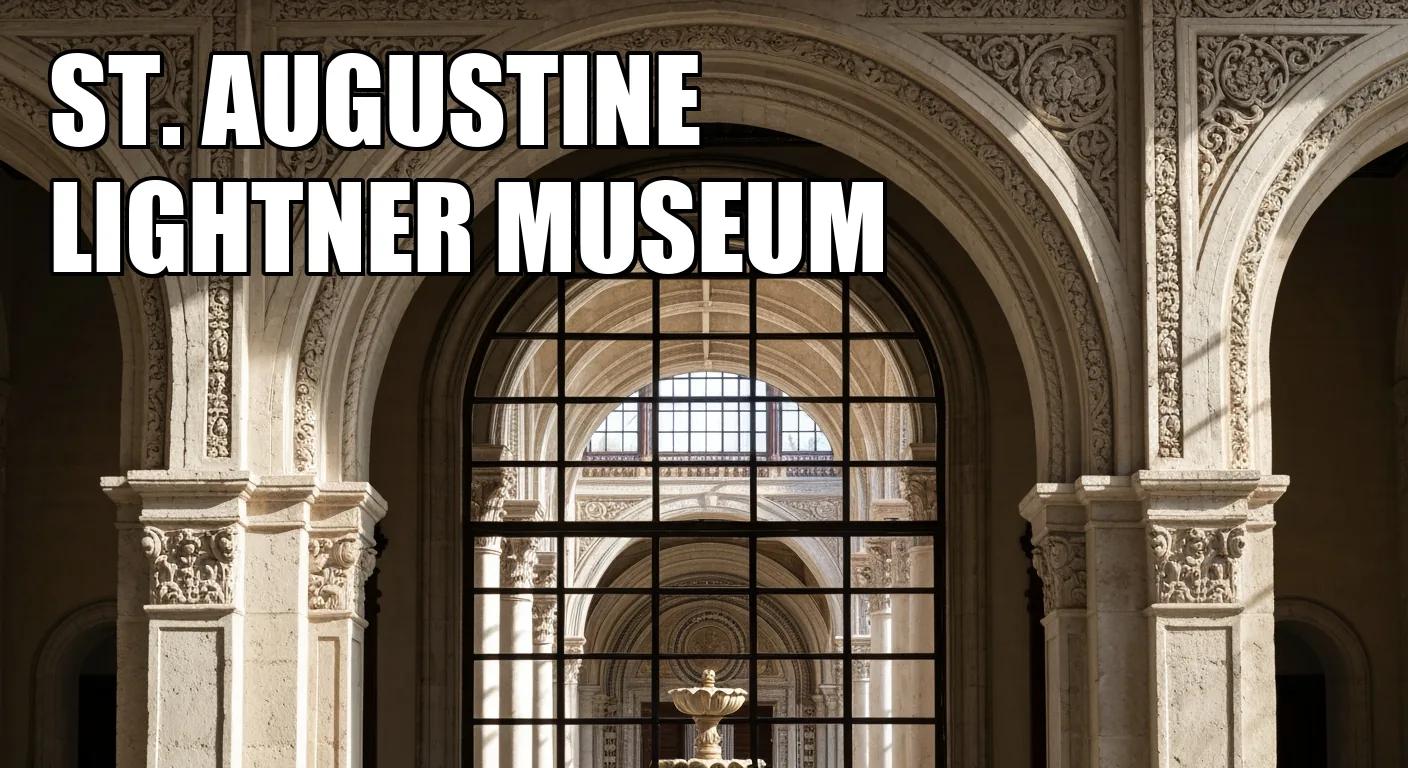
Step into St. Augustine, Florida, and you're immediately immersed in a city that practically breathes Spanish history. But the architectural gems here, particularly those from the Gilded Age, offer a fascinating twist on "Spanish Colonial." They aren't purely authentic remnants of the earliest colonial period; rather, they are magnificent, often over-the-top, *interpretations* of Spanish and Moorish styles, built with incredible ambition and innovative engineering. Henry Flagler, the railroad magnate, dreamt of turning St. Augustine into an American Riviera, and his opulent hotels became the canvas for this vision. Consider the Hotel Ponce de León, opened in 1888, now the centerpiece of Flagler College. It was the first major commission for the legendary firm of Carrère and Hastings, and it's a marvel. Imagine, for a moment, the audacity of building one of the nation’s first large multistory poured concrete structures using local coquina stone – a sedimentary rock composed of shell fragments – as aggregate. This was cutting-edge technology for its time, cloaked in the romanticism of Spanish Colonial Revival, complete with red-tile roofs and intricate terracotta details. While the exterior screams "Spain," the interiors are a Gilded Age fantasy. The Flagler Room, once the Women's Grand Parlor, still boasts those opulent Austrian crystal chandeliers and a clock featuring what’s said to be the largest piece of intact white onyx in the Western Hemisphere. Don't expect a quiet, reverent historical site here; this is an active college campus. Visitors should plan tours around the academic calendar, usually offered daily at 10 a.m. and 2 p.m. for a modest $10 adult fee. My advice? Arrive early, even for the first tour, to get a moment of relative quiet before the student buzz fully kicks in. It's truly special to see the 79 Louis Comfort Tiffany stained glass windows in the dining room, showering the hand-painted murals with light – a detail many tourist guides simply mention without truly conveying the awe it inspires. Just a stone's throw away, the Hotel Alcazar, another Carrère and Hastings masterpiece from 1888, now houses the Lightner Museum. This sister hotel to the Ponce de León shared the same ambition, but with a different focus: leisure. It originally boasted the world's largest indoor swimming pool, Turkish baths, and a casino. Today, the central interior courtyard, with its graceful stone arch bridge over a koi pond, offers a sublime escape. It truly *feels* like a Spanish colonial plaza, despite its Gilded Age origins. You're not just looking at art here; you're walking through a space designed for extravagant recreation. Tickets run $19 for adults, and it’s open daily from 9 a.m. to 5 p.m. If you're lucky enough to catch one of their infrequent after-hours tours, which delve into the hotel's original entertainments, shell out the extra cash (around $40). It provides a deeper, more immersive narrative than a daytime visit allows. Then there's the Casa Monica Resort & Spa, which opened on New Year's Day 1888, making it a peer to Flagler’s behemoths. What sets the Casa Monica apart is its distinctive Moorish Revival and Spanish Baroque Revival styling, pioneered by Franklin W. Smith. He, too, experimented with poured concrete construction, integrating crushed coquina and Portland cement. The lobby is a visual feast, notably featuring a Spanish Galleon carved into the central mantle, shimmering in gold and silver leaf. While some of its original interior rooms, like the elaborate Sun Parlor, have been modified over time, the spirit remains. Staying here, with rates starting around $185 a night, you truly feel a connection to that flamboyant era. The historical duplex suites in the Cordova towers, originally outfitted with wicker furnishings from Philadelphia's upscale John Wanamaker Store, offer a unique opportunity to experience the hotel's storied past first-hand. It reminds you that luxury was as much about thoughtful design as it was about extravagance.

Santa Fe's Enduring Charm: Where Pueblo Meets Spain

Shifting gears entirely, we journey southwest to Santa Fe, New Mexico, where Spanish Colonial design takes on a distinctly regional flavor, deeply intertwined with Pueblo traditions. Here, the architecture feels less like an imported fantasy and more like an organic outgrowth of the landscape and culture.La Fonda on the Plaza, which traces its roots back to 1922 but truly blossomed with its 1926-1929 redesign, perfectly embodies this fusion. The Fred Harvey Company, those pioneering hospitality giants, tapped architect John Gaw Meem and designer Mary E.J. Colter – two titans of Southwestern design – to transform La Fonda into an authentic "Harvey House." Their genius lay in integrating hand-carved wooden beams and corbels (those decorative brackets supporting the beams), tin and copper light fixtures, and vibrant hand-painted tiles that spoke to both Spanish and Native American aesthetics. What surprised me most on my first visit wasn't just the beauty, but the pervasive sense of narrative. Local artists like Gerald Cassidy and Paul Lantz were commissioned to create the paintings and murals, meaning the art isn't just decoration; it's *part* of the building's historical fabric, telling stories of frontier life and Mexican villages. The La Plazuela restaurant, occupying the hotel's original 1920s outdoor patio, is a must-see. Its terracotta tiles, hammered tin chandeliers, and hand-painted ceiling details make for an unforgettable dining experience. Guest rooms, often around $210-$226 per night, feature hand-painted Spanish chests and hand-woven Indian rugs, solidifying that distinctive Spanish-Pueblo design philosophy. Don't rush through the public spaces; spend time in the lobby, look up at the 25-foot cathedral ceiling, and absorb the details. This isn't just a hotel; it's a living museum of Southwestern art and design.

Beyond the Mainland: A Glimpse into True Colonial Roots

Crossing the Caribbean, we arrive in San Juan, Puerto Rico, home to a property that offers a stark contrast to the Gilded Age interpretations of Florida and the regional adaptations of New Mexico. Here, we encounter genuine, unadulterated Spanish Colonial architecture, dating back to a time when Spain's empire was at its zenith.Hotel El Convento, a structure whose foundations were laid in 1646, initially as the Monasterio del Señor San José, is an absolute treasure. This isn't Spanish *Colonial Revival*; this *is* Spanish Colonial. Imagine thick masonry walls, arched colonnades, and original timber ceiling beams that have stood for nearly four centuries. The property's enduring beauty, meticulously restored after 1959 into a luxury hotel, speaks volumes. It’s the kind of place where you can almost feel the whispers of the Carmelite nuns who once resided within its walls. The Patio del Nispero, with its 300-year-old Nispero fruit tree, is not just a courtyard; it’s a living connection to that original convent era, a palpable link to history. When I first wandered through its cool, shaded corridors, I was struck by the sense of permanence, the sheer weight of history embedded in every stone. While rooms, starting around $157, offer modern comforts, the design maintains that authentic aesthetic with Spanish antique furnishings. This isn't merely a place to sleep; it’s an immersive historical experience. Visiting Old San Juan without stepping into El Convento is like reading only half a book.

California's Coastal Interpretations and a Canyon Masterpiece

Our journey through Spanish Colonial design wouldn't be complete without a stop in California, where the style found fertile ground in the early 20th century, often blending with Mediterranean influences to create its own distinct character. The Mar Monte Hotel in Santa Barbara, originally built in 1931, offers a compelling study in adaptation and contemporary preservation. Commissioned by visionary hotelier Frederick A. Bartholomew and designed by Walker & Eisen, it captured the romanticism of Spanish Colonial Revival on the Pacific coast. The 2020 renovation by Beleco Design is particularly noteworthy because it attempted to respectfully unite the hotel’s original architecture with a modern sensibility. This isn't always easy, and sometimes such renovations strip a property of its soul. Here, however, I found a thoughtful balance. Traditional clay tiles, white stucco walls, and wrought-iron balconies still define the exterior. Inside, while there are raw concrete floors and contemporary touches, the grand staircase remains a signature feature, and guest rooms (starting at $200+) incorporate Spanish Colonial-inspired décor with natural fabrics and rattan light fixtures. It’s a compelling example of how a historic style can evolve while retaining its essence, though it sometimes sacrifices a bit of the original, ornate drama for a cleaner, more minimalist interpretation. Finally, we arrive at the Grand Canyon, where Mary E.J. Colter, arguably one of America’s most influential architects, left an indelible mark with her redesign and expansion of Bright Angel Lodge & Cabins in 1935. Colter’s philosophy was unique: she believed architecture should grow *out of* its environment. This isn't a typical "Spanish Colonial" spot in the vein of the Florida hotels; instead, it's a brilliant example of National Park Service Rustic style, infused with Spanish Colonial and Native American elements. The sheer genius of the History Room fireplace alone is worth the trip. Colter painstakingly arranged rocks, hauled from the canyon itself, to depict the geological layers of the Grand Canyon, from river cobbles to rim stone. It's not just a fireplace; it’s an architectural wonder, a geological lesson, and a profound statement about integrating man-made structures with nature. Booking is essential, especially for the cabins (around $150-$250+ per night), and directly through Grand Canyon Lodges is the way to go. If you're truly adventurous, look into Phantom Ranch, another Colter-designed experience, though it's only accessible by mule or foot into the canyon and requires lottery reservations. Bright Angel offers interpretive programs that highlight Colter’s incredible legacy, and they are not to be missed. This is where Spanish Colonial influence blends with indigenous artistry and raw nature to create something truly American. These seven properties, spanning from the authentic 17th-century convent in Puerto Rico to the Gilded Age grandeur of Florida and the nature-inspired designs of the American Southwest, collectively paint a vivid picture of Spanish Colonial interior design’s enduring legacy in the United States. They demonstrate that whether through thick stucco walls, hand-carved wooden elements, ornate ironwork, or vibrant tilework, the spirit of Spanish design has been authentically applied, reimagined, and preserved, offering us rich, textured experiences that transcend mere sightseeing. Each visit challenges perceptions and deepens appreciation for the layers of history beneath our feet.

Ultimate Guide to Spanish Colonial Interior Design in America

What is Spanish colonial interior design?
Spanish colonial interior design is a warm and inviting style characterized by thick adobe walls, exposed wooden beams, terracotta tiles, arches, vibrant earth tones, and ornate carved details reflecting a blend of Spanish and indigenous influences. It emphasizes rustic charm, handcrafted furniture, colorful textiles, and decorative ironwork that create an elegant yet authentic atmosphere rooted in historical Spanish colonization.
What are the key design elements of Spanish colonial style?
Key elements include adobe or stucco walls in warm cream and honey tones, terracotta tile flooring, exposed wooden ceiling beams, arched doorways and windows, decorative columns, wrought iron features, painted ceramic tiles with geometric and floral patterns, antique wooden furniture with intricate carvings, and vibrant textiles featuring medallions and damask patterns.
What colors are typical in Spanish colonial interior design?
Spanish colonial interiors use warm, earthy tones including terracotta, ochre, deep reds, yellows, and oranges, complemented by blue accents, cream or honey-colored walls, and off-white stucco surfaces that serve as neutral backdrops for richer tones.
Where can I see authentic Spanish colonial interior design in the United States?
Top destinations include Casa del Herrero in Montecito, California; the Historic Castillo de San Marcos in St. Augustine, Florida; Colonial Quarter in St. Augustine; San Antonio Missions National Historical Park in Texas; and Balboa Park buildings in San Diego showcasing 1915 Panama-California Exposition architecture.
What is the best time to visit Spanish colonial sites in Florida?
The best time to visit is March through May and October through November when temperatures range from 65°F to 80°F, offering ideal weather for walking tours and exploring outdoor attractions without extreme heat.
How much does it cost to visit Spanish colonial historical sites?
Admission costs vary by location: Castillo de San Marcos is $15 for adults (children 15 and under free); Casa del Herrero tours are $25-$50 per person; Colonial Quarter offers various admission options; and San Antonio Missions feature free guided tours by the National Park Service.
How can I incorporate Spanish colonial design into my home?
Add warm, earthy paint colors, install or emphasize exposed wooden ceiling beams, incorporate terracotta or hand-painted tiles in kitchens and bathrooms, use arched doorways, display carved wooden furniture and textiles with traditional patterns, and include wrought iron accents in railings, fixtures, and window grilles.
What types of furniture are characteristic of Spanish colonial style?
Authentic pieces include heavy wooden tables and chairs made from dark woods like mahogany or walnut with intricate carved details, decorative chests for storage, carved wooden armchairs, antique pieces available from specialty dealers ranging from $140 to $2,862 on average, with rare museum-quality pieces commanding higher prices.
What materials should I prioritize for Spanish colonial design?
Prioritize natural, handcrafted materials including clay terracotta tiles, solid wood for furniture and beams, adobe or stucco for walls, wrought iron for decorative elements, hand-painted ceramic tiles, and natural fiber textiles like wool and cotton for authentic period-appropriate choices.
What are the most visited Spanish colonial sites in the United States?
St. Augustine, Florida is the most visited destination featuring 450+ years of Spanish colonial history with sites like Castillo de San Marcos and Colonial Quarter; Santa Barbara, California offers Casa del Herrero; San Diego features Balboa Park's Panama-California Exposition architecture; and San Antonio, Texas showcases UNESCO World Heritage Spanish missions.
How do I start planning a trip to view Spanish colonial architecture?
Begin by selecting your preferred region—Florida for coastal colonial sites, California for Revival estates, or Texas for historic missions—then check specific sites' websites for admission costs, tour schedules, and advance reservation requirements, particularly for popular attractions like Casa del Herrero which books tours on Wednesdays and Saturdays.
Are there free admission days for Spanish colonial sites in 2025?
Yes, the Castillo de San Marcos offers five fee-free days in 2025 including April 19 (First Day of National Park Week) and June 19 (Juneteenth), plus free admission for children under 15 year-round.
What are current interior design trends incorporating Spanish colonial style?
2025 trends include blending traditional Spanish colonial elements with modern influences, featuring textured walls, warm color palettes inspired by Spanish heritage, sustainable materials like reclaimed wood and terracotta, and mixing antique pieces with contemporary furnishings for updated yet timeless aesthetics.
Where can I find authentic Spanish colonial furniture and decor?
Antique dealers on platforms like 1stDibs, Chairish, and Etsy offer authentic pieces; specialty retailers like Rustico Tile and My Rustica provide handcrafted furniture inspired by colonial design; furniture prices range from affordable reproductions under $600 to museum-quality antiques exceeding $100,000.
Which regions of the United States have the strongest Spanish colonial heritage?
California, Florida, Texas, New Mexico, and Arizona have the strongest Spanish colonial heritage due to historical Spanish settlement and colonization, making these regions ideal for viewing authentic architecture, attending cultural events, and finding design inspiration.