Expectation: every low-pitched roof with knee braces is “true Craftsman soul.” Reality: purists reserve “Craftsman” for Gustav Stickley’s roughly 240 published plans (1904–1916 in The Craftsman); everything else is Arts & Crafts or Craftsman-style. The soul was anti-industrial philosophy—honest joinery, natural materials, moral labor—not a big-box bracket kit. Five things unlock it in 2026.
1) Pay for the interiors that still teach. 2) Walk free neighborhoods that still cohere. 3) Separate bungalow form from Craftsman style. 4) Do not confuse Prairie or Mission. 5) Match the site to your energy: ultimate bungalow, Stickley utopia, or streetcar suburb.
1–2. Interiors worth the ticket vs free streetscapes
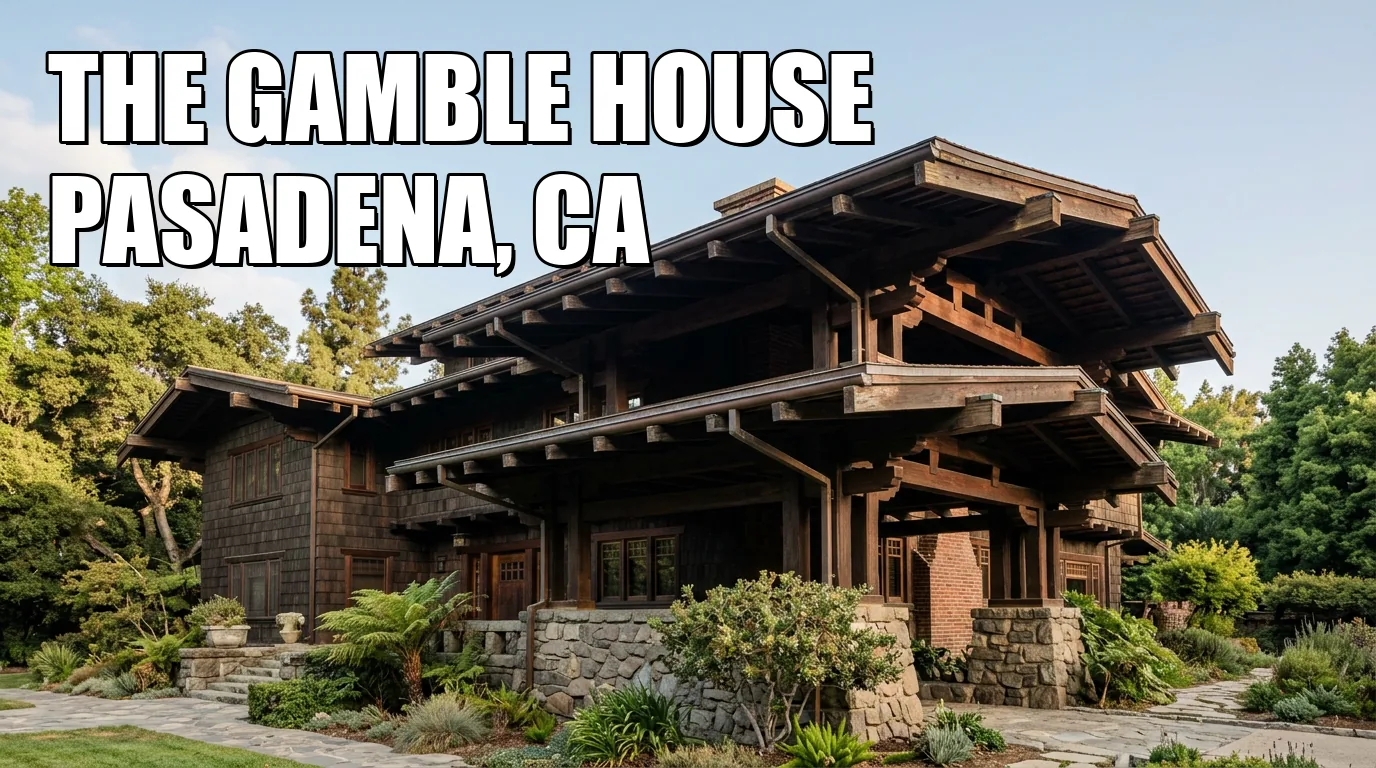
Gamble House (Pasadena, 1908–09, Greene & Greene) remains the high-water “ultimate bungalow”: original custom furniture, leaded glass, teak and mahogany joinery. Interior tours roughly $15–$20 adult (seniors/students lower; under-12 often free); specialty Behind the Velvet Ropes ~$60, Details & Joinery ~$100; Gardens & Gables exterior ~$15; neighborhood walking tour ~$17. Hours typically Thu–Sun interiors midday; grounds/bookstore Tue and Thu–Sun. Book ahead; flat wide-heeled shoes required; no large bags/strollers; second floor and attic are stair-only (manual stair-climber for first floor limited). Summer Friday night lawn/first-floor specials can drop to ~$5. Movie fans note the garage as Doc Brown’s in Back to the Future—fun footnote, not the design thesis.
Stickley Museum at Craftsman Farms (Morris Plains, NJ) — Stickley’s own 1910–17 estate and log house with original furniture; docent tours often $5–$15. Riordan Mansion SHP (Flagstaff) — 1904 Arts & Crafts duplex, Stickley/Harvey Ellis pieces; guided interior ~$18 adult / $12 youth; grounds ~$5. Marston House (San Diego) — Hebbard & Gill near Balboa Park; Fri–Sun 10–4; ~$20 adult / $15 senior-military-student / $7 kids 6–12.
Free streetscapes: Pasadena’s Bungalow Heaven (16 blocks, 1906–14), Orange Heights, Prospect/Hillcrest for grander Greene-adjacent work. Berkeley Elmwood + Thorsen House exterior (Greene & Greene; interior is a fraternity). Seattle Wallingford, Ravenna, Capitol Hill, Mount Baker. Portland Ladd’s Addition (wagon-wheel plan, rose gardens), Irvington, Piedmont, Sunnyside. Portland Architectural Heritage Center neighborhood walks ~$10 public (free members/students/kids) March–November, rain or shine—book ahead.
3–4. Definitions and common mistakes
Arts and Crafts is the broad English-born movement against industrial clutter. Craftsman is the American domestic expression—low gables, wide eaves, exposed rafter tails, tapered porch columns, wood and stone, built-ins, visible joinery. Stickley’s magazine gave free plans to subscribers and preached middle-class honesty. Prairie (Wright et al.) stretches horizontal lines for Midwest plains—long roofs, ribbon windows, open plans—sleeker than most bungalows. Mission Revival is Spanish Colonial homage (stucco, tile, parapets); Mission furniture is plain oak geometry, not Craftsman floral motifs.
Bungalow is a form (low house with porches, from Bengali bangla), not a style. Most Craftsman plans were not pure bungalows; many bungalows are not Craftsman. Catalog kits (Sears, Ready Cut ~$650 for 10,000 pieces of sweat equity) democratized the look—entire blocks without custom architects. Mistakes: calling every porch house Craftsman; mixing Victorian jigsaw or iron supports into “historic Craftsman”; reading Prairie horizontals as bungalows.
5. Who should go where
Who yes for Gamble House: joinery geeks, Greene & Greene pilgrims, visitors who will book timed tickets and wear floor-safe shoes. Who yes for Stickley Farms: purists tracing the magazine-to-utopia path. Who yes for Bungalow Heaven / Ladd’s / Wallingford: walkers who want everyday kit-home street rhythm without $100 specialty tours. Who no: travelers who need full elevator access through multi-story museum houses; people seeking Miami pastel or Tudor “castle” branding; visitors who think “Craftsman” is just a Home Depot product line.
Three 2026 scenarios
1) Free neighborhood walk ($0): Bungalow Heaven, Elmwood, Ladd’s Addition, or Wallingford at your pace. Uneven parkway sidewalks possible—wear real shoes. No reservations.
2) Gamble House day (~$15–$100): Standard hour tour or upgrade to joinery deep-dive. Add free Bungalow Heaven afternoon. Advance tickets; closed Mon/Wed typically. Accessibility limited upstairs—use first-floor options and scripts/Braille/tactile kits with notice.
3) Multi-city West Coast (~$20–$30 admissions + transit): Pasadena Gamble + free Berkeley exteriors + Portland AHC walk $10 + Seattle Mount Baker/Capitol Hill free. Book Gamble early; Portland walks March–November.
If you only remember one number after the trip, make it Stickley's roughly 240 plans versus the millions of porch kits that borrowed his language. The soul lives in the gap between those numbers—philosophy scaled for the middle class, not a logo on a modern vinyl eave. Bottom line: Craftsman soul is philosophy made visible in eaves and joinery. Pay once for Gamble or Stickley if you need the interior sermon; otherwise the free bungalow districts still preach the democratic version Stickley wanted for the middle class—not the mythology of every porch as a masterpiece.
The Cornerstone Brief
One historic place, once a week — what it is, why it matters, whether it's worth going. No filler, no paid placements.
Coming soon. Unsubscribe any time.