Architecture Styles

Unlocking the Secrets of America's Saltbox Homes

Find Nearby Hotels

Book Flights

There's a certain unassuming dignity to the saltbox colonial, isn't there? That instantly recognizable silhouette—a two-story facade melting into a single-story lean-to at the rear, creating an asymmetrical roofline often likened to the wooden containers used for salt during the colonial era—feels like the architectural equivalent of a well-worn leather-bound book. Yet, beneath that deceptively simple form lies a trove of ingenuity, adaptation, and stories that most casual observers, and indeed, many mainstream travel guides, completely miss. My decades spent poking around these venerable structures across the American landscape have taught me that to truly understand a saltbox, you can't just admire its shape; you have to feel the weight of its history, the whisper of its occupants, and the sheer grit of its construction.

What makes a saltbox more than just a house with a quirky roof? It’s the pragmatic elegance born of necessity. Early settlers, particularly in the harsh New England climate, needed robust, adaptable dwellings. Initially, many started as simple two-story structures, but as families grew and winters bit harder, adding a lean-to to the rear provided crucial extra space—for a larger kitchen, a buttery, or sleeping quarters—while also offering an extended, steeply pitched roof that shed snow and deflected wind with remarkable efficiency. This wasn't merely an aesthetic choice; it was a deeply practical one, a testament to colonial resourcefulness. This design often allowed for a massive central chimney, the beating heart of any colonial home, distributing warmth and facilitating cooking with remarkable efficiency.

Unpacking Presidential Pedigrees: More Than Just Famous Occupants

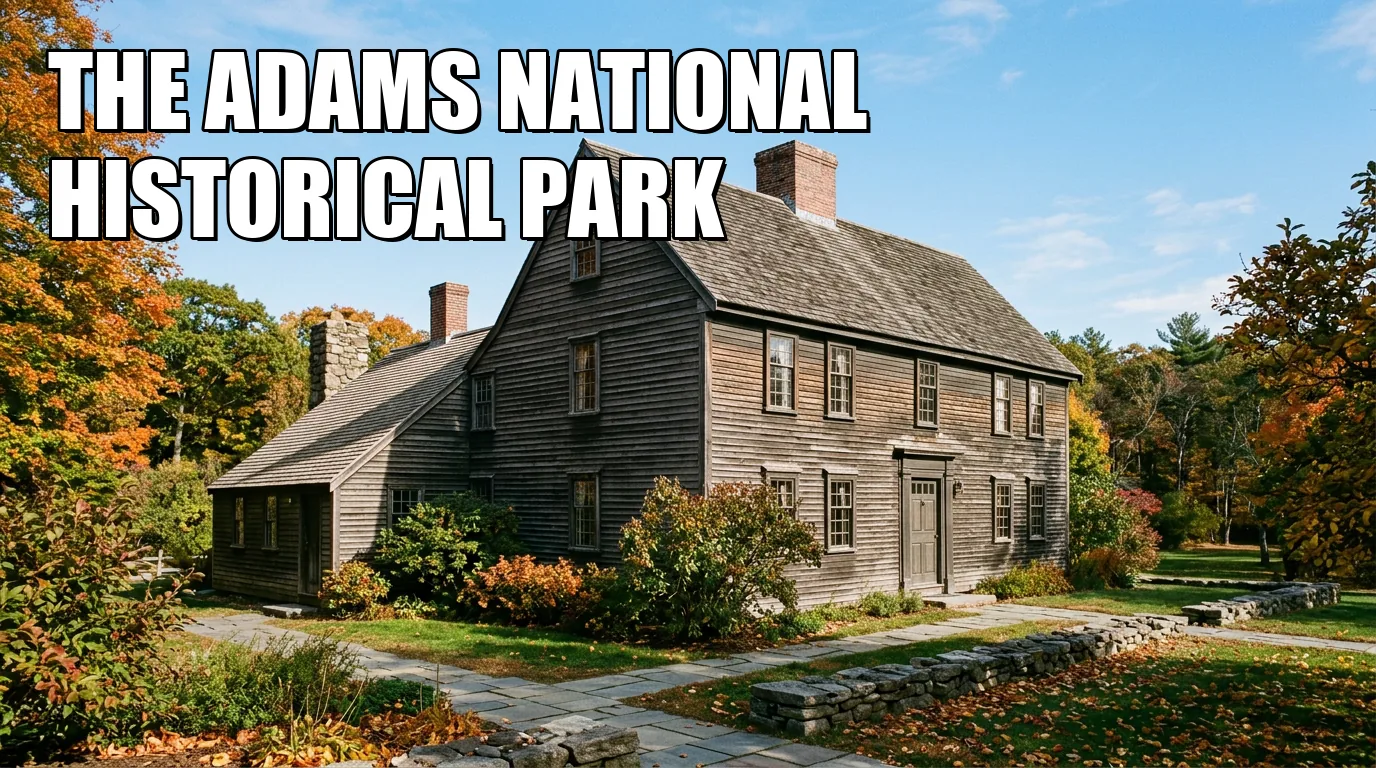
When you talk about historic homes, especially in Massachusetts, the Adams family quickly comes to mind. And rightly so; their legacy is intertwined with the very fabric of American independence. However, the true insights into the John Adams Birthplace (c. 1681) and the John Quincy Adams Birthplace (c. 1660s) in Quincy, Massachusetts, transcend mere biographical data. Yes, John Adams, the second U.S. President, was born in the former, and his son, John Quincy Adams, the sixth President, in the latter. But what does that really tell us about the *architecture*?

Standing between these two adjacent saltboxes, one might expect a grand, imposing experience. Instead, the real revelation is their humble, almost indistinguishable character. They are, at their core, modest structures built for farming families. The John Adams Birthplace, originally constructed by Joseph Penniman and purchased by Deacon John Adams, Sr., began its life as a typical colonial home before its transformation into the saltbox form. The adjacent John Quincy Adams Birthplace, originally Samuel Belcher's home, actually had its lean-to added later, illustrating the organic evolution of these structures rather than their initial, intentional construction as saltboxes. It's a powerful reminder that even future presidents began their lives in homes that were practical and unpretentious, shaped by the needs of an agrarian existence. The architectural story here isn't about extravagance, but about continuity and the everyday domesticity that underpinned a revolutionary era.

Visiting these homes, particularly during peak summer months, can feel less like an architectural exploration and more like a history lesson delivered under duress from surging crowds. To truly appreciate the subtle nuances of their timber frames and the faint echoes of their past, I’d suggest visiting in late fall or early spring, perhaps on a weekday. The interpretive staff, often excellent, can offer more detailed insights into the construction when they aren’t herding dozens of visitors. Expect a combined admission fee, typically around $15-20, which is fair for the unique insight into two presidential lives. Parking can be a real headache on weekends, so aim for a weekday morning arrival to snag a spot in the modest lot.

Connecticut's Enduring Saltboxes: Timber Tales and Unmoved Histories

Connecticut is a veritable goldmine for saltbox enthusiasts, offering some of the earliest and most beautifully preserved examples. Take the Nehemiah Royce House (1672) in Wallingford, affectionately known as the "Washington Elm House." Most guides will trumpet that George Washington visited twice, once in 1775 to purchase gunpowder and address townspeople, and again in 1789 during his presidential tour. It's a compelling anecdote, certainly. But what's often overlooked is the house's original owner, Nehemiah Royce, a man who wore many hats: carpenter, blacksmith, shoemaker, and one of Wallingford's founding "Pillars." This isn't just a house Washington stopped at; it’s a tangible link to the industrious, multi-talented individuals who literally built these early communities.

Then there's the Comfort Starr House (1695) in Guilford. A 2014 dendrochronology study—that's tree-ring dating for the uninitiated—confirmed its astonishing age, making it one of the oldest wooden timber-frame houses still used as a private residence in the United States. Here’s the critical bit: it remains in a remarkably primitive state. This isn’t a restored, polished museum piece. Its authenticity, its un-fussy character, speaks volumes about the original craftsmanship and the endurance of these structures. Comfort Starr himself was a tailor, but his grandfather, an English physician, arrived on the *Hercules* in 1635, directly connecting this structure to the very first wave of Puritan settlement. For the serious architectural history buff, this private residence, viewable from the exterior, offers a rare glimpse into genuine, untouched colonial living, a stark contrast to some more heavily interpreted sites.

Perhaps the most geographically curious tale belongs to the Ephraim Hawley House (1683-1690) in Nichols (Trumbull), Connecticut. This privately owned colonial American wooden post-and-beam timber-frame saltbox boasts a truly unusual distinction: it has been located in four different named townships throughout its existence without ever being moved. Think about that for a moment. Its "location" shifted from Stratford to Unity, then North Stratford, and finally Trumbull, purely due to evolving jurisdictional boundaries. This detail, often glossed over, speaks to the dynamic, often messy, formation of early American towns, where property lines and political divisions were far from settled. The house itself, while expanded over the centuries, retains its original 1680s timber framing, a testament to its builder, Ephraim Hawley, a farmer whose foresight or perhaps simple good luck has left us with a static anchor in a constantly shifting landscape.

Cape Cod's Architectural Ingenuity: Adapting to the Coast

Heading to Cape Cod, you encounter the Hoxie House (c. 1675) in Sandwich, a quintessential First Period saltbox that practically breathes maritime history. This isn't just another old house; it's a masterclass in adapting design to a specific, often brutal, environment. Built with distinctive "gunstock posts"—timbers cleverly wider at the top to provide exceptional strength for supporting floor joists and roof beams—and massive hand-hewn beams of pumpkin pine, likely imported from Maine, it showcases the resourcefulness required for coastal construction. The term "First Period" for architecture refers to buildings constructed roughly between 1625 and 1725, characterized by heavy timber framing, simple forms, and often, little decorative embellishment.

What sets the Hoxie House apart, beyond its age and construction details, is its explicit engineering for the harsh Cape Cod coastal weather. Its steeply asymmetrical roofline and careful orientation weren't random; they were specifically designed for maximum warmth and efficiency, shedding winter storms and minimizing exposure to relentless winds. The central hearth, the true heart of the home, served not only for cooking but as the primary heat source, radiating warmth throughout the compact living spaces. Many guides might just mention its age, but understanding *why* it looks the way it does—as a direct response to wind, snow, and the struggle for warmth—reveals a deeper, more compelling narrative about survival and ingenious design.

The Unexpected: A Brick Saltbox in Western Massachusetts?

Just when you think you've seen every iteration of the classic wooden saltbox, the Josiah Day House (c. 1754) in West Springfield, Massachusetts, throws a delightful curveball. This is where conventional wisdom gets a jolt: it’s the oldest known brick saltbox-style house in the United States. Forget everything you thought you knew about these timber-framed beauties. This house stands as a singular, robust outlier, built on the west bank of the Connecticut River, a testament to changing building materials and growing prosperity in the mid-18th century.

Why brick? It speaks to a shift from the immediate post-settlement era to a more established colonial economy, where brick was a more expensive, permanent, and fire-resistant choice. Josiah Day, a farmer, clearly had the means and ambition to build something substantial. The house also witnessed significant Revolutionary War events: Henry Knox’s famous passage with cannons from Fort Ticonderoga in 1776, and the encampment of captured Hessian troops in 1777. The true insight here isn't just its material, but how it embodies the transformation of the region itself—from a nascent colonial parish to an independent town, a process Josiah Day himself championed before his death. This house isn't just a structure; it's a brick-and-mortar chronicle of West Springfield's very identity. While its exterior is readily viewable, check local historical society websites for specific tour times and any nominal admission fees, as these can vary seasonally. Parking is generally ample, though limited to street parking on residential roads.

Planning Your Own Architectural Pilgrimage: Practicalities and Ponderings

Embarking on a journey to explore saltbox colonials requires a bit more intentionality than simply following a GPS to a well-known landmark. Many of these treasures are privately owned, meaning your "visit" will often be an appreciative drive-by or a respectful glance from the street. For those open to the public, like the Adams homes or the Josiah Day House, timing is everything. Aim for shoulder seasons—late April/May or September/early October—to avoid the sweltering heat and tourist crush of summer. Not only are the crowds thinner, but the quality of light for photography is superb, and you'll find docents more relaxed and willing to share deeper insights.

Expect that not every house will offer a full interior tour. Embrace the exterior views as opportunities to study the roofline, the window placements, and the overall context within its landscape. Pay attention to the subtle variations: the pitch of the roof, the type of siding, the size and placement of the chimney. These details, often overlooked in glossy brochures, are what truly connect you to the lives lived within these walls. If a site charges admission, consider it a direct contribution to preserving these irreplaceable pieces of American heritage. And always, always double-check opening hours and visitor information online before you set out, as small historical societies often have limited schedules.

What I find most surprising after all these years isn't just the sheer number of these surviving structures, but their incredible resilience. These aren't just old houses; they are living testaments to human ingenuity, adapting to changing families, shifting political boundaries, and the relentless march of time. They question the notion of grandiosity, instead celebrating the pragmatic, the durable, and the genuinely essential. So, the next time you spot that distinctive saltbox silhouette, remember: you’re not just looking at a house; you’re peering into the very soul of colonial America, a place where humble design met enduring purpose.

Saltbox Colonial Architecture: A Complete Visitor's Guide

What is saltbox colonial architecture and what is its history?
Saltbox colonial architecture is a distinctive New England residential style named after wooden salt containers from the colonial period, featuring a two-story front with an asymmetrical single-story rear covered by a long sloping roofline. Originating in colonial Kent and East Anglia before being brought by English settlers around the 1620s-1650s, this style became widespread in Massachusetts, the Connecticut Valley, and parts of Ohio through the mid-1700s, continuing to be built until approximately 1820.
Why do saltbox houses have that distinctive long sloping roof?
The long sloping rear roof evolved as a practical solution for harsh New England winters—the steep angle allows heavy snow and rain to slide off quickly without accumulation, and homeowners didn't need to climb onto the roof for maintenance. The design also provided economical home expansion by adding a shed-like addition to existing structures with minimal cost.
Where can I find and visit historic saltbox colonial homes?
Historic saltbox homes are primarily located across New England, particularly in Massachusetts, Connecticut, Rhode Island, and New York. Popular examples include the Comfort Starr House (1695) in Guilford, Connecticut; the Hoxie House in Sandwich, Massachusetts; the Hyland House Museum in Guilford; and the Thomas Griswold House (1764), also in Guilford.
What is the admission cost to visit saltbox house museums?
Admission costs vary by location: Hoxie House in Sandwich, MA charges $5 for adults; the Salt Box Museum in New Providence, NJ offers free admission; and many historic properties like the Comfort Starr House offer tours by appointment, with costs varying by venue.
What are the key architectural features of a saltbox colonial house?
Defining characteristics include a two-story front facade with a single-story rear, asymmetrical long sloping roofline, central chimney for heating and cooking, timber frame construction, flat front elevation with symmetrical window placement, and hand-riven oak clapboards (on original homes).
What is the origin of the name 'saltbox' for these homes?
The name comes from wooden lidded boxes used to store salt during the colonial period, which the house's shape resembles—particularly the sloped lid resembling the home's distinctive roofline.
Is the Queen Anne tax story about saltbox homes true?
This is largely a myth; while the story claims Queen Anne taxed two-story homes heavily, causing colonists to create the one-and-a-half-story saltbox design to avoid taxation, this narrative is not historically substantiated and appears to be a popular folk tale about the origin.
When is the best time to visit saltbox colonial homes in New England?
The ideal visiting season is late September through mid-October for fall foliage, though many museums open seasonally from June through October; the peak fall foliage period in southern New England occurs in early to mid-October.
What is the oldest known saltbox house in America?
The Comfort Starr House in Guilford, Connecticut, built in 1695 according to dendrochronology studies, is among the oldest wooden timber-frame saltbox houses still used as a private residence in the United States.
How much does it cost to build a modern saltbox colonial home?
Building a new saltbox house ranges from $120,000 to $600,000 depending on size and customization, with costs typically between $120-$250 per square foot; a standard 2,000 square foot saltbox averages around $350,000.
What makes saltbox design practical for modern homeowners?
The sloped roof design naturally sheds water and snow efficiently, is highly resistant to extreme weather and wind damage, works well for homes on sloped properties with potential walkout basements, and allows asymmetrical architectural flexibility for contemporary living spaces.
How were saltbox homes originally constructed?
Traditional saltbox homes used post-and-beam timber frame construction with hand-riven oak clapboards, featured a large central chimney for heating, and typically ranged from 1,000 square feet; the distinctive shape often evolved organically as additions were made to existing colonial homes.
Are there any saltbox colonial homes outside of New England?
While saltbox architecture originated in and is predominantly found in New England, examples also appear in parts of Newfoundland, Labrador, and Michigan's Keweenaw Peninsula.
What is involved in preserving and restoring a saltbox colonial home?
Restoration projects typically focus on maintaining architectural integrity while incorporating modern systems for energy efficiency, with common work including interior plaster repair, window restoration, roof maintenance, and selective structural updates that honor the home's original character.