Film & TV Locations

Unlocking the Winchester Mystery House's Secrets
Find Nearby Hotels

Book Flights

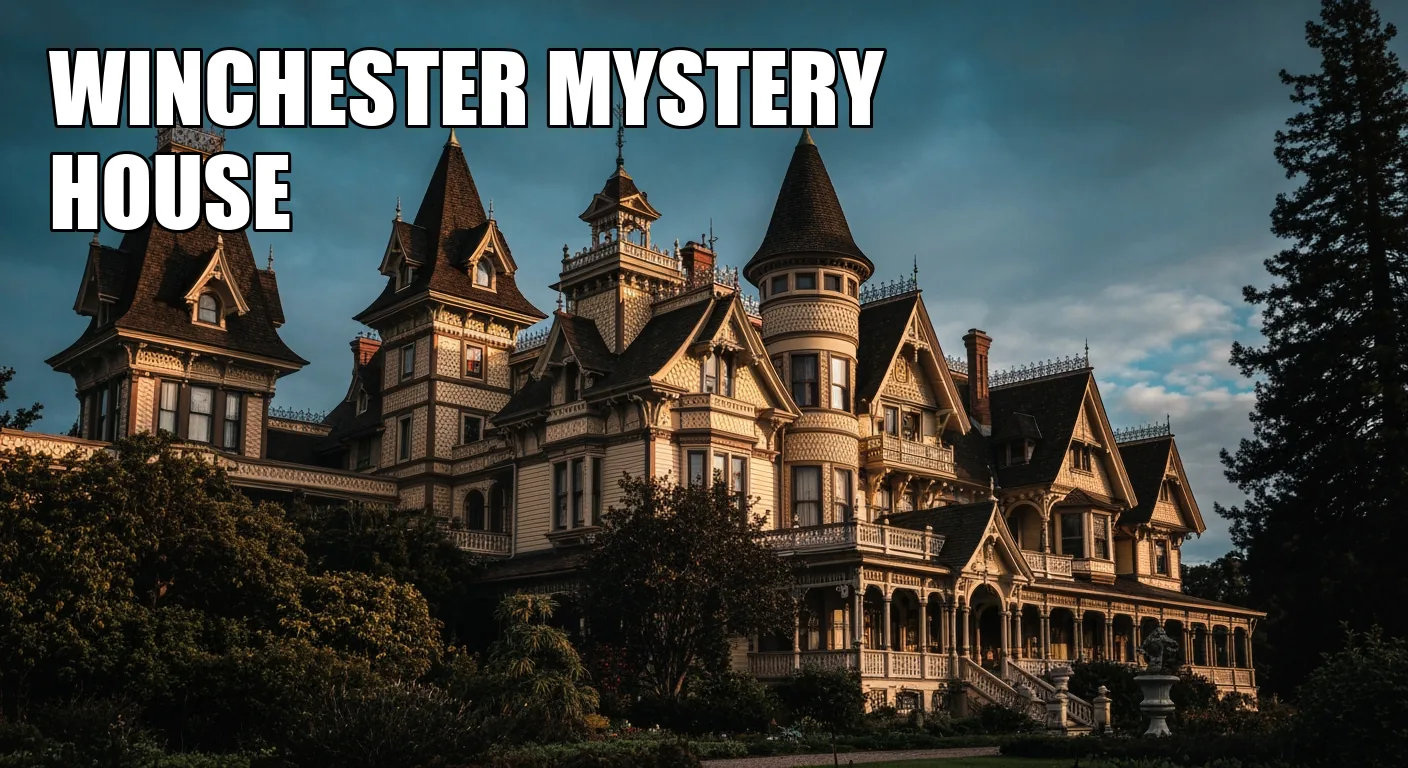
Standing sentinel in San Jose, California, the Winchester Mystery House has long been a magnet for those drawn to the peculiar and the paranormal. For decades, the narrative has been simple: a wealthy widow, haunted by the spirits of those killed by her family's rifles, built a sprawling, nonsensical mansion to confuse them. But after multiple visits and countless conversations with staff, historians, and even a few wide-eyed skeptics, I’ve come to believe the truth is far more nuanced, more human, and ultimately, more fascinating than any ghost story. This isn't just a house; it’s a physical manifestation of a profound, eccentric inner world, a place where architectural whimsy intertwines with genuine grief and an unyielding desire for purpose. ### What Lies Behind Sarah's Obsession? A Deeper Look at the Architecture Forget the simplistic "crazy widow" trope for a moment. Sarah Winchester inherited immense wealth from her husband, William Wirt Winchester, whose family fortune stemmed directly from the lucrative Winchester Repeating Arms Company. This staggering wealth, however, came with a heavy price: the loss of her infant daughter, Annie, and then her beloved husband. Conventional wisdom suggests she believed a curse afflicted her family, leading her to consult a spiritual medium who advised continuous construction on her new home to appease vengeful spirits. While that’s certainly the prevailing legend, I often wonder if the endless building wasn't also a way to process unimaginable grief, to maintain control, or simply to find an engaging project for a brilliant, if eccentric, mind in an era when women of her standing had few avenues for independent expression. The house, then, becomes a canvas for a life lived profoundly outside the norms. ### Doors to the Void, Stairs to Nowhere: A Study in Deliberate Confusion One cannot discuss the Winchester Mystery House without immediately addressing its utterly perplexing architectural features. You’ll encounter doors that open to sheer drops, staircases that ascend directly into ceilings, and corridors that lead abruptly to dead ends. On the second floor, for instance, you'll find what’s famously known as the "Door to Nowhere," which, when flung open, offers an exhilarating—or terrifying—8 to 15-foot plunge directly into an outdoor garden. Imagine the surprise, perhaps even a gasp, if you weren’t warned! Another variant of this bewildering design involves a closet door on the same floor that inexplicably opens onto a first-floor sink several feet below, a genuine head-scratcher that makes you question the very concept of spatial logic. These baffling constructions, I’ve come to understand, weren't accidental. They were deliberate. Sarah Winchester’s reported intention was to confuse malevolent spirits, preventing them from finding and harming her. While I’m skeptical of literal ghosts needing to navigate a physical maze, the effect on living visitors is undeniable: disorientation. Stepping through a door expecting a room only to face open air forces a moment of primal surprise, a visceral understanding of the house's unconventional nature. It's a masterclass in architectural storytelling, where every bizarre turn reinforces the narrative of a woman building against unseen forces. Another iconic feature is the "Staircase to the Ceiling." It rises from the floor with purpose, yet abruptly terminates at the ceiling, offering no opening, no passage, just solid wood meeting plaster. There's also the "7-11 staircase," a truly peculiar ascent with seven switchbacks that only gain a mere nine feet in height across 44 steps, each rise a mere two inches. This kind of architectural slow-motion, almost a visual stutter, is something you won't find in any conventional home. Maintenance worker Denny once recounted hearing footsteps above him in the water tower, a similar vertical space, only for them to consistently remain one floor ahead, culminating on the roof with no one to be found. Whether spirits or just the mind playing tricks in a truly bewildering environment, these features certainly foster an atmosphere ripe for suggestion. ### Whispers from the Witch's Cap: Where Sarah Allegedly Sought Counsel Deep within the mansion lies a room with a sharply pitched conical ceiling, affectionately dubbed the "Witch's Cap." This turret room is said to possess unique acoustic properties, amplifying echoes and making sounds bounce in curious ways. According to local lore, this was Sarah Winchester’s spiritual epicenter, the place where she conducted séances to communicate with the other side, seeking guidance for her endless construction projects. Renowned psychic-medium James Van Praagh once singled out this room as particularly significant to Sarah, suggesting its very shape might have been optimized for spirit communication. The Witch's Cap and its closely associated Séance Room are indeed focal points for paranormal reports. Staff and visitors alike have reported a palpable intensity within the room, an almost "crowded" feeling that makes some reluctant to enter. I’ve personally felt a subtle shift in temperature there, a peculiar stillness that makes the hairs on your arm stand up, though that could easily be attributed to the unique architecture rather than spectral presences. The Séance Room itself has a single entrance but three distinct exits, one famously dropping eight feet into the kitchen below, another a one-way secret passage. One documented visitor account even described seeing a woman in a black dress vanish down a hallway leading to the Witch's Cap, mere minutes after touring the room. Whether these are residual energies or simply the house’s theatrical power at play, these stories certainly add layers to the mystery. ### Beyond the Ghosts: Examining the Mansion's Legacy and Practicalities While the house’s architectural oddities and ghostly tales capture the imagination, the broader history offers equally compelling insights. Take the consistent reports of "Clyde," a mustached man in Victorian-era clothing, often seen pushing a wheelbarrow in the basement or tending to the Grand Ballroom's fireplace. Many visitors mistake him for a hired actor, given his authentic period attire, only to learn the mansion employs no such performers. This kind of anecdotal evidence, coming from numerous independent sources, makes you pause and wonder. Are these merely collective hallucinations, or something more? The house also played a fascinating role in the early 20th century’s spiritualism debates. In 1924, none other than Harry Houdini himself visited the mansion during his nationwide tour to debunk spiritualism claims. He cited the Winchester Mystery House as a prime example of how such beliefs could lead to apparent eccentricity, if not outright delusion. This historical footnote grounds the house’s supernatural narrative in a broader cultural context, reminding us that its mysteries have long been subject to both belief and scrutiny. It’s crucial to remember the immense impact of the 1906 San Francisco earthquake on the mansion. This 7.8-magnitude tremor not only devastated much of Northern California but also caused significant damage to the Winchester Mystery House, collapsing the top three floors of what was then a seven-story structure. Sarah Winchester was reportedly trapped in the Daisy Bedroom during the quake and had to be rescued by staff with a crowbar. The cracked walls and torn wallpaper visible in the Daisy Bedroom today serve as a stark, tangible reminder of that night’s terror. This event, which Sarah reportedly interpreted as a negative spiritual reaction to her building methods, profoundly influenced her construction practices afterward, adding another layer of practical response to her spiritual inclinations. ### Planning Your Own Expedition: Navigating Sarah's World in 2025 So, you’re ready to experience this labyrinth for yourself? A visit to the Winchester Mystery House in 2025 promises to be an intriguing, if occasionally bewildering, adventure. To make the most of your trip, some practical advice is essential.When to Go: For the best experience, aim for a weekday visit, ideally during the shoulder seasons—late February to April or September to early November. You'll encounter smaller crowds, making it easier to absorb the details and hear your guide without interruption. The house is particularly busy during summer months, holiday weekends, and around Halloween; expect long lines and a more bustling atmosphere if you visit then.Tickets and Timing: Always purchase your tickets online in advance, especially if you're visiting on a weekend or during peak season. This isn't a place where you want to wait in a long queue. Admission fees typically range from $40-50 per adult for the main Mansion Tour, with additional options for extended tours or special events. Parking is available on-site, usually for a modest fee of $10-15, so factor that into your budget.What to Expect on the Tour: The standard Mansion Tour lasts about 65 minutes and covers many of the house's most famous features. Be prepared for a fair amount of walking, climbing stairs, and navigating tight spaces. The house is, by its very nature, a maze, and while guides are excellent, the sheer volume of oddities means you can't dwell on every detail. If you have mobility issues, inquire about their accessible tours, which cover specific sections of the ground floor. What might surprise you is how little "jump scare" theatrics there are; the house's eerie atmosphere comes from its inherent strangeness, not manufactured frights. Instead of overt spookiness, expect a profound sense of wonder mixed with a touch of architectural bewilderment. The Winchester Mystery House is more than just a quirky mansion or a purported haunted attraction. It's a deeply personal, endlessly complex monument to one woman's unique interpretation of life, loss, and the veil between worlds. It challenges our notions of sanity, architectural convention, and even history itself. Walk through its doors, ascend its impossible stairs, and you might just find yourself questioning not only the house, but the very stories we tell about the past.

Winchester Mystery House: Essential Visitor Guide & Frequently Asked Questions

Can you visit the Winchester Mystery House?
Yes, the Winchester Mystery House is open daily to visitors for guided and self-guided tours from 10 AM to 4 PM on weekdays and 10 AM to 5 PM on weekends (closed Thanksgiving and Christmas Day). Tours explore 110 of the mansion's 160 rooms during a 65-minute guided experience.
What is so special about the Winchester Mystery House?
The 24,000-square-foot Victorian mansion features 160 rooms with extraordinary architectural oddities including doors that open to walls, staircases that lead nowhere, 10,000 window panes, 2,000 doors, and 47 fireplaces (with only 17 chimneys). Sarah Winchester continuously rebuilt and redesigned the mansion for 36 years until her death in 1922, creating one of the most architecturally unique homes in the world.
Can you stay in the Winchester Mystery House?
No, overnight stays are not offered at the Winchester Mystery House for general visitors. While early permits were discussed for special lodging arrangements, the estate currently operates as a daytime attraction. Several hotel partners in the San Jose area offer nearby accommodations for visitors.
Does anyone live in the Winchester House today?
No, no one currently lives in the Winchester Mystery House. The mansion has not had residential occupants since the 1990s and is now protected and maintained as a historic museum by Winchester Mystery House LLC, with security services protecting the property.
How scary is the Winchester Mystery House?
The regular daytime Mansion Tour is family-friendly and not designed to frighten visitors; it focuses on the architectural oddities and history. However, the house's mysterious design and eerie atmosphere create an intriguing experience. Seasonal 'Festival Fright Nights' in September through November offer horror-focused haunted house experiences for those seeking scares.
Why did Sarah inherit $20 million in 1881?
Sarah Winchester inherited $20 million and approximately 50 percent ownership in the Winchester Repeating Arms Company following her husband William Wirt Winchester's death from tuberculosis in 1881. This substantial inheritance made her one of the wealthiest women in America at the time.
What disease did Annie Winchester have?
Sarah and William's only daughter, Annie Pardee Winchester, died from a digestive disorder called Marasmus just six weeks after birth. This tragic loss deeply affected Sarah and is considered the first of several tragedies that shaped her life.
How much was Sarah Winchester worth when she died?
When Sarah Winchester died in 1922, her estate was valued at approximately $2.9 million. The majority of her original $20 million inheritance had been spent on the construction and continuous renovation of the Winchester Mystery House, which cost an estimated $5.5 million throughout its 36-year construction period.
Why does the Winchester House have so many rooms?
Sarah Winchester continuously expanded and rebuilt the mansion for 36 years, designing the house with increasingly complex and unusual architecture that baffled builders and visitors alike. According to legend, she believed spirits guided her designs, though historians note her motivation may have also been connected to the Winchester rifle's legacy and her desire to create an ever-changing architectural marvel.
What are the current admission prices for Winchester Mystery House tours?
The Mansion Tour starts at $17.99 for children, $38.99 for adults, and $32.99 for seniors. Add-ons include Basement Access ($13) and Attic Access ($13); visitors can add both for a $6 discount. Festival Fright Nights tickets start at $54.99.
What tour options are available in 2025?
The main Guided Mansion Tour explores 110 rooms over 65 minutes. Add-on experiences include self-guided Basement Access and Attic Access with expert guides. Sarah's Garden Tour offers a self-guided outdoor experience through the Victorian Gardens. Special experiences like nighttime flashlight tours and paranormal investigations are offered seasonally.
What is the best time to visit the Winchester Mystery House?
January through March offers the smallest crowds. Weekday visits are less busy than weekends, and early morning tours between 10 AM and 11 AM typically have the fewest visitors. October is popular due to Halloween activities, and summer months (May-August) offer extended evening hours.
Is the Winchester Mystery House wheelchair accessible?
The mansion tour is not wheelchair accessible due to 47 staircases and historic construction limitations, though three inoperable elevators remain in the house. An ADA video tour is available featuring accessible garden buildings and a self-guided Sarah Winchester Garden Tour with wheelchair access.
Are children allowed on tours at the Winchester Mystery House?
Yes, children of all ages are welcome on the family-friendly Mansion Tour, with free admission for children four and under, and regular tickets required for ages 5-12. All minors must be accompanied by an adult at all times during the tour.
Can you bring pets to the Winchester Mystery House?
No, pets are not permitted on the estate except for certified service animals. Several doggie daycares are located nearby for visitors who need to arrange pet care during their visit.
What photography rules apply at the Winchester Mystery House?
Non-flash photography is allowed during daytime Mansion Tours inside the mansion, and visitors are encouraged to share photos on social media with the hashtag #winchestermysteryhouse. Photography is prohibited during Halloween tours for safety reasons, and videography or live streaming is not permitted due to copyright restrictions.