
Winchester Mystery House Ghosts: What the Evidence Shows
A provenance map for the best-known claims
| Claim | Earliest or strongest traceable layer | What the evidence establishes |
|---|---|---|
| Sarah had to build or die | Newspaper rumor published in 1895, during her lifetime | The rumor is old; her belief in it is not documented |
| Nightly séances directed construction | Posthumous “Séance Room” story located in 1928 print | The room label belongs to the attraction-era narrative, not a Sarah-era record |
| Houdini named the Mystery House | The exact name appeared in print in 1923; Houdini visited in 1924 | His visit amplified the brand but did not create its name |
| Clyde repairs the Ballroom fireplace | Official attraction retelling published in 2019 | The estate promotes the anecdote; the selected record supplies no dated first-hand report or verified identity for Clyde |
| Denny followed footsteps up the Water Tower | Official 2019 retelling of a maintenance-worker story | A named staff anecdote survives, but not a dated first-person account |
| A hidden envelope identified the glassmaker | Physical object uncovered during restoration in 2019 | A material discovery linked the stained glass to a documented San Francisco studio |
The build-or-die story is old—but age is not proof
The earliest located newspaper version of Sarah Winchester building to avoid death appeared in 1895, almost three decades before she died. Later papers repeated and embellished the mystery narrative; a 1911 article called the estate a “House of Mystery.” That makes the legend part of Sarah's lifetime, not necessarily part of Sarah's thinking. She left no known first-person explanation confirming the curse. Archival research by biographer Mary Jo Ignoffo found that building work paused and crews were dismissed for stretches, contradicting the later image of hammers sounding without interruption for thirty-eight years. Interviews cited by Ignoffo also attribute a denial of séances and superstition to Sarah's longtime secretary and nurse, Henrietta Severs. Those interviews should be treated through the biographer's research, not as a surviving statement from Sarah herself. The honest conclusion is narrower than either a ghost tour or a debunking slogan: contemporaries circulated the story, while the available record does not establish that Sarah organized her life around it.The “Séance Room” shows how a label becomes evidence
The small, oddly connected room now called the Séance Room feels persuasive because its physical circulation is strange. Yet the first located print version of that special function dates to 1928, six years after Sarah's death and five years after public tours began. Ignoffo's archival work identifies the space in household records as a gardener's bedroom. No document from Sarah's lifetime in the selected evidence calls it a séance room. The same caution applies to the number 13. The house contains countable groups that tours can point out, but no historical record establishes a general obsession. Some specific features—most clearly later coat hooks—were added after Sarah's death to strengthen the mystery theme. Other groups may be coincidence or selective counting. Seeing thirteen of something proves that thirteen objects are present; it does not identify who arranged them or why.Clyde is a documented story, not a documented worker
The estate's own page calls its subject “Rumored Hauntings,” an important editorial word. Its best-known figure is Clyde, whom the attraction associates with an old worker photograph and stories about a wheelbarrow and the Ballroom fireplace. As folklore, the scene is effective. As evidence, it has limits: the selected record supplies no dated first-hand sighting and does not verify who Clyde was. The story documents how the attraction narrates a reported haunting. Denny's Water Tower story sits one rung higher only because a staff member is identified. Official posts say the longtime maintenance worker followed footsteps upward through the tower and found nobody. They do not supply the date, Denny's full name or a direct statement from him. It remains a staff anecdote retold by the attraction, not an independently recorded event. That provenance test removes much of the old haunted-room map. Phantom Ballroom music, Water Tower lights, a “Room of No Return,” Sarah apparitions and a 1983 television crew's alarm-and-dog episode could not be traced to adequate sources in this research set. Repetition across ghost lists does not repair the missing first report.The physical house explains some oddities, not all of them
The 1906 earthquake destroyed upper sections of the mansion and led Sarah to leave damaged front rooms sealed rather than rebuild them. Some stairs ending at ceilings and doors opening toward missing volumes are scars of that decision. It is still too simple to blame the entire maze on one earthquake: rooms within rooms, disjointed routes and other anomalies predated 1906 and grew from decades of piecemeal renovation without one master plan. The shallow switchback “easy-riser” stairs make a different point. Historians interpret them as adaptations for Sarah's limited mobility and severe arthritis. Their unusual proportions are real; the claim that they were designed for spectral feet is the added story. The most revealing Winchester mystery solved in recent years involved neither an apparition nor a séance. During restoration of the North Dining Room in 2019, craftsman Cris Mead found an envelope hidden behind a wall niche. It was postmarked July 20, 1894, addressed to S. L. Winchester and bore the name of the Pacific American Decorative Company. The material find helped house historian Janan Boehme connect Sarah's stained glass to John Mallon's San Francisco studio rather than the long-repeated Tiffany attribution. That is what strong house evidence looks like: an object, a date, a location, named investigators and a conclusion limited to what the find can support.Houdini and Hollywood added different layers
Harry Houdini did visit the property at midnight in October 1924, but the exact phrase “Winchester Mystery House” had already appeared in print the previous year. Contemporary reporting places his visit inside his campaign against fraudulent mediums; the later claim that he was simply baffled by the mansion reverses the point of his work. The 2018 horror film Winchester added a modern layer. The real estate closed for roughly seventy-two hours to capture exteriors, aerials and limited interior material, while most of the film's labyrinth was rebuilt on stages in Melbourne. Its ghosts belong to a dramatization of the legend, not a filmed record of what a mansion tour reveals.Choose the visit by the question you want answered
The official tour menu separates several different products. A daytime history or historian-led experience is the better match for construction sequence, conservation and physical fabric. Expanded-access products add spaces, not stronger supernatural evidence. Flashlight and paranormal-investigation events invite participants to interpret darkness, equipment readings and sensations. Seasonal scare events are theater. None of those categories is dishonest when it is labeled clearly. The mistake is expecting one to do another's job. A ghost-hunting event can provide a memorable personal experience; it cannot establish what Sarah believed in 1895. A daytime tour can show a door, stair or sealed volume; the feature alone cannot prove why it was made. For every story, ask four questions: Who reported it? When was it first recorded? Is the account first-hand? Is there a physical or documentary trace? At Winchester, the answers do not empty the house of mystery. They reveal which mysteries belong to Sarah's building, which belong to later witnesses and which were built by the attraction itself.Planning the Wider Trip?
Use this planner when San Francisco is already in play and the real question is where the sleep base belongs: close to the city’s Victorian and screen-location logic, or far enough south that Winchester stops feeling like an afterthought.
Open San Francisco and Bay Area Stay Planner
Banff Springs Room 873: Fairmont's Missing Room Story and Whether the Stay Is Worth It
A source-backed Banff Springs Room 873 guide covering Fairmont's own Missing Room explanation, the real room inventory, arrival basics, and the smarter way to book the castle.
Congress Plaza Hotel Room 441: Booking Reality, Grant Park Logic, and What Guests Can Actually Confirm
Room 441 is the search hook, but the real question is whether Congress Plaza is the right historic Chicago stay once the lore stops doing all the work.
Driskill Room 525: Booking Reality, Downtown Austin Fit, and What Guests Can Actually Confirm
Room 525 is the search hook, but the real question is whether the Driskill is the right downtown Austin hotel once the legend stops doing all the work.
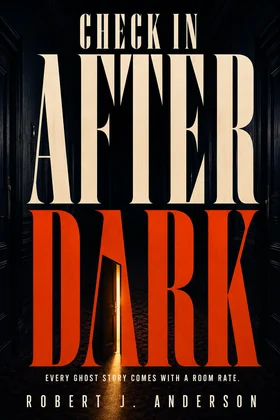
Check In After Dark
One writer checks into the rooms with the stories — Stanley 217, Banff Springs 873, the Del's 3327 — and reports what the night is actually like.